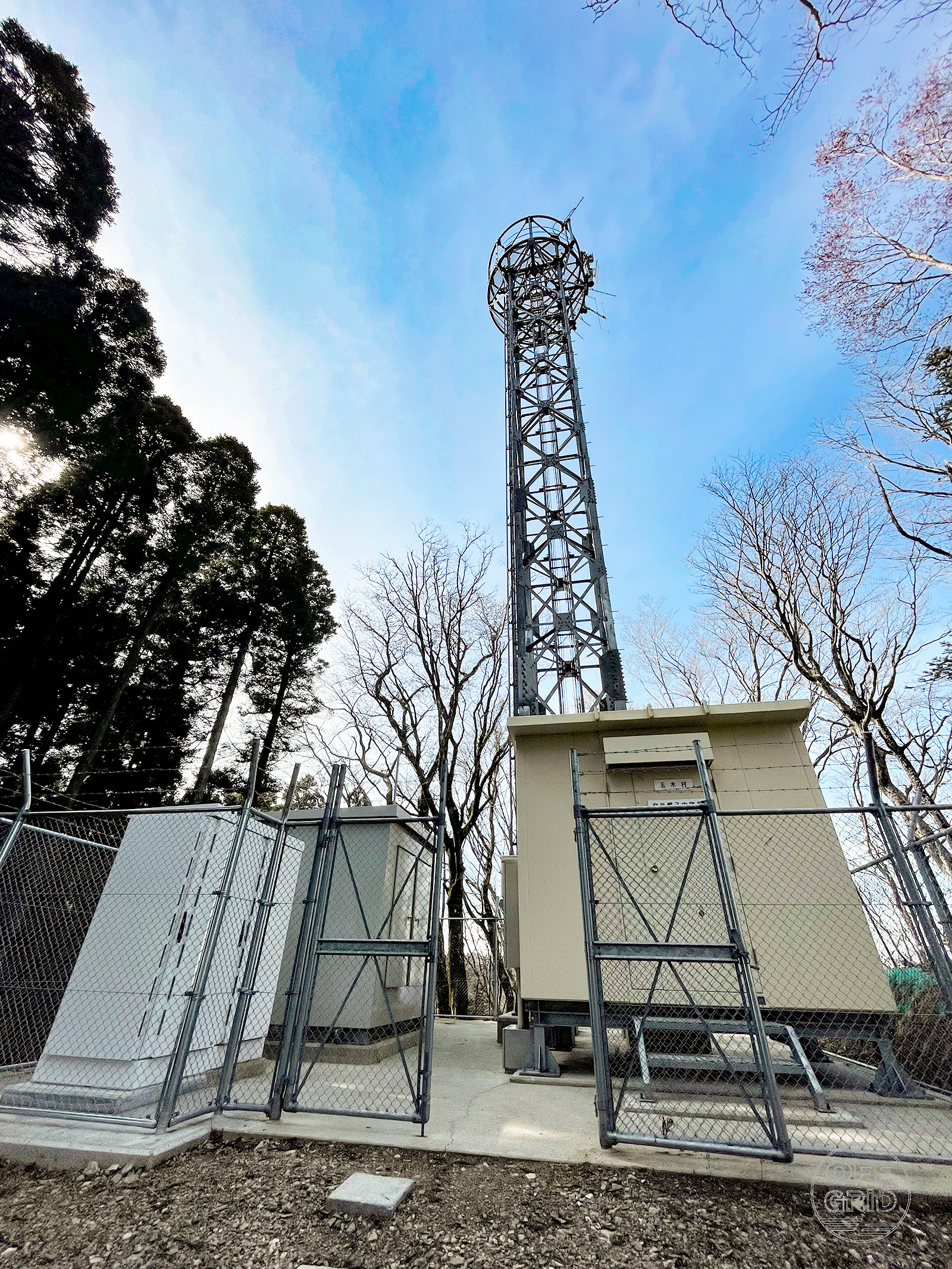
Overview: What must not stop is “communications”
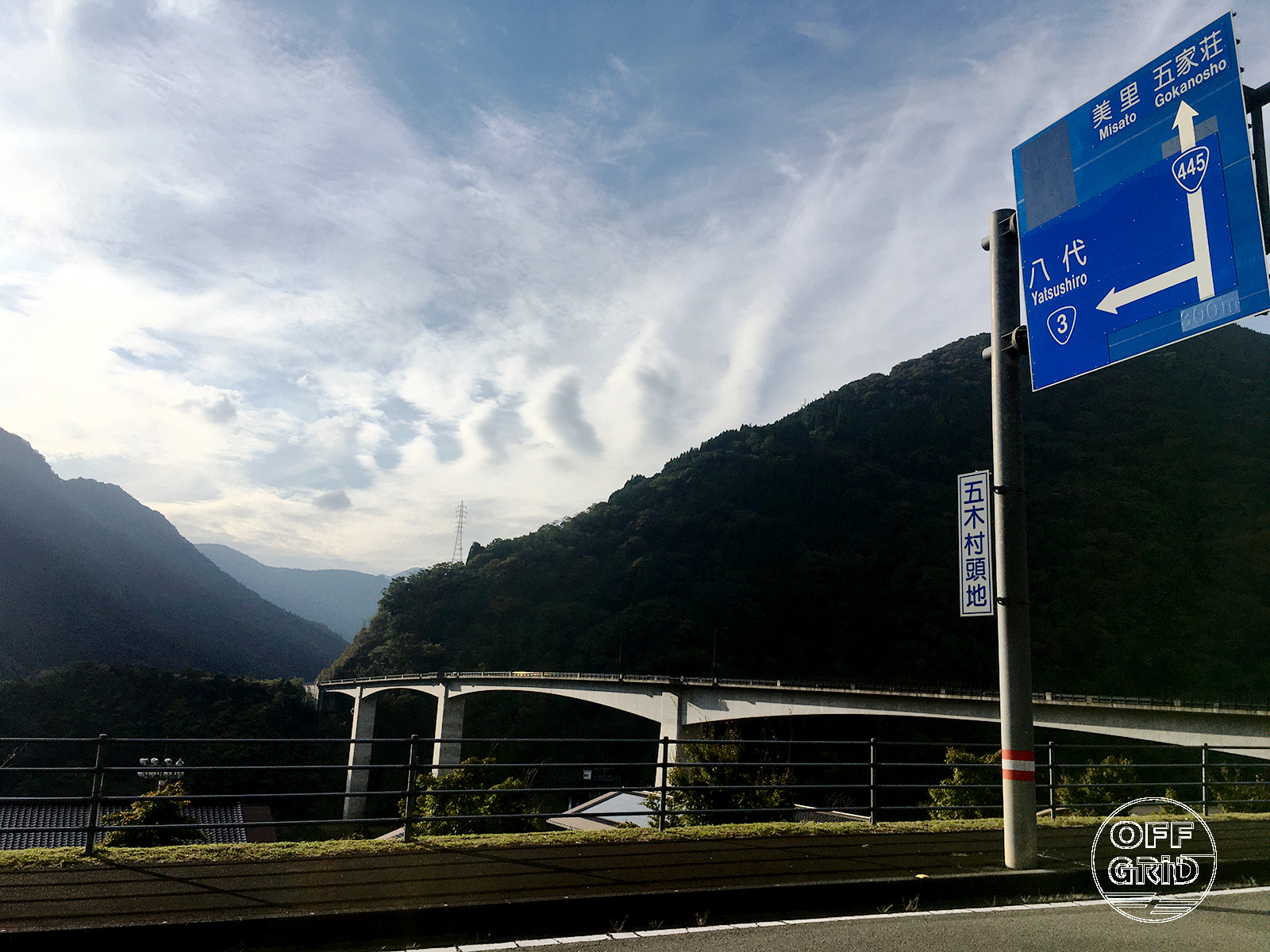
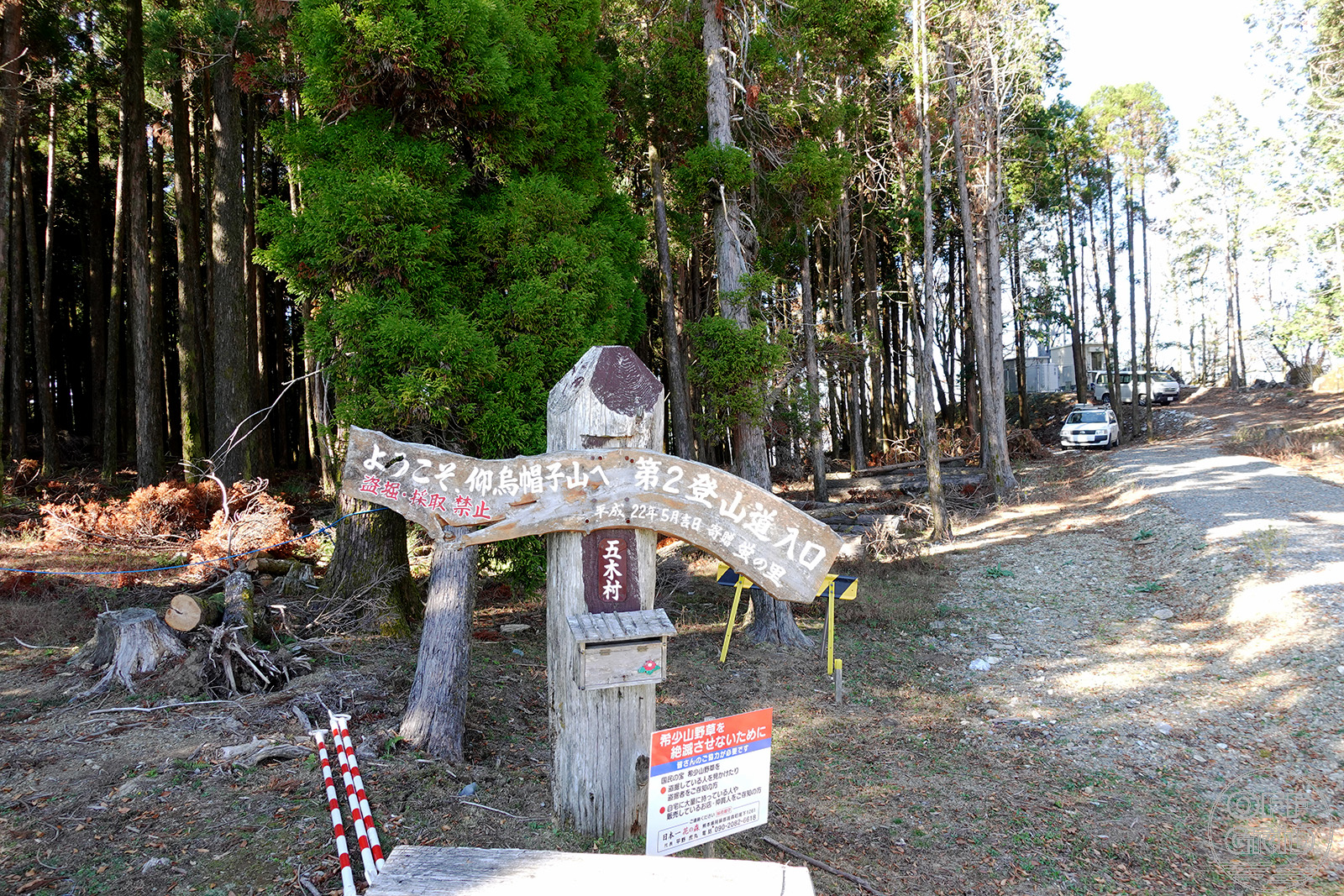
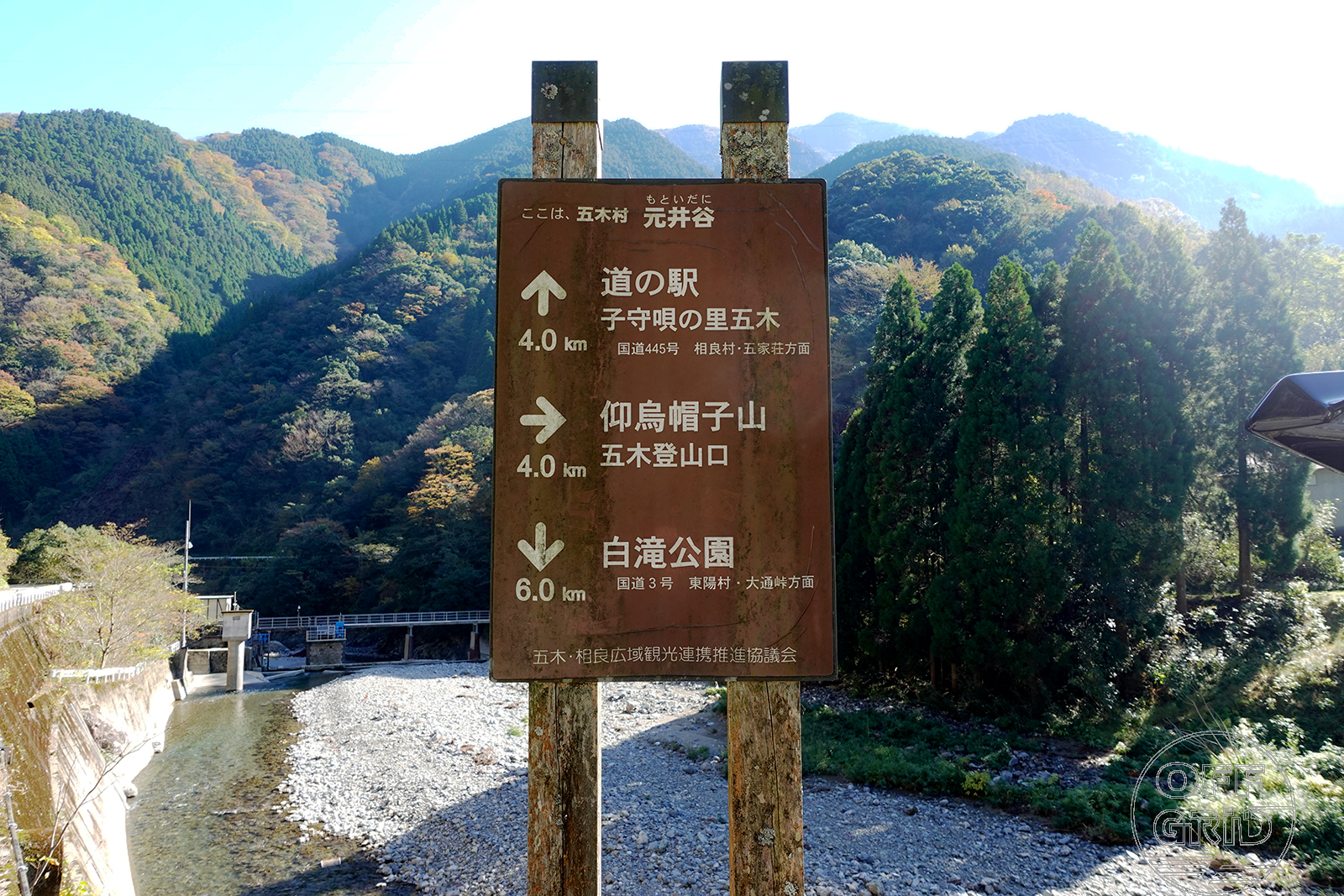
Deep in southern Kumamoto, Itsuki Village (Kuma District) is a small mountain community with a population under 1,000. Surrounded by steep terrain, it is vulnerable to isolation when disasters cut roads and access routes—geography itself becomes a risk factor.
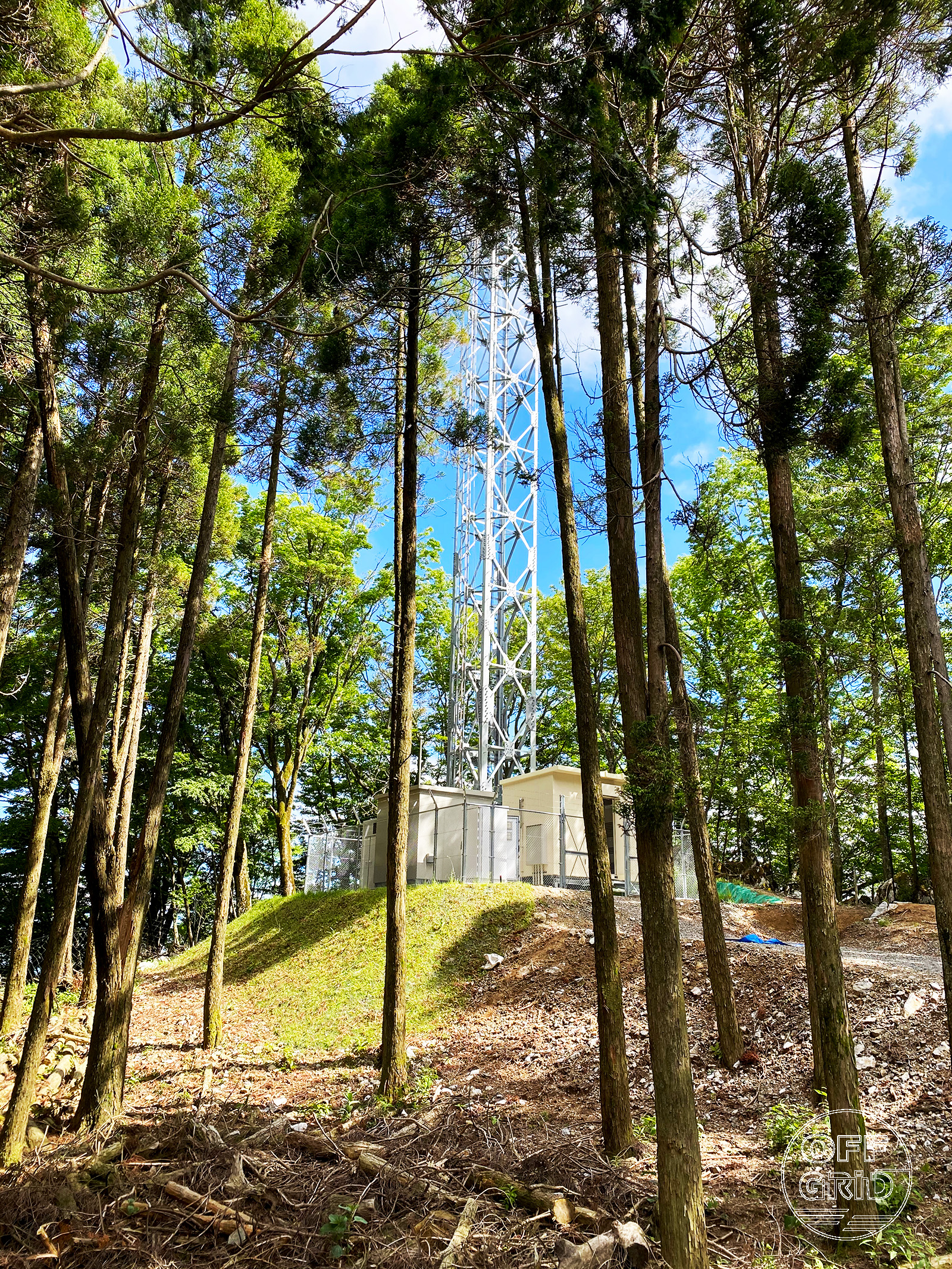
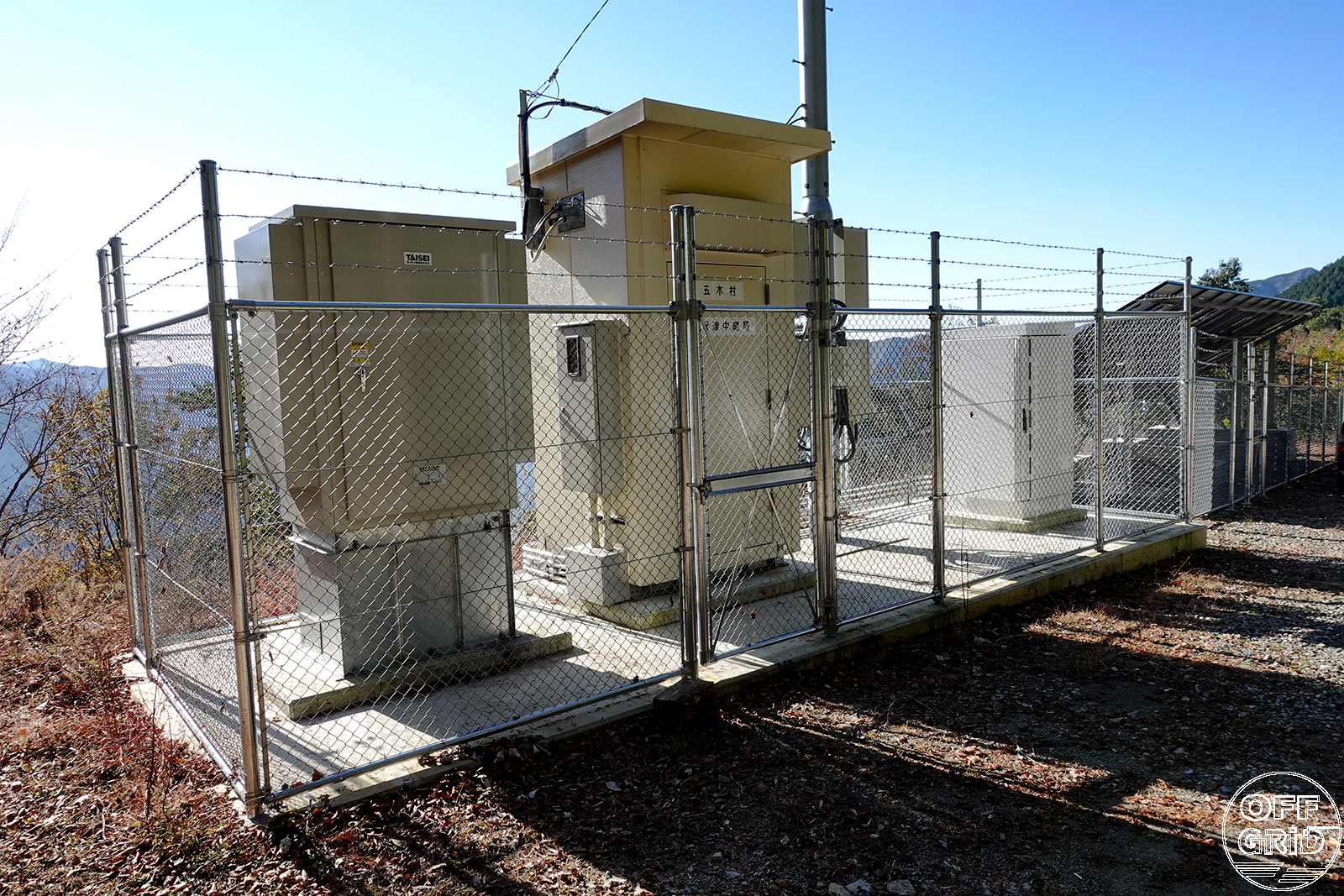
In such places, a disaster-prevention radio relay station becomes the “last mile” of emergency communications. It stays quiet in normal times, but if communications fail during outages and disruption, local safety deteriorates immediately. What we need to protect is not electricity alone, but the ability to keep communications available.
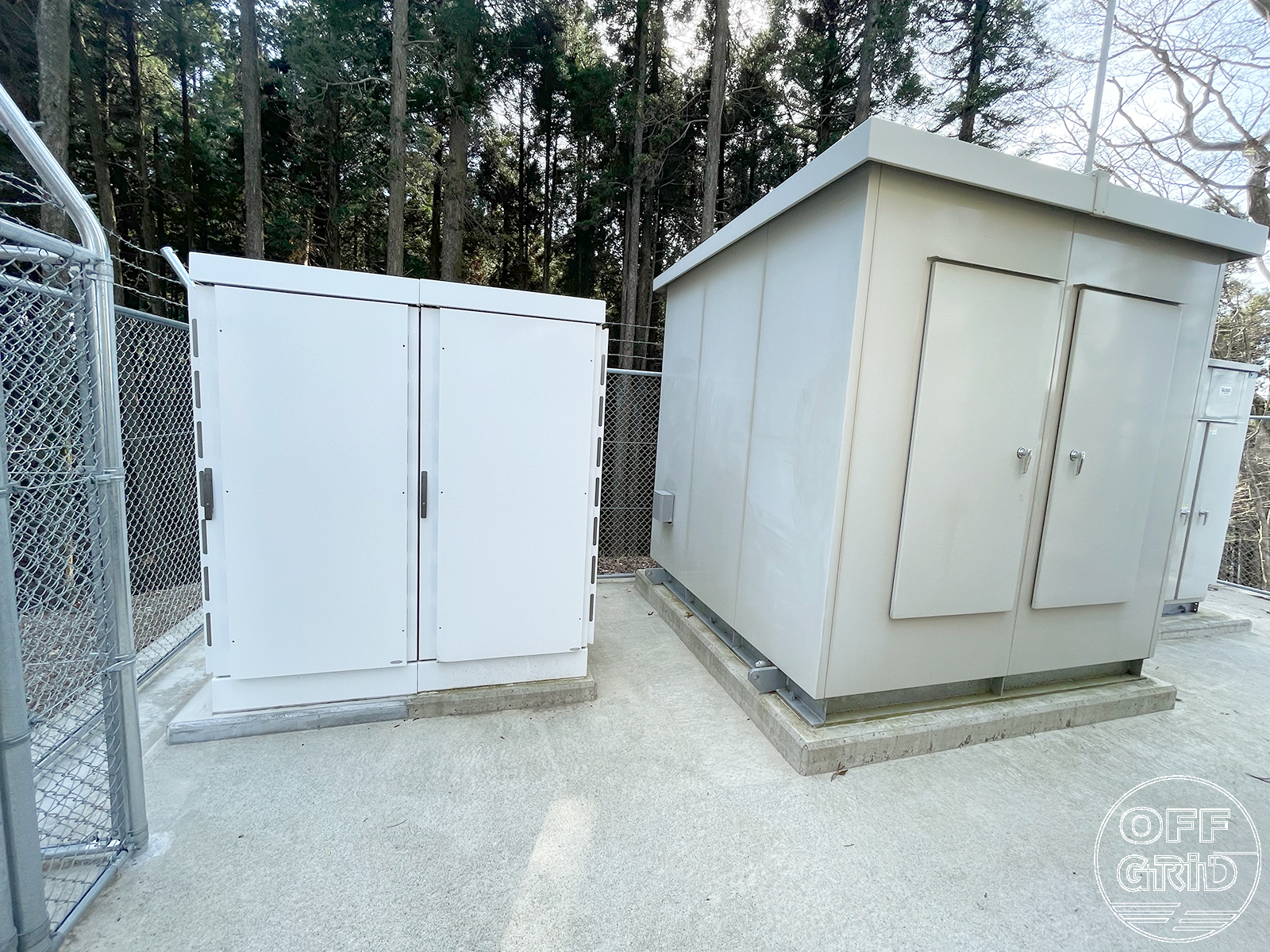
In this project, alongside the digital upgrade of the disaster-prevention radio system, we moved away from dependence on the power grid. We implemented an off-grid power system using Personal Energy® JIZAI, designed around autonomous, distributed, and asynchronous control. Solar power is the primary source, and the system continuously manages charge/discharge while supplying power to the relay equipment and HVAC.
Context: Conditions a mountain relay site faces
- Grid restoration can take a long time—or be unpredictable—after an outage
- Road damage, heavy rain, and rockfalls make maintenance and transport difficult
- Sites are usually unmanned; you cannot rely on onsite work during emergencies
- Quiet in normal times, but cannot stop “when it matters”
- Smaller populations and economic bases tend to feel the risk of centralized dependence more sharply
Timeline: Installed just before the 2020 heavy-rain disaster
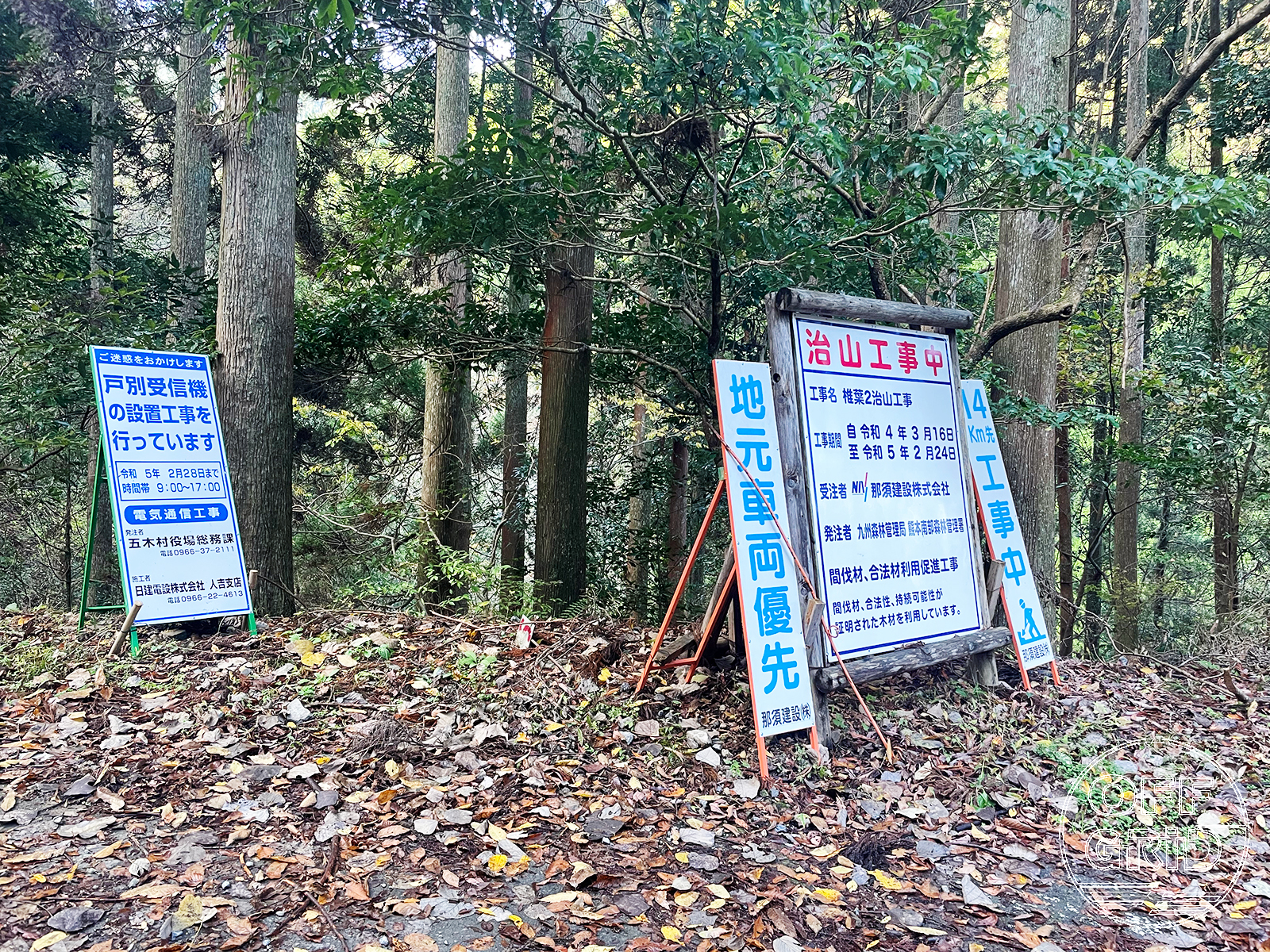
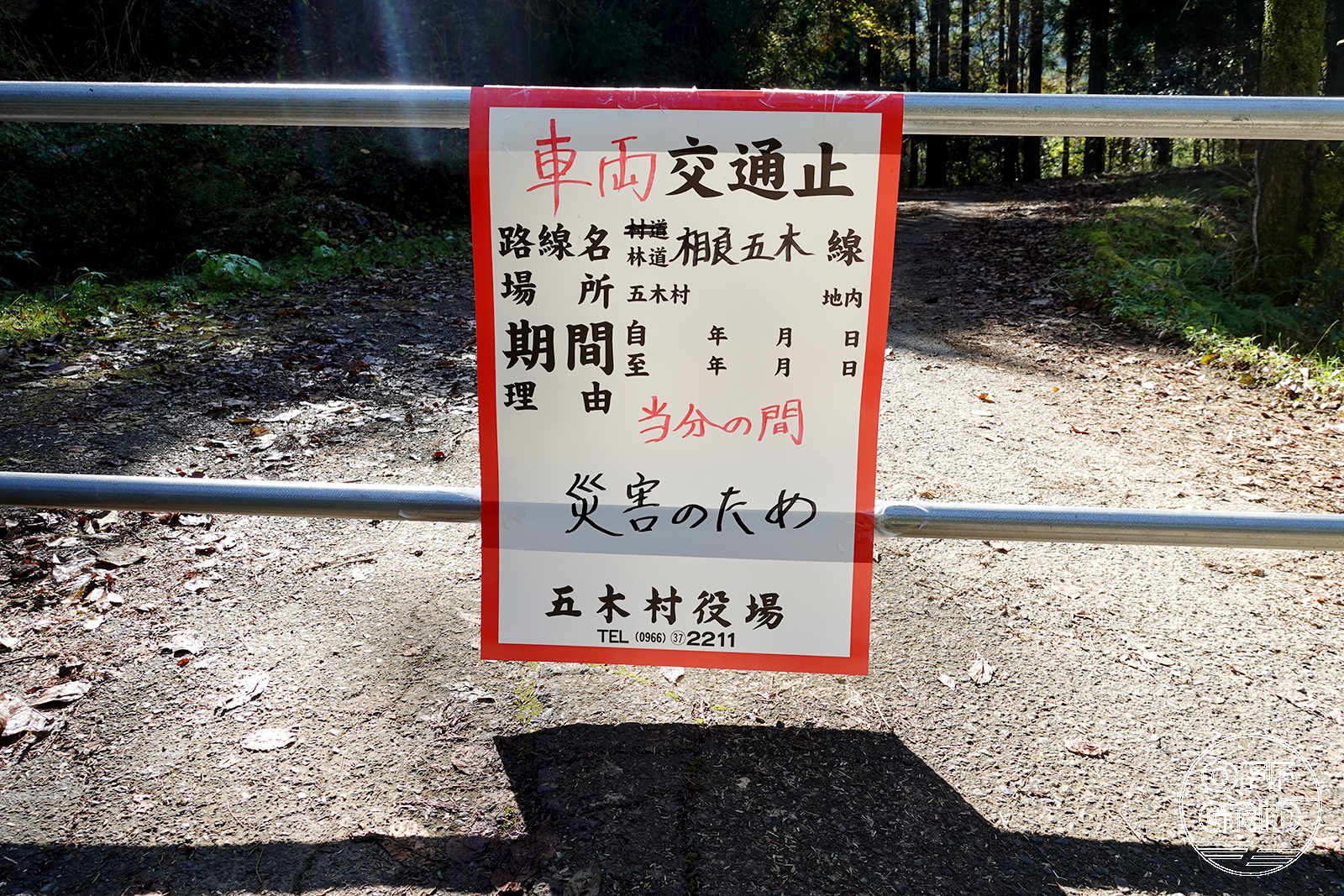
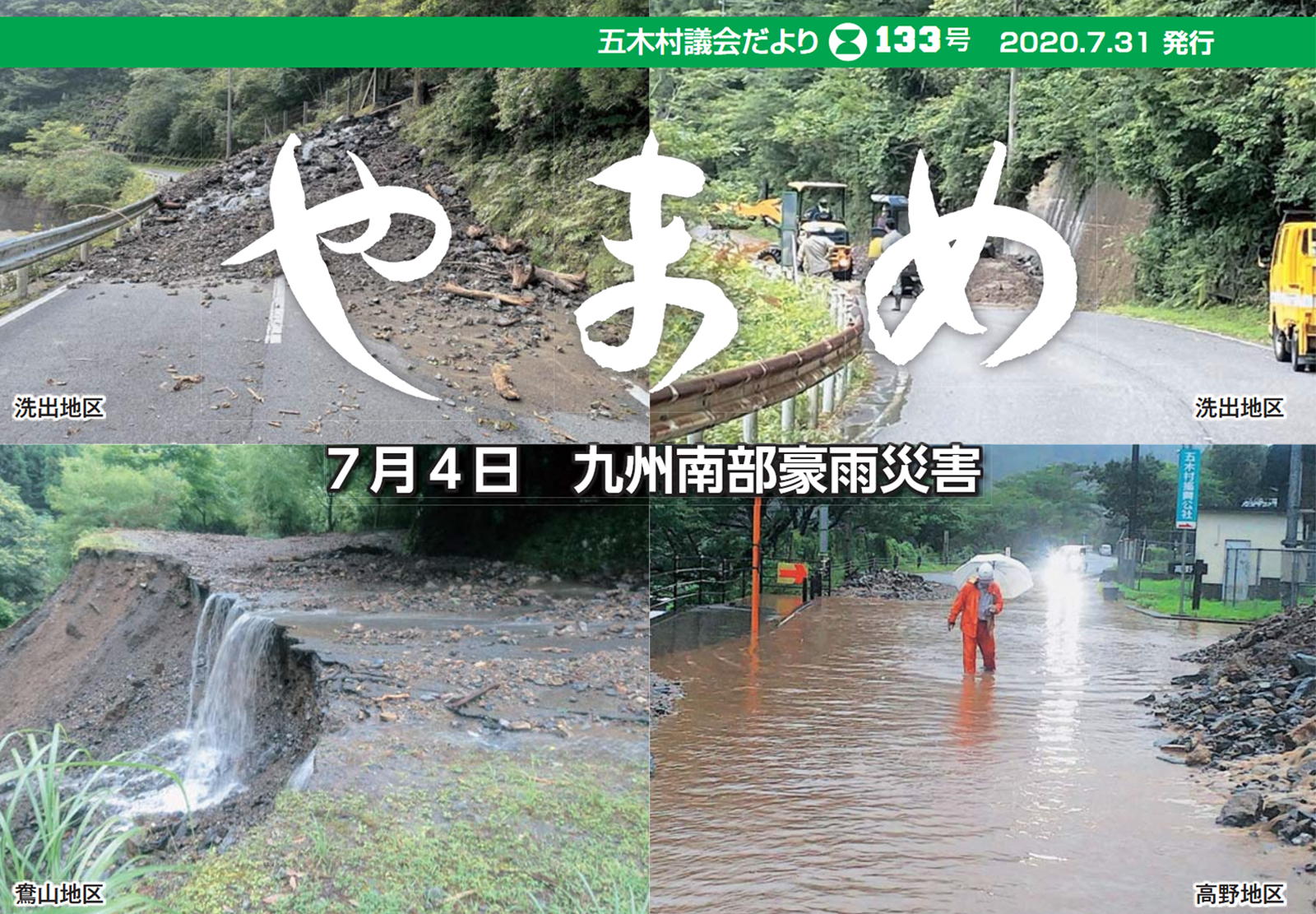
The system installation was completed on June 20, 2020. Just after trial operation had been completed, the July 2020 Heavy Rain Disaster struck southern Kyushu. Kumamoto Prefecture suffered casualties, and infrastructure disruption spread across the Kuma River basin.
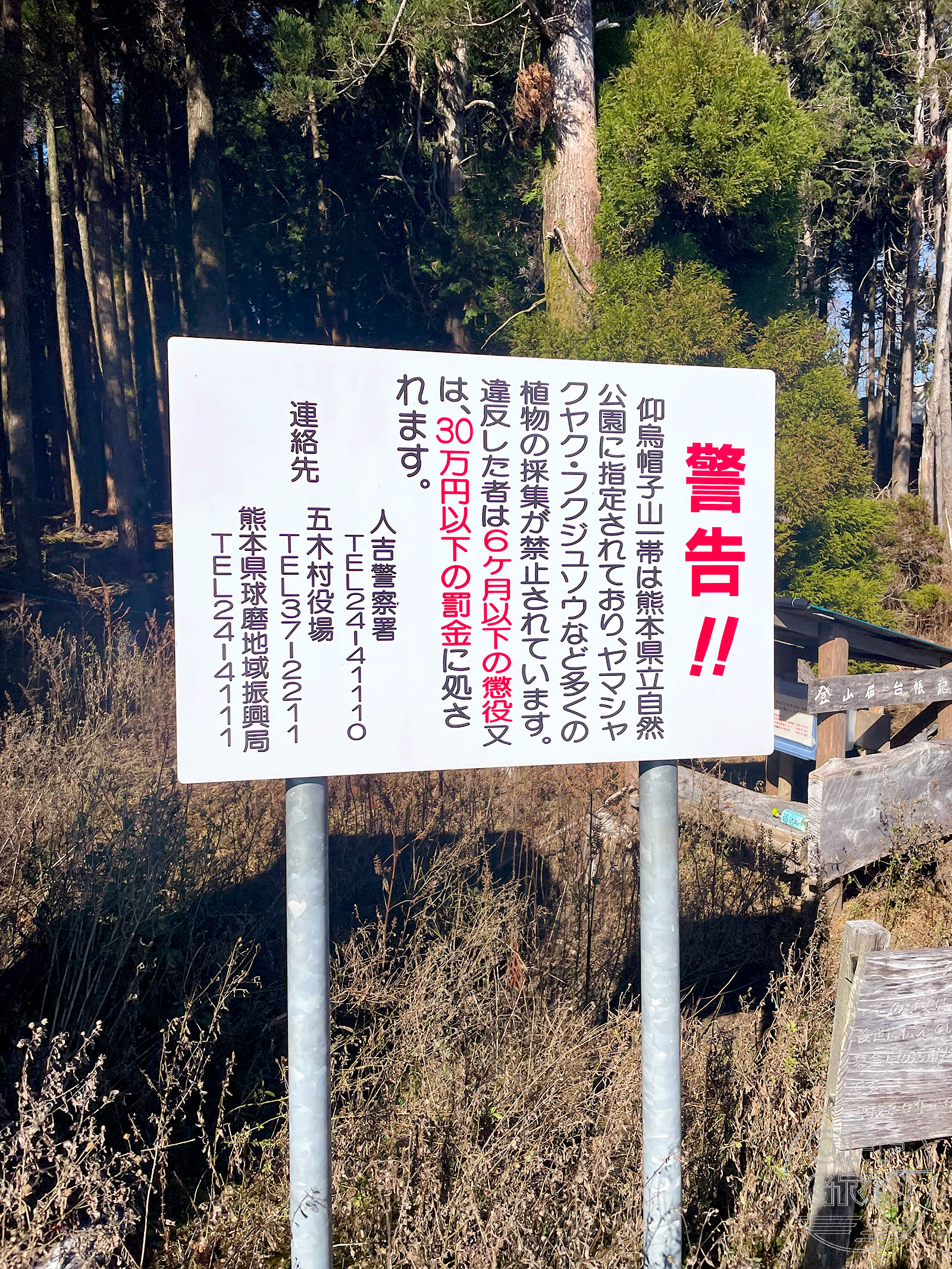
The maintenance road leading to the site was also cut off by landslides. Under these conditions, the requirement was simple: communications must keep operating even when nobody can reach the site. Off-grid power matters precisely in this “real world” scenario.
System: Personal Energy (autonomous / distributed / asynchronous)
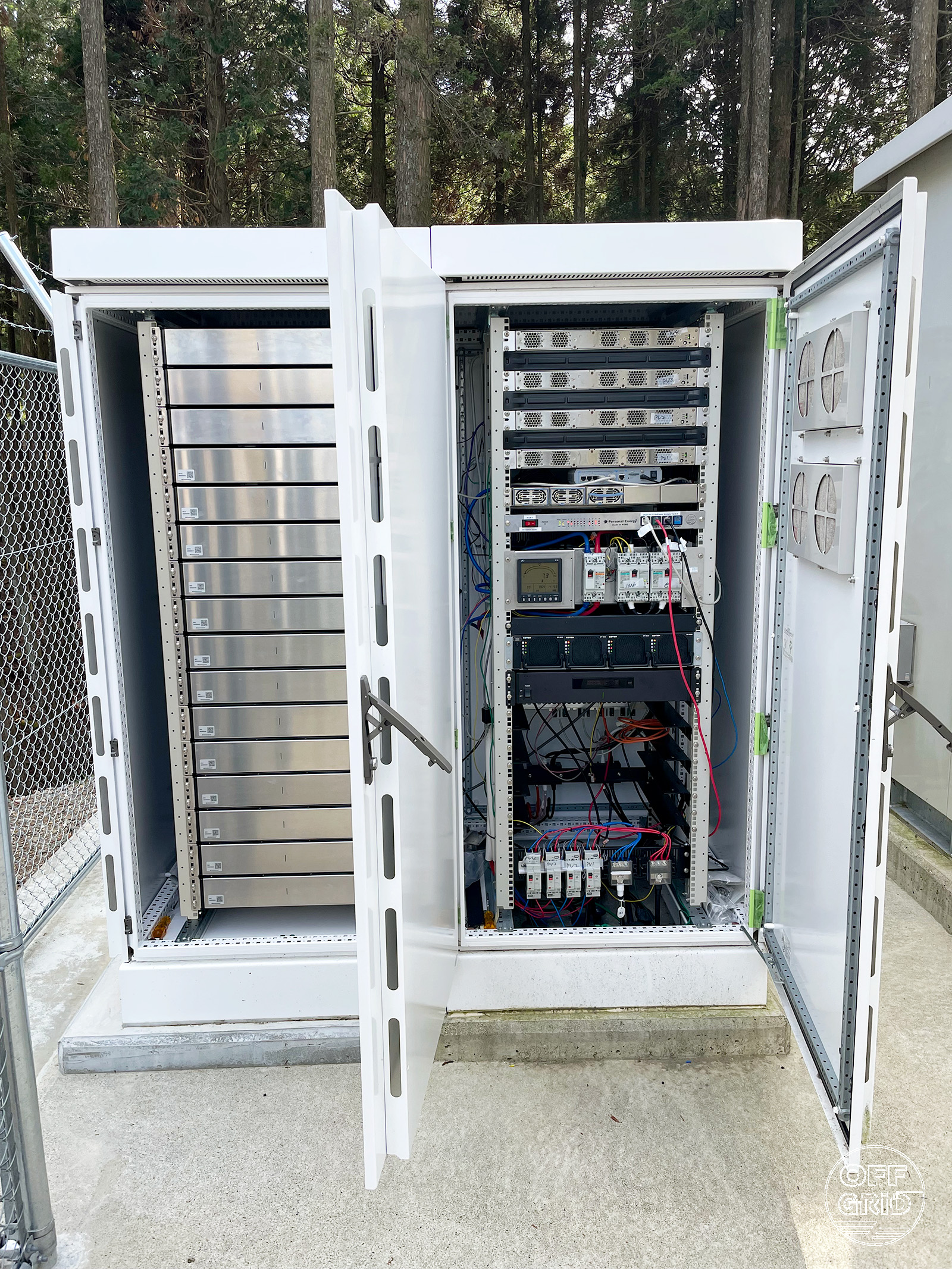
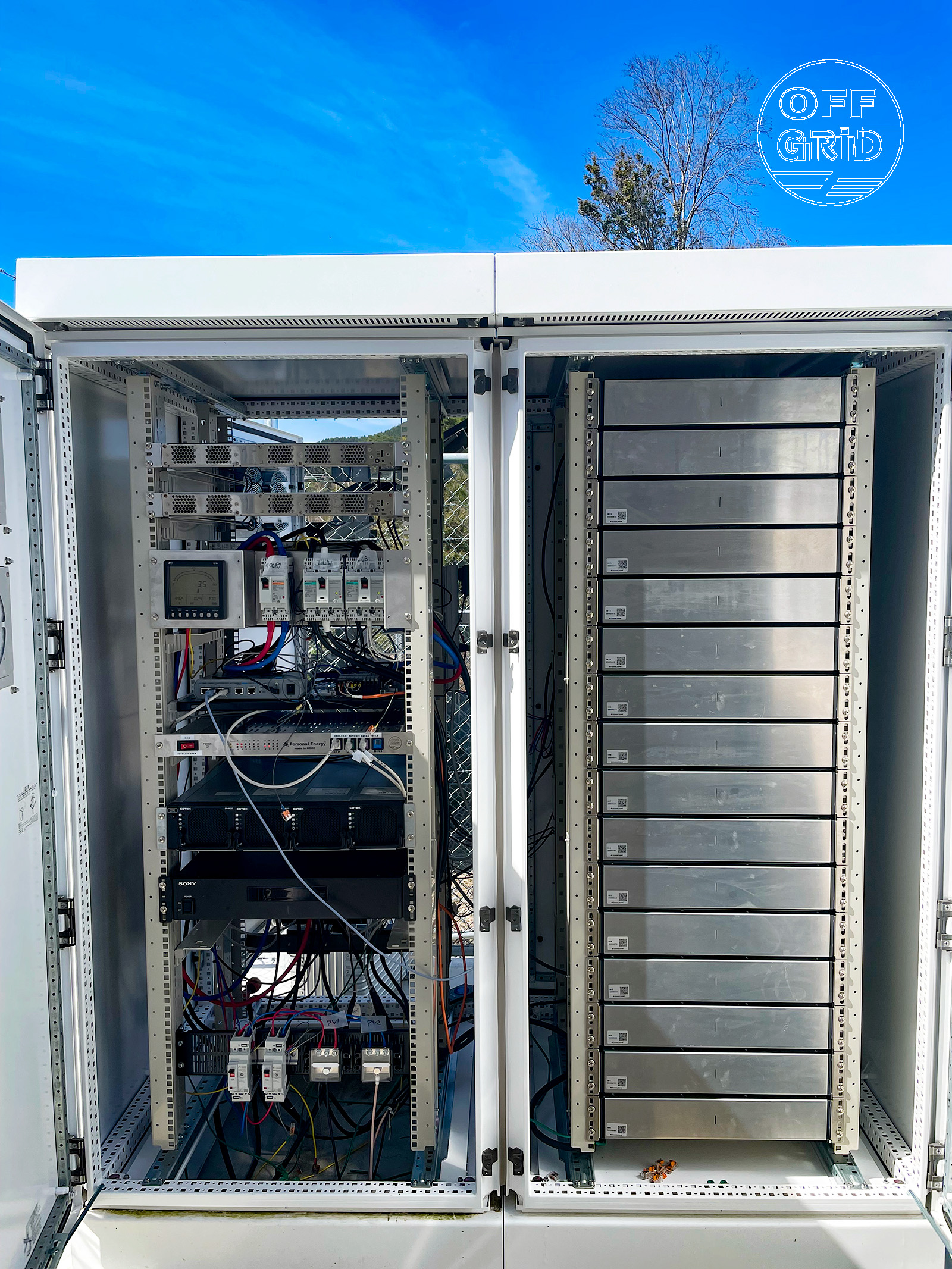
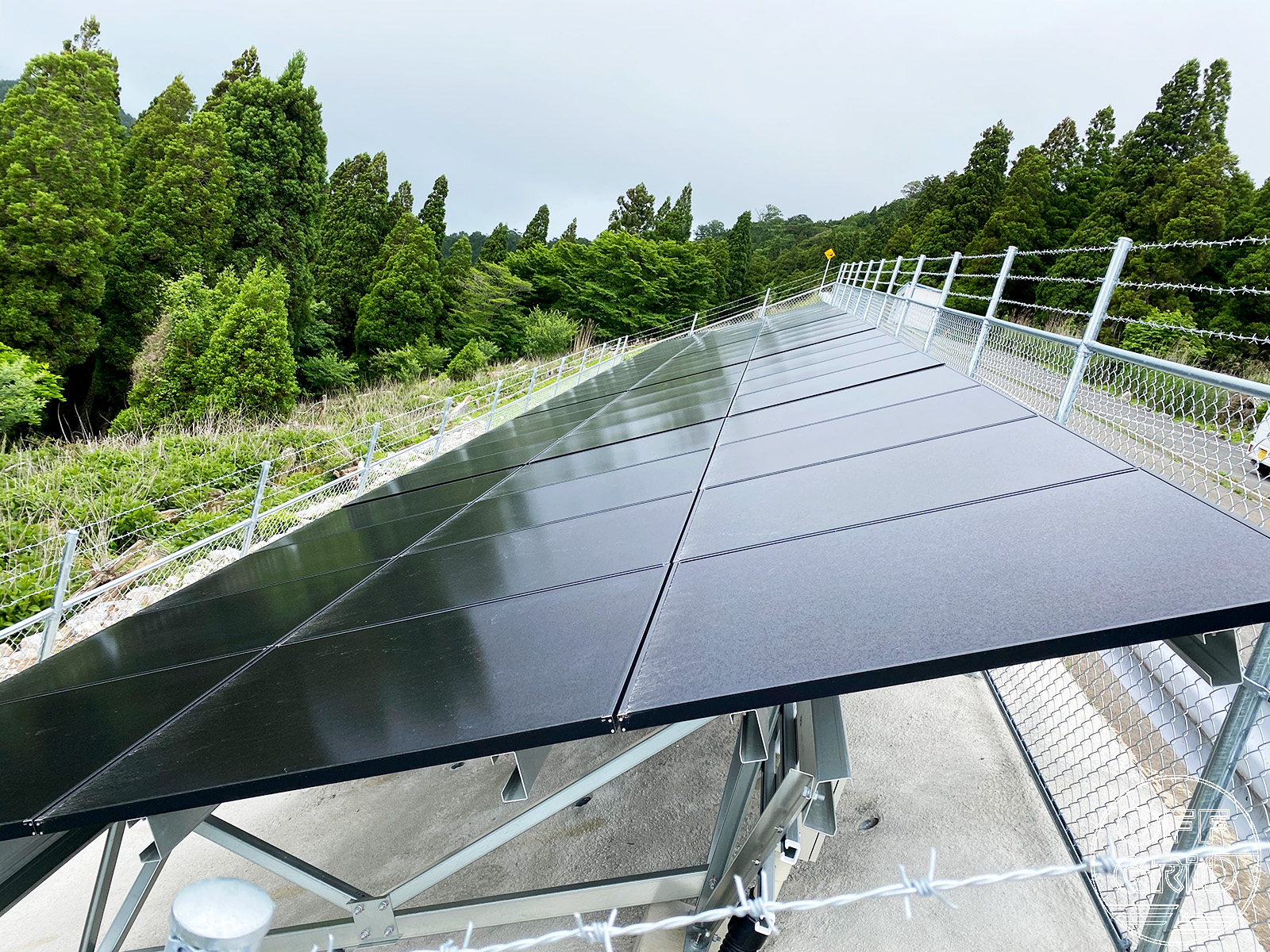
This off-grid system is not simply equipment that has been disconnected from the utility grid. It uses 11.1kW of solar generation equipment as the primary source, while Personal Energy® JIZAI continuously controls battery charging and discharging, and hot-swappable inverters supply AC power to the relay-station equipment and HVAC.
Electrically, the hot-swappable inverter configuration supports continuous AC output at rated 6000W (within the 100–120VAC range). The battery uses olivine lithium iron phosphate chemistry (nominal 51.2V), with 19.2kWh rated capacity / 17.6kWh effective capacity, providing continuous operation matched to the load requirements.
Published specifications (equipment configuration and design requirements)
To support planning for government and public-sector applications, this page organizes the specifications that can be disclosed publicly. Final specifications are engineered individually from site conditions, including loads, operations, maintenance, and expected outage scenarios.
| Application | Off-grid power system for a digital disaster-prevention radio relay station |
|---|---|
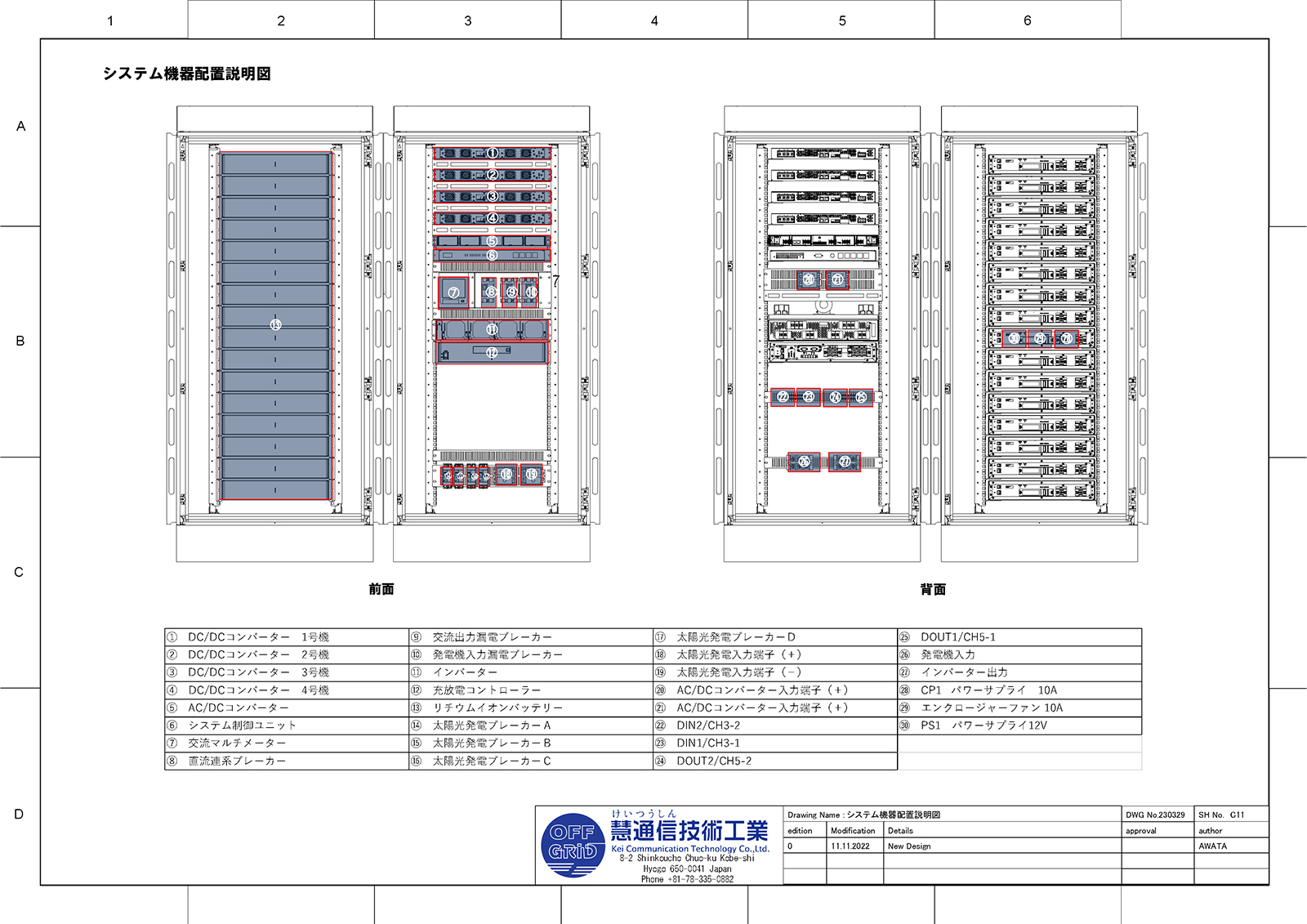
| Personal Energy JIZAI off-grid independent power system | JIZAI-PV2.5-4,INV6.4,DC4.8,LIB19.6 |
| Enclosure | SUS304 IP55 outdoor cabinet |
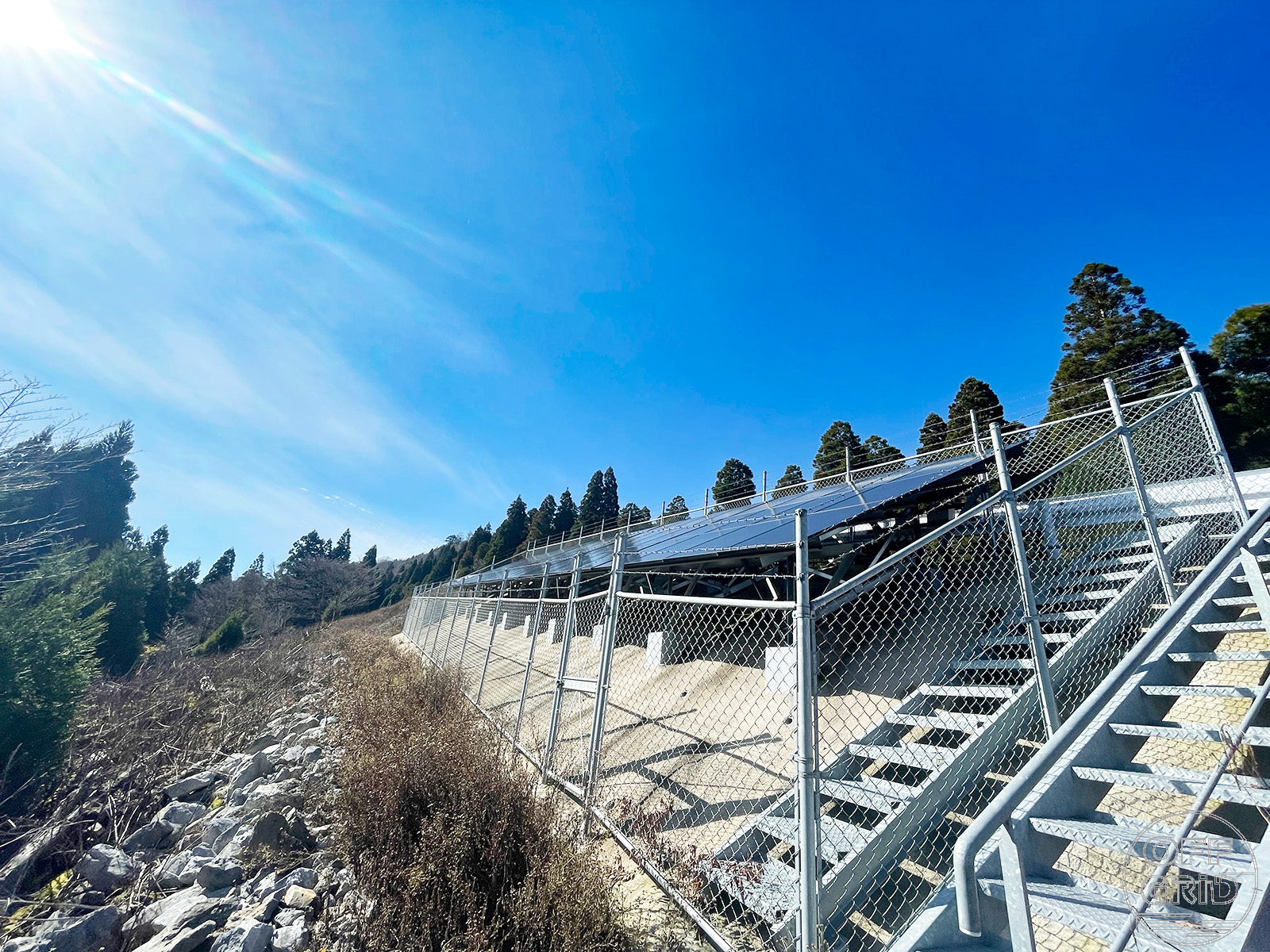
| Solar generation equipment | 11.1kW |
| Inverter | Hot-swappable configuration / AC output rated 6000W / 6000VA |
| External AC input | AC85–265V (continuous) / 47–63Hz |
| AC input current / power | 14.2 / 8.2A (input) / Maximum input power 1497W |
| PV input (DC) | Nominal 320VDC (input-voltage range: 150–400VDC ±3%) / Maximum input power: 10kW (combined) |
| AC output | Rated: 6000W / 6000VA, 120VAC (output-voltage range: 100–120VAC ±3%), 50/60Hz |
| Battery | Nominal voltage 51.2V / Rated capacity 19.2kWh (1.2kWh, 24Ah typ. per module) / Effective 17.6kWh (1.1kWh, 22Ah per module) |
| Charge / discharge (example) | Maximum charge current 100.0A / Maximum discharge current 130A / Charge time approx. 4h |
| Intended operation | Unmanned operation / Remote monitoring (detailed settings are not public) |
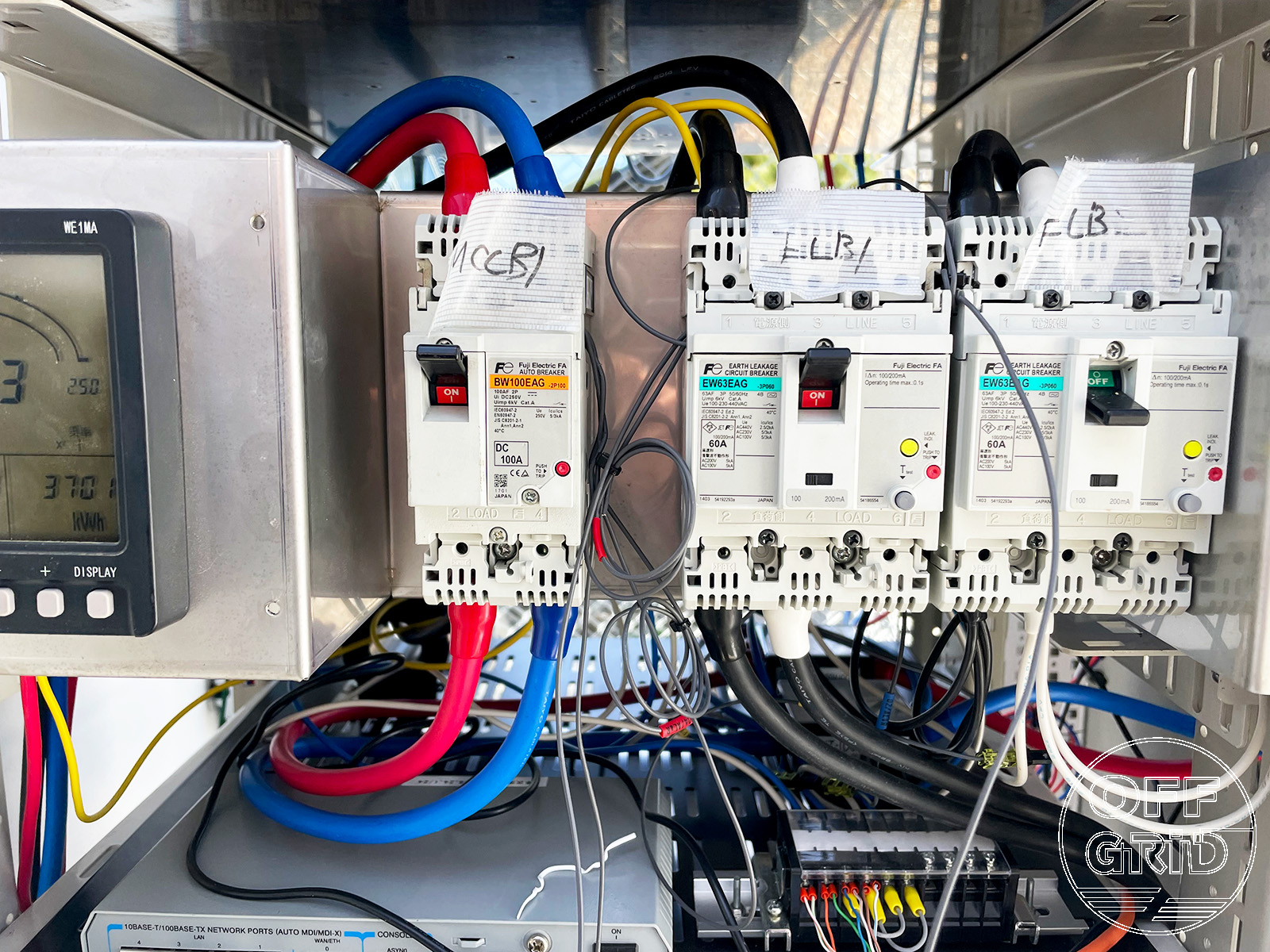
For unattended off-grid equipment, “do not stop” must be paired with the ability to “stop safely.” Protective devices such as ELBs are incorporated in multiple stages.
Battery storage supports continuous operation at night and during poor weather. Personal Energy has more than 10 years of operating experience at other sites.
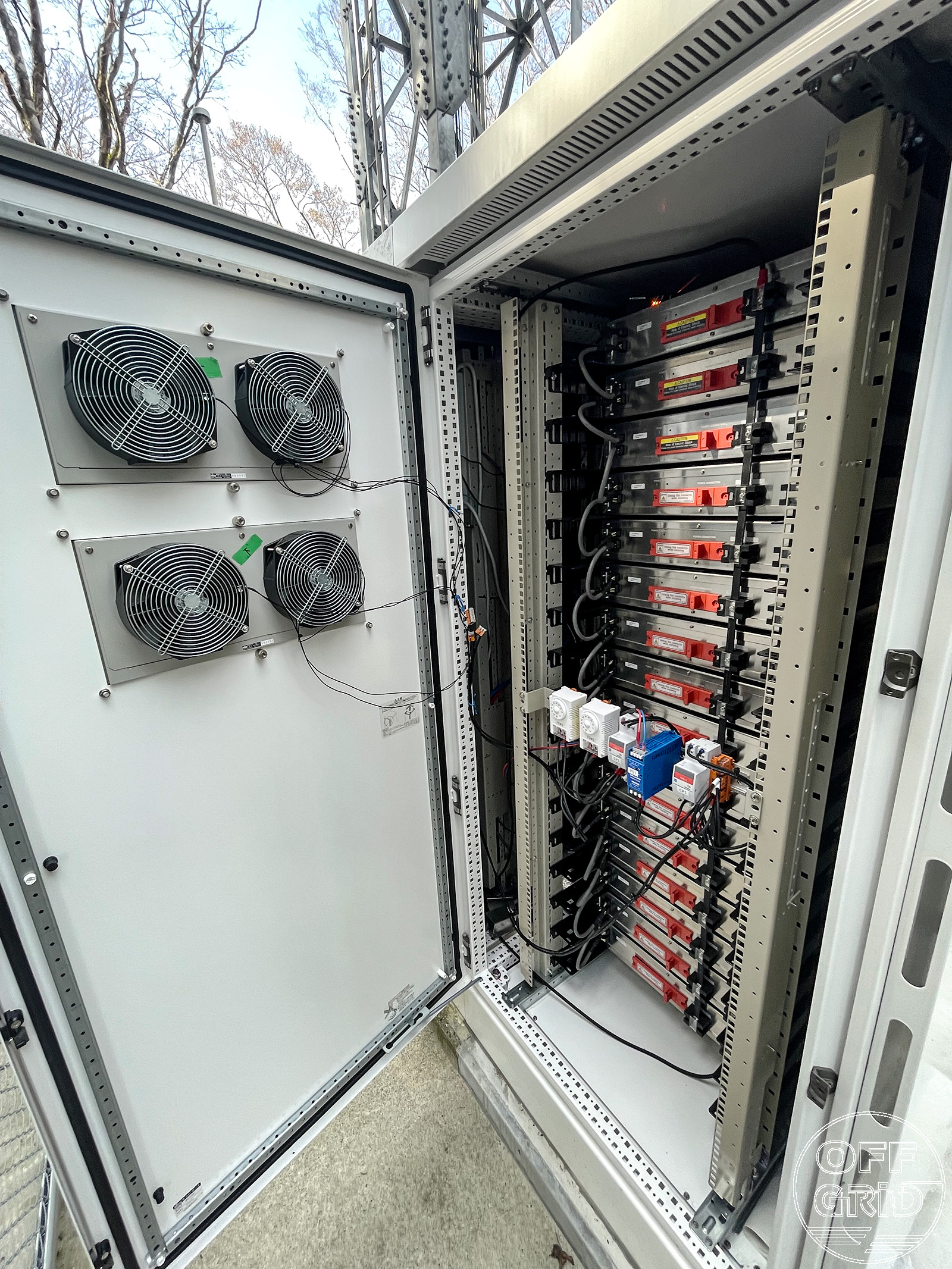
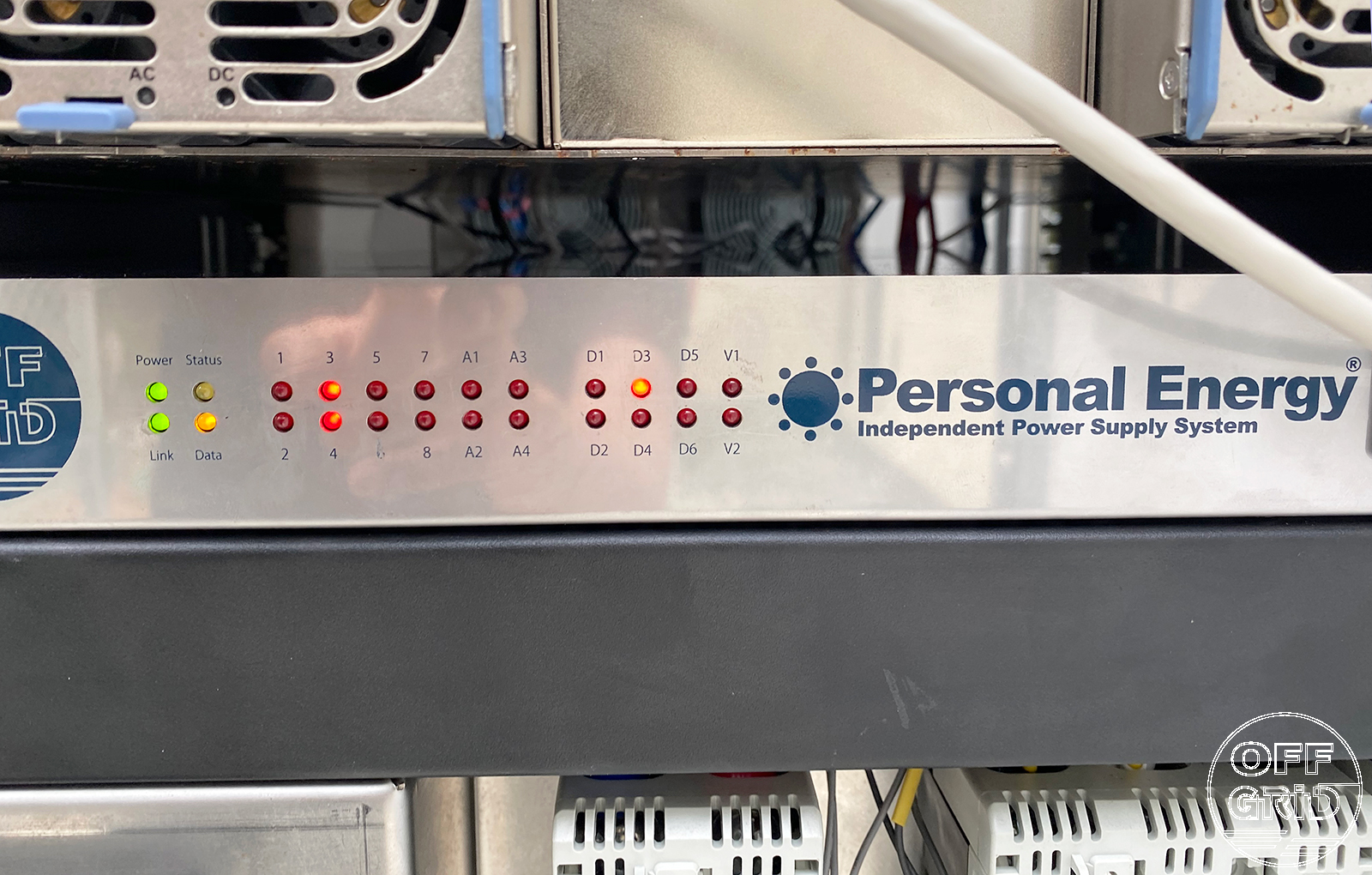
The BMS uses JIZAI, a real-time operating system developed by Kei Communication Technology Inc., to control the overall off-grid system.
CIGS modules are used because they can provide useful generation under low-light conditions.
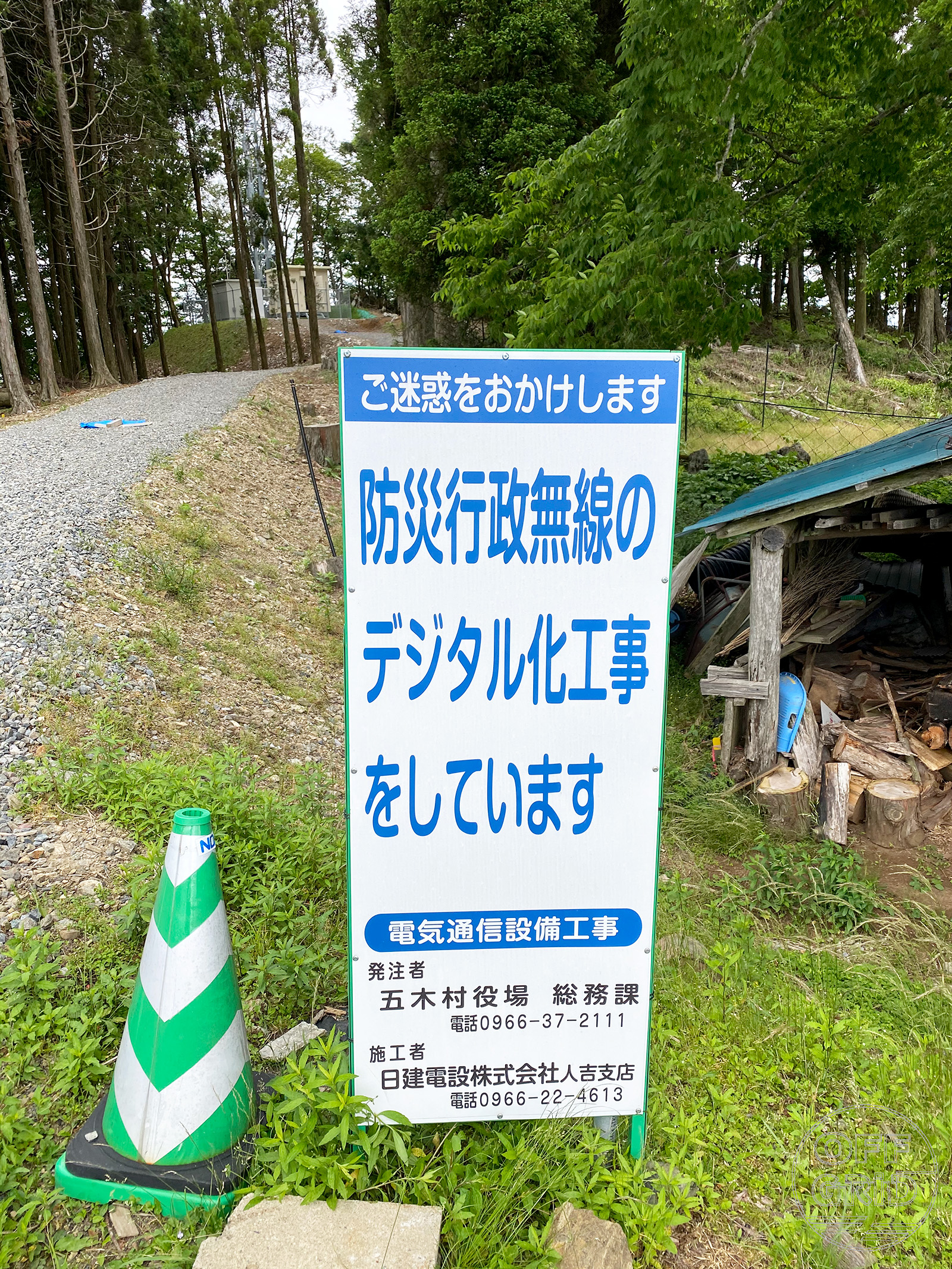
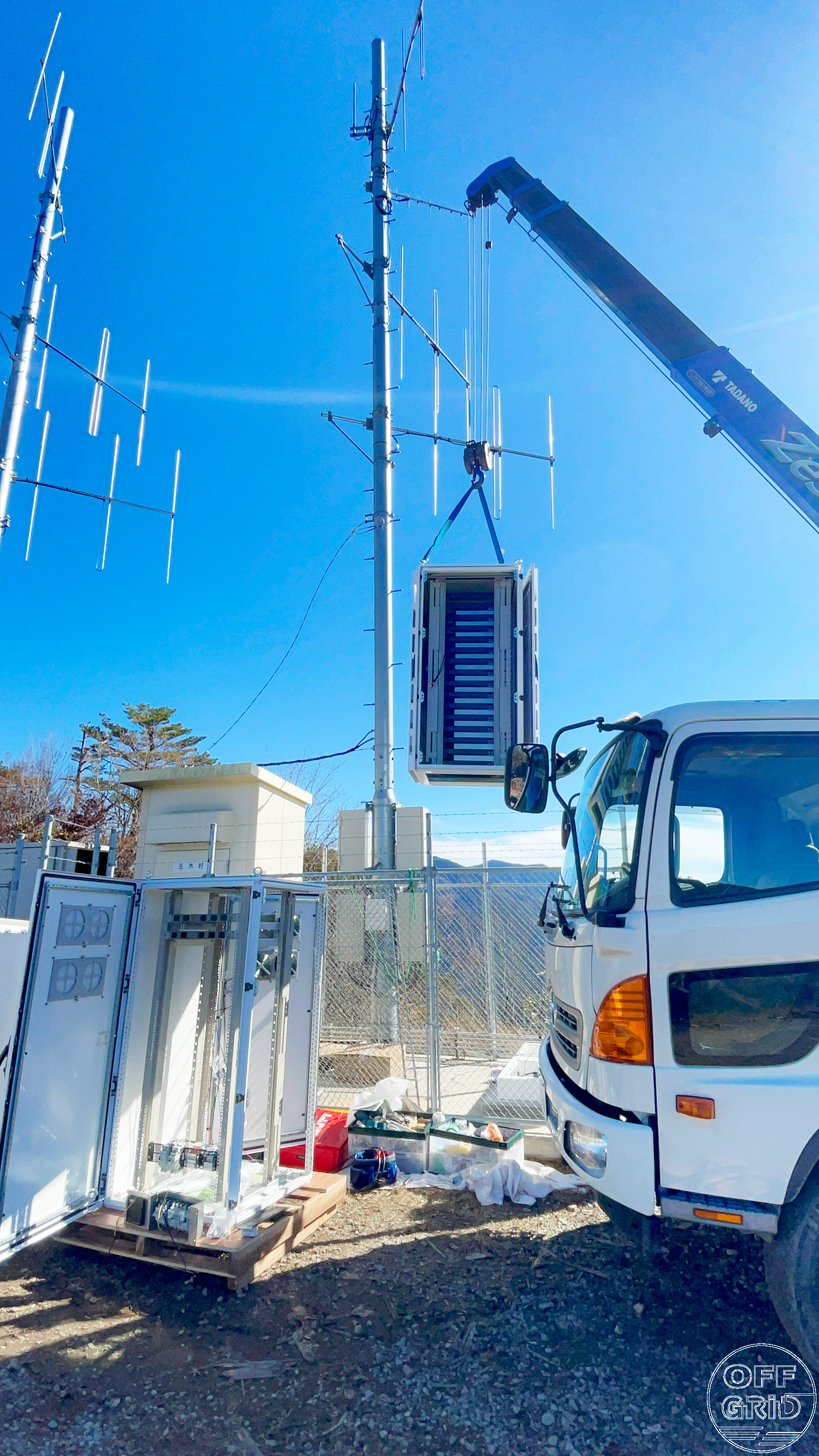
Disaster-prevention radio systems are radio stations used by prefectures and municipalities for disaster prevention, emergency relief, and disaster recovery under local disaster-management plans. Following major disasters in recent years, digital systems have been introduced to support increasingly diverse needs such as image and data transmission.
Deployment: From installation to proof of operation
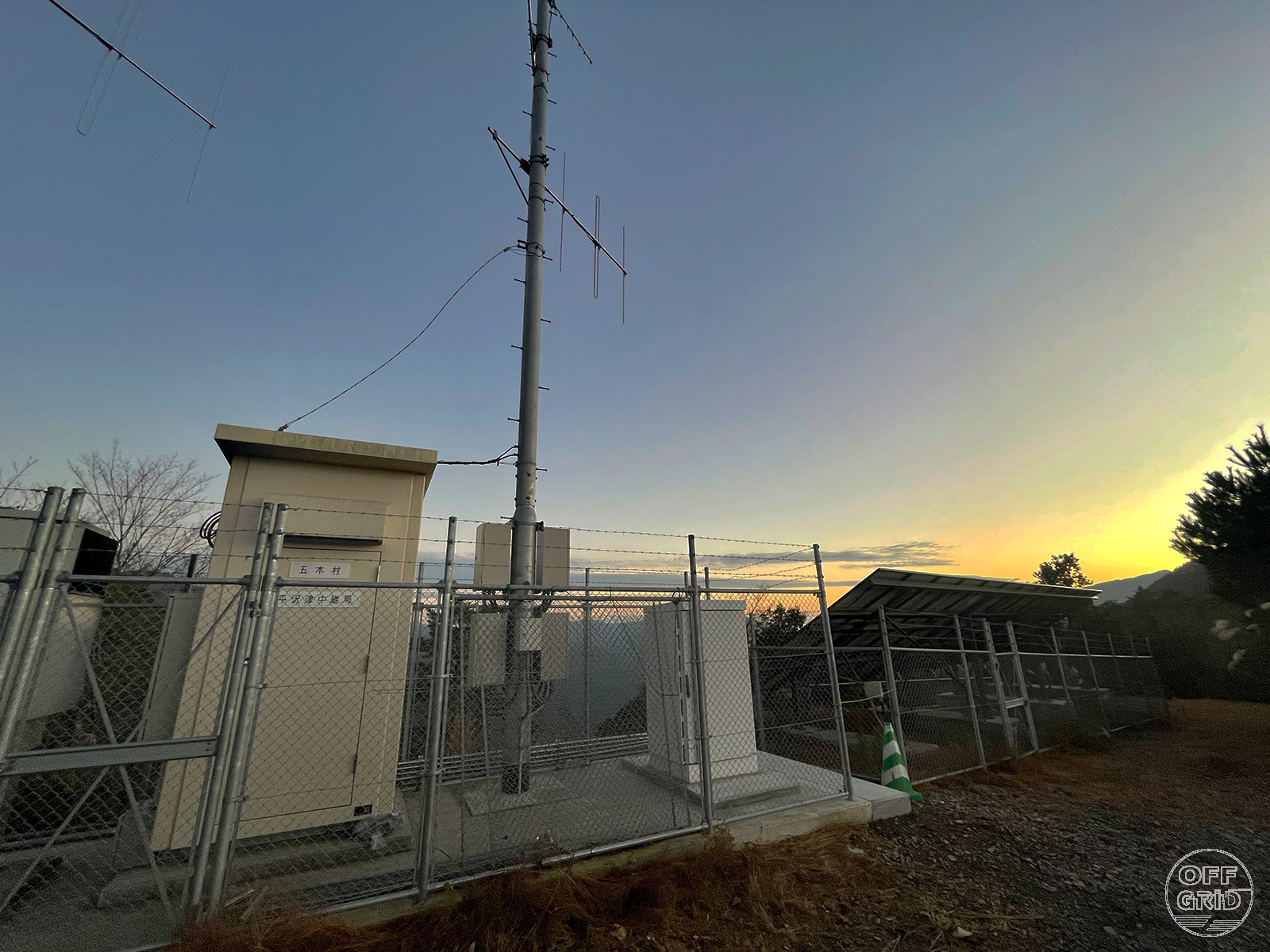
Immediately after installation was completed on June 20, 2020, a heavy-rain disaster caused road closures and power outages. Continued operation under those conditions directly demonstrated the value of the design intended not to stop.
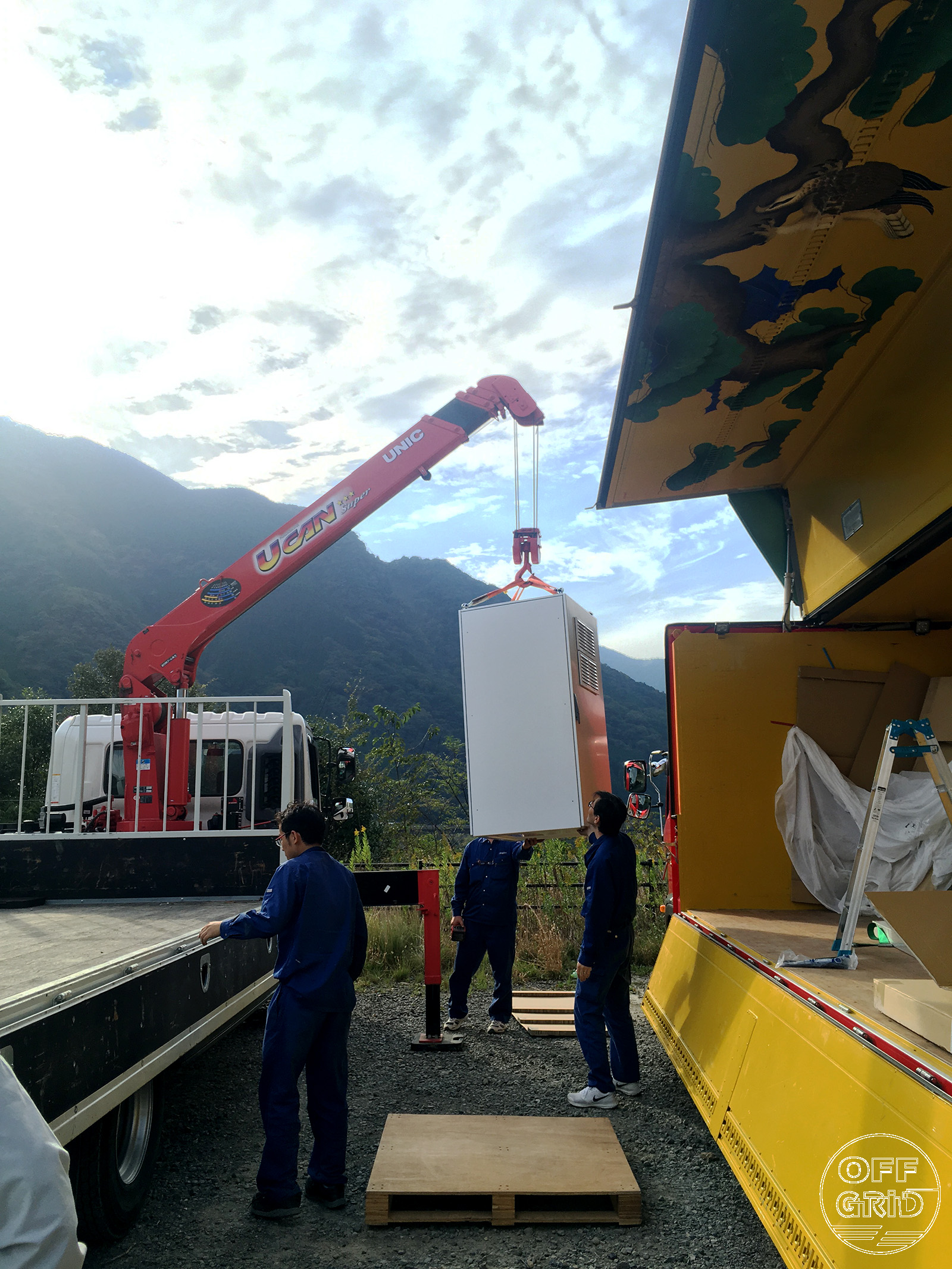
- Transport (logistics & preparation)
- Placement (positioning & fixing)
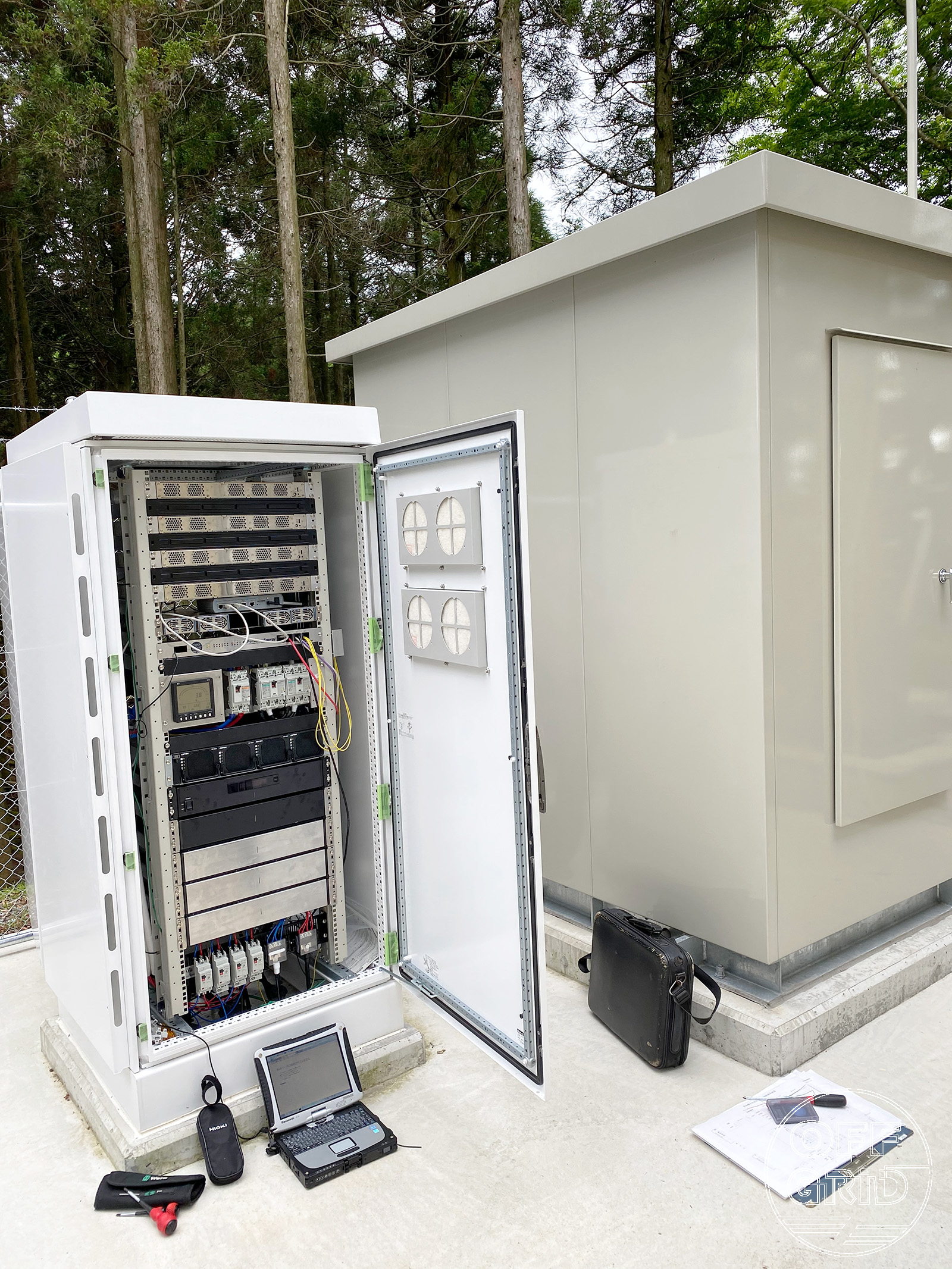
- Wiring (connections, waterproofing, grounding)
- Testing (insulation, energizing, measurement, operational checks)
- Operation (status indication & recording)
After deployment: Results in resilience and local autonomy
Using solar as the primary source eliminates the electricity charges that were previously required. This changes the operating-cost structure and improves continuity.
Even when roads or transmission lines are cut, power remains available and the disaster radio station continues operating.
Rather than stopping together with a large centralized system, resilience is built by stacking autonomous redundancy in smaller units— a concrete implementation of distributed infrastructure.
- Limits of centralization: Convenience can also mean “stop everything when cut off.”
- Technology that restores local agency: Not just cost-cutting—enabling communities to sustain their own safety
- Stronger local autonomy: Keeping communications available directly supports safety checks and rescue operations
Revision History
| 2026-02-01 | Published. |
|---|---|
| 2026-09-25 | Added system-configuration details including 11.1kW solar generation equipment and hot-swappable inverters. Reorganized the Case Answer, Scope, and Constraints to synchronize the English version with the Japanese canonical page. |