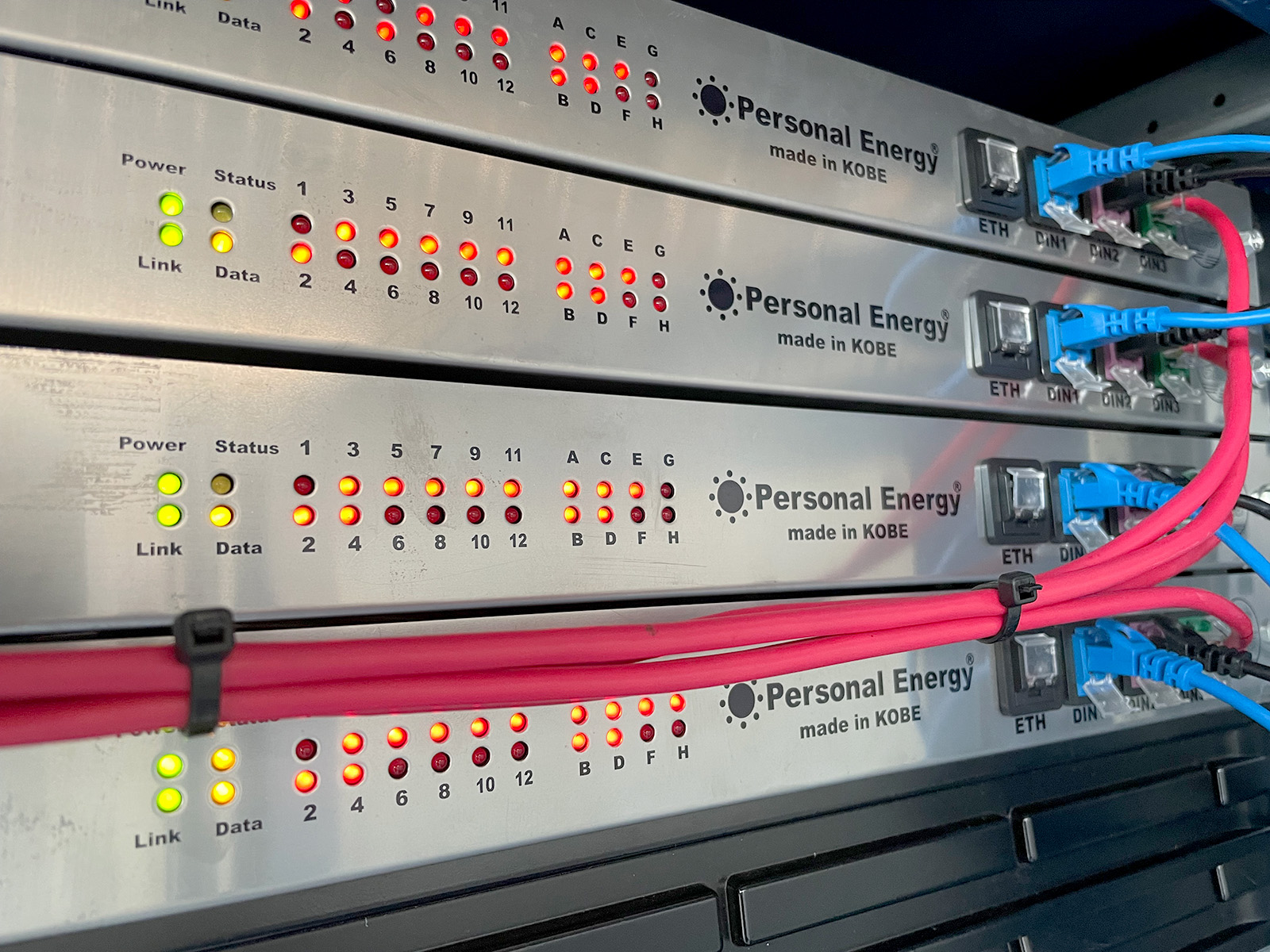
“Nothing happening” became normal
Power is rarely discussed at Taiho Bosai’s headquarters. Employees do not think about outages or switching procedures; they simply continue their work.
The absence of incidents is the result of a design that avoids forcing the system or its users to perform exceptional actions, combined with continuous field improvement.
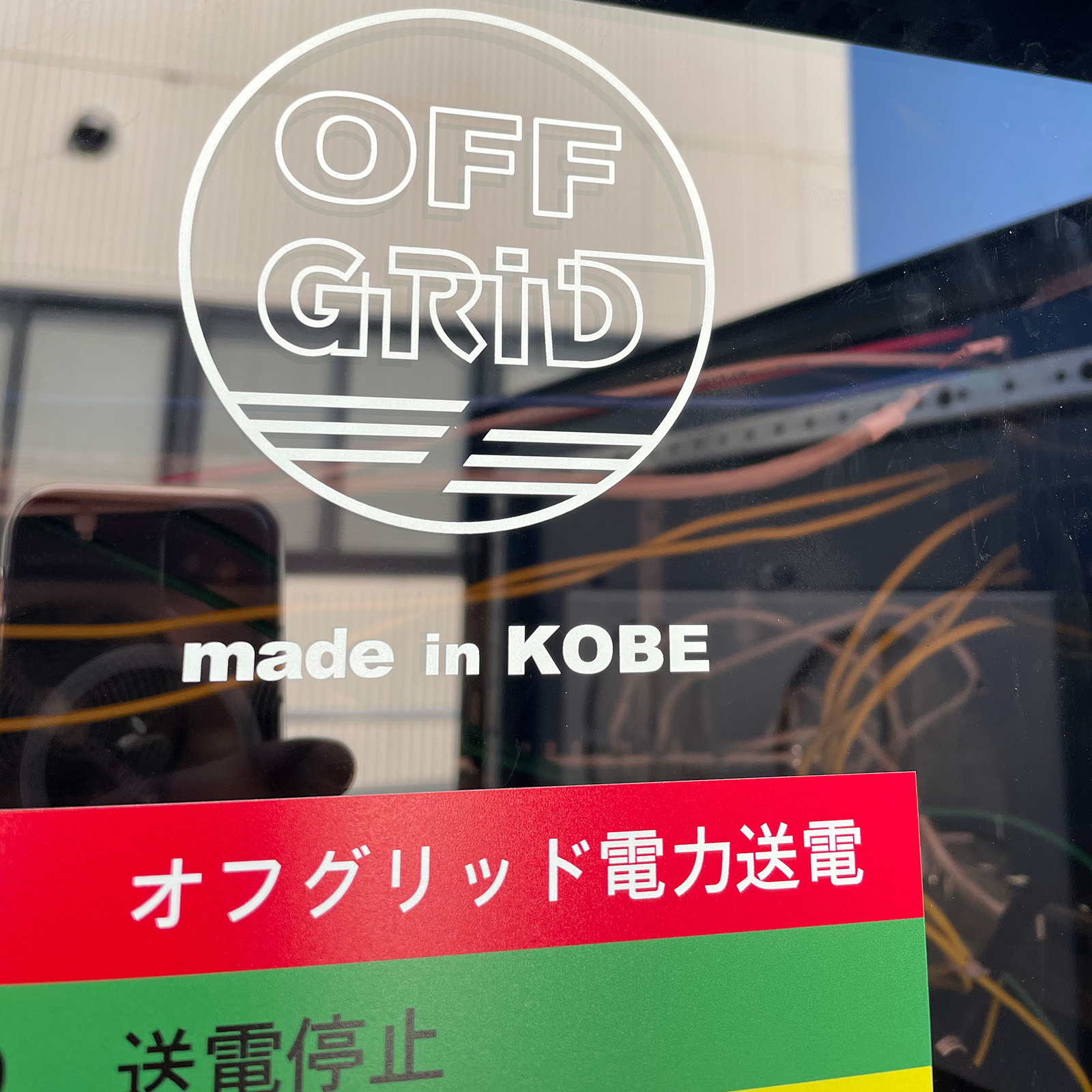
The operating principle is not to touch the system
The most important operating rule is to minimize human intervention. Staff should not have to observe conditions, make decisions, and switch power sources during an emergency.
The project prioritized reducing operational procedures before increasing equipment strength. When that order is maintained, power becomes part of the background rather than a special management task.
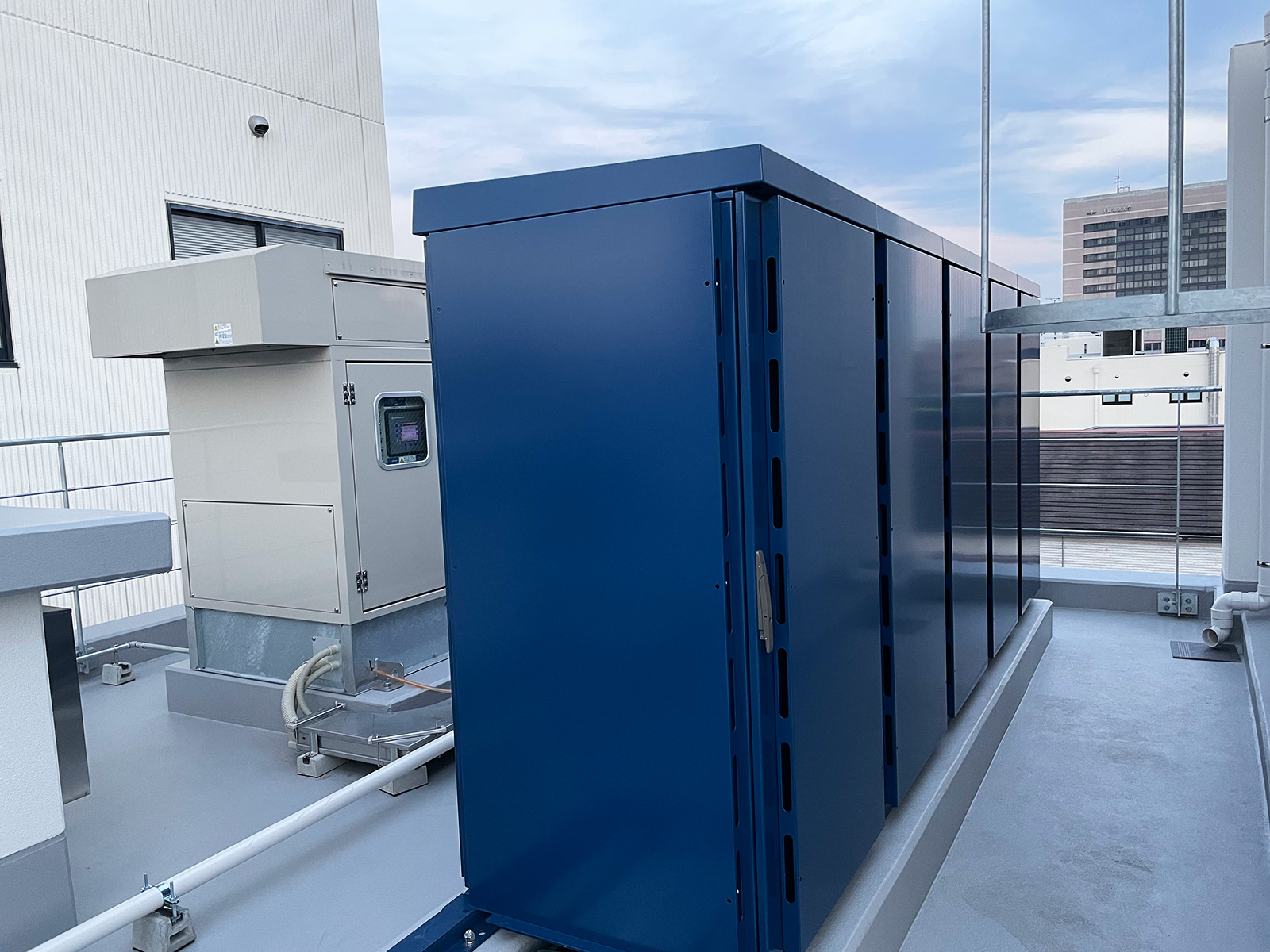
Countermeasures should remain invisible
The rooftop system faced dust, high humidity, temperatures around 50°C, and lightning exposure. Actual lightning-related failures also occurred.
The response included improved cooling, IP65-equivalent sealing, replacement of consumable parts, and stronger lightning protection. These measures were implemented without adding work for employees.
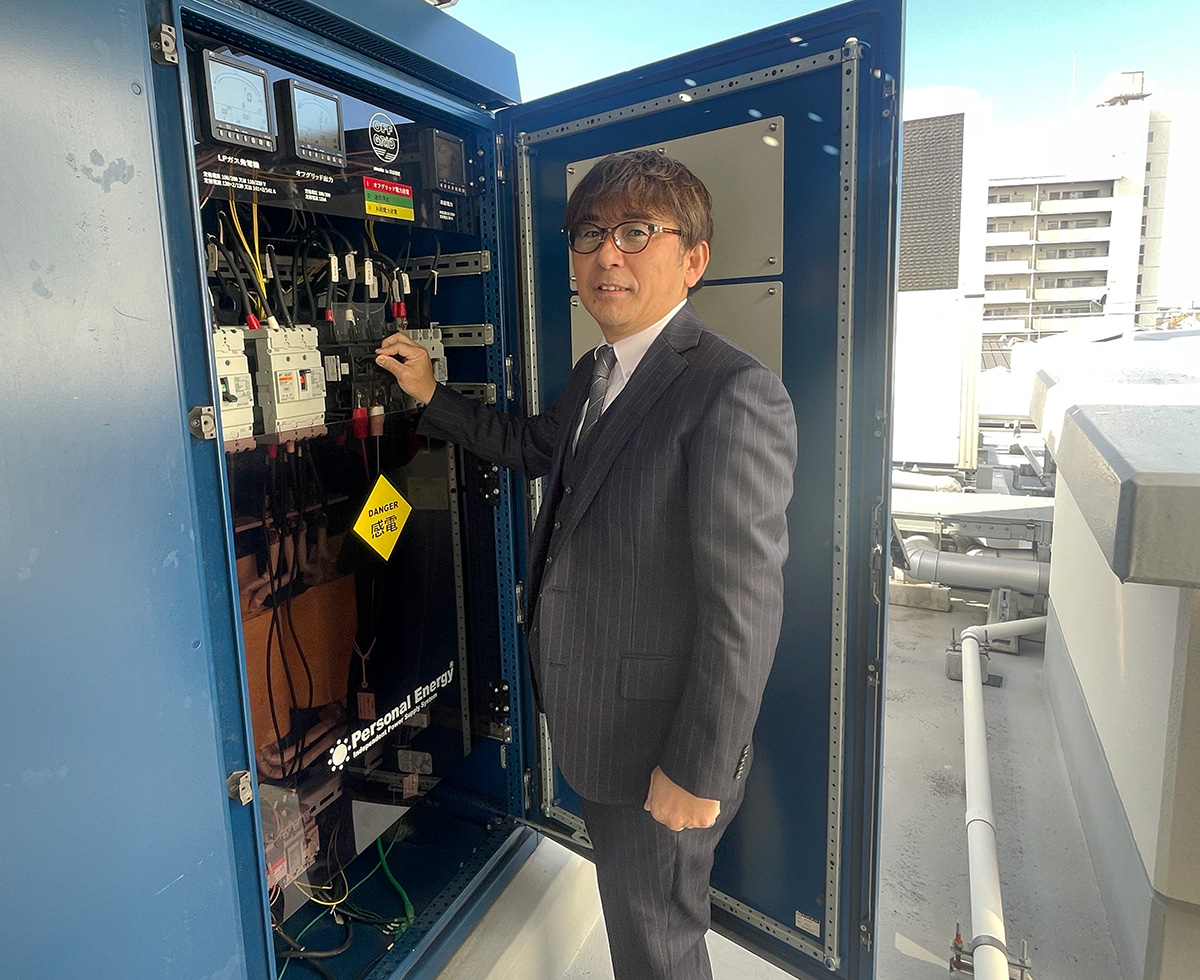
Power became part of the environment
Power is no longer treated as a special system. Like lighting and air conditioning, it is simply part of the building environment.
This was possible because the design left room for practical improvement without imposing excessive work on the field team.
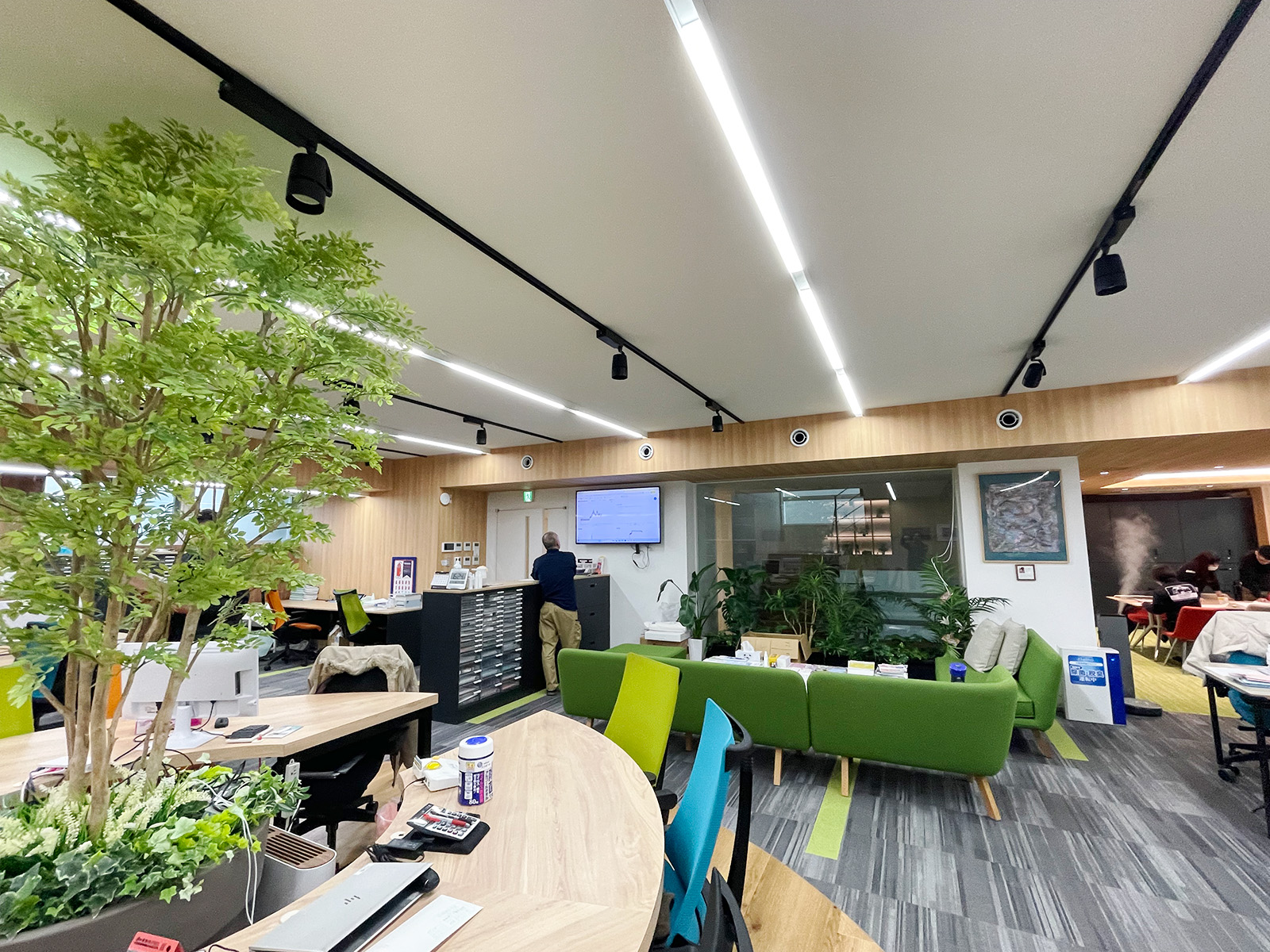
Business continues normally during an external outage
Even if external infrastructure fails, internal workflows do not change. Employees continue working as usual.
Avoiding additional emergency procedures is itself a form of resilience. Power performance depends not only on output capacity, but also on operational simplicity.
What this case demonstrates
This case is not about a showpiece technology. It is about reducing employee burden, listening to field feedback, and continuing to update the system as conditions change.
It also shows what an RFP should ask before equipment specifications are compared.
Why we chose not to use high-voltage service
A conventional design would have made high-voltage service an obvious choice. Taiho Bosai instead asked a different question: Could the building reduce electricity use in the future?
High-voltage service fixes not only equipment capacity, but also contracts, inspections, and operating costs. Once adopted, reducing or simplifying the system later becomes difficult.
The contractor initially proposed electric heat-pump air conditioning. The client instead wanted a low-voltage configuration that could be supplied through lighting service alone.
The load was therefore separated into seasonal and base components. Air conditioning was shifted to GHP, the electrical system was capped at 25 kW, and normal demand was designed around approximately 12–13 kW.
Solar panels supply the base load, with LPG generation covering shortages. Rooftop solar work was completed after handover using a method that did not damage the waterproofing layer.
The criterion was not today’s maximum efficiency, but future operating freedom. The receiving method determines the long-term cost and operating structure of the building.
How we would write the RFP today
Before listing equipment specifications, the RFP should define the operating assumptions that determine the design.
- Could the building reduce electricity use in the future?
- Should seasonal loads and base loads be designed separately?
- Should the receiving method be based on the absolute maximum, or on a justified demand cap?
- Who is responsible for selecting the receiving method and defining the boundary between building, equipment, and owner work?
- Are dust, humidity, heat, and lightning written into the design conditions?
- Who must continue which functions during abnormal conditions, and under what operating rules?
When these questions are included, evaluation naturally shifts from initial cost and maximum specification toward lifetime cost and operating flexibility.
Revision History
| 2026-01-17 | Published. |
|---|---|
| 2026-09-25 | English edition synchronized with the Japanese V9.1 source, including low-voltage service, GHP, the 25 kW cap, the typical 12–13 kW load design and the RFP decision criteria. |