How Do We Maintain Bridges for More Than 200 Years?
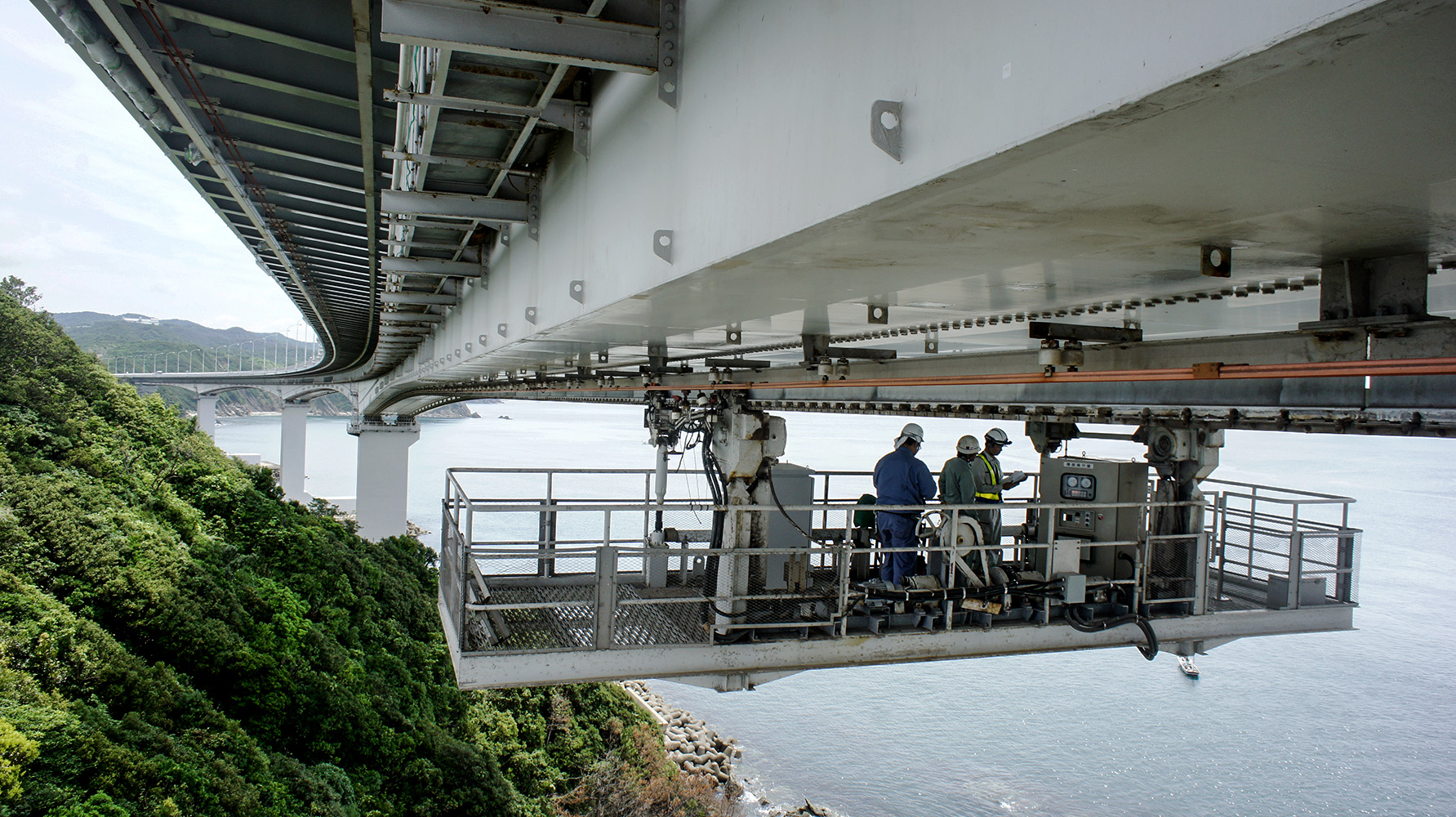
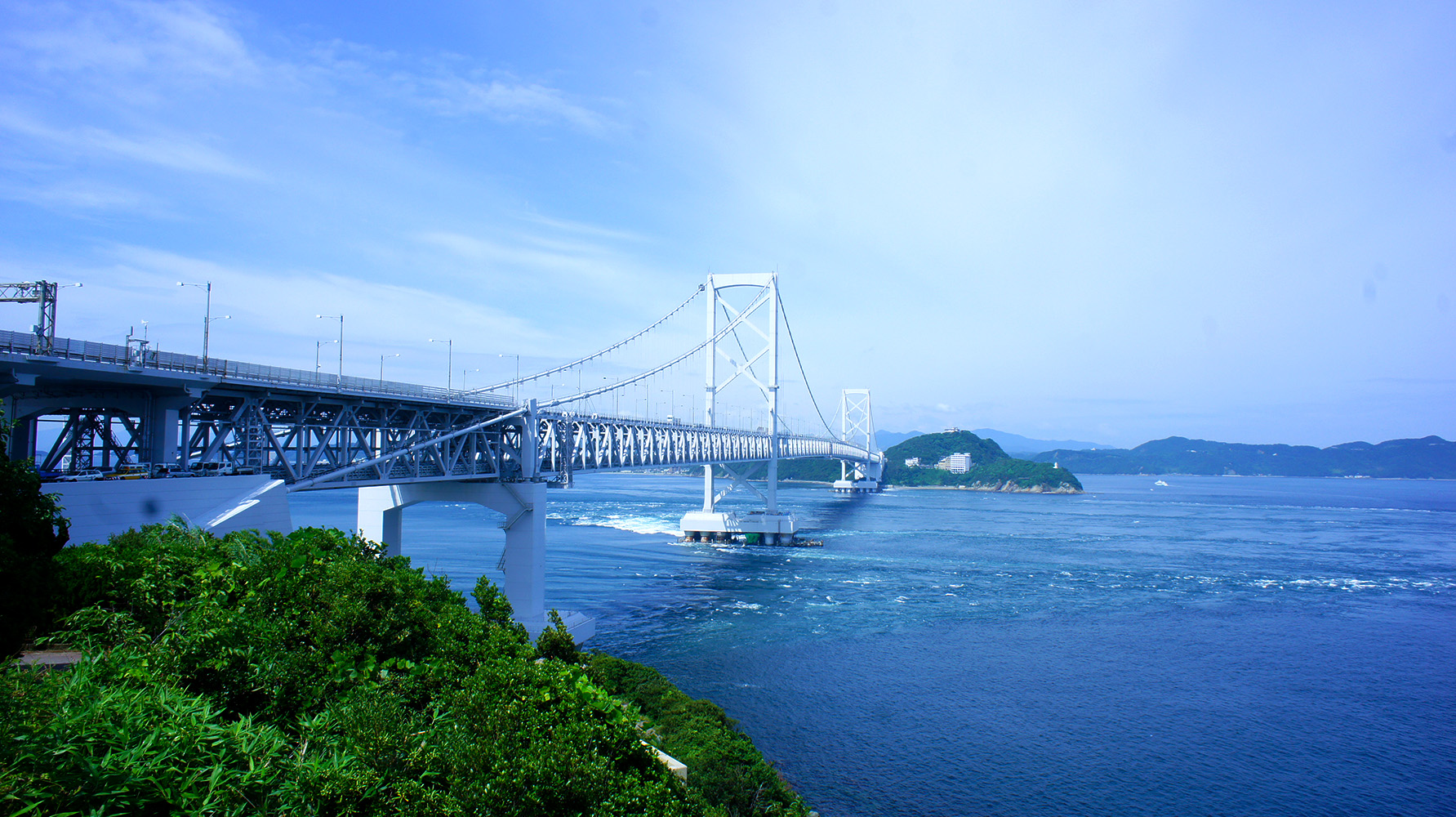
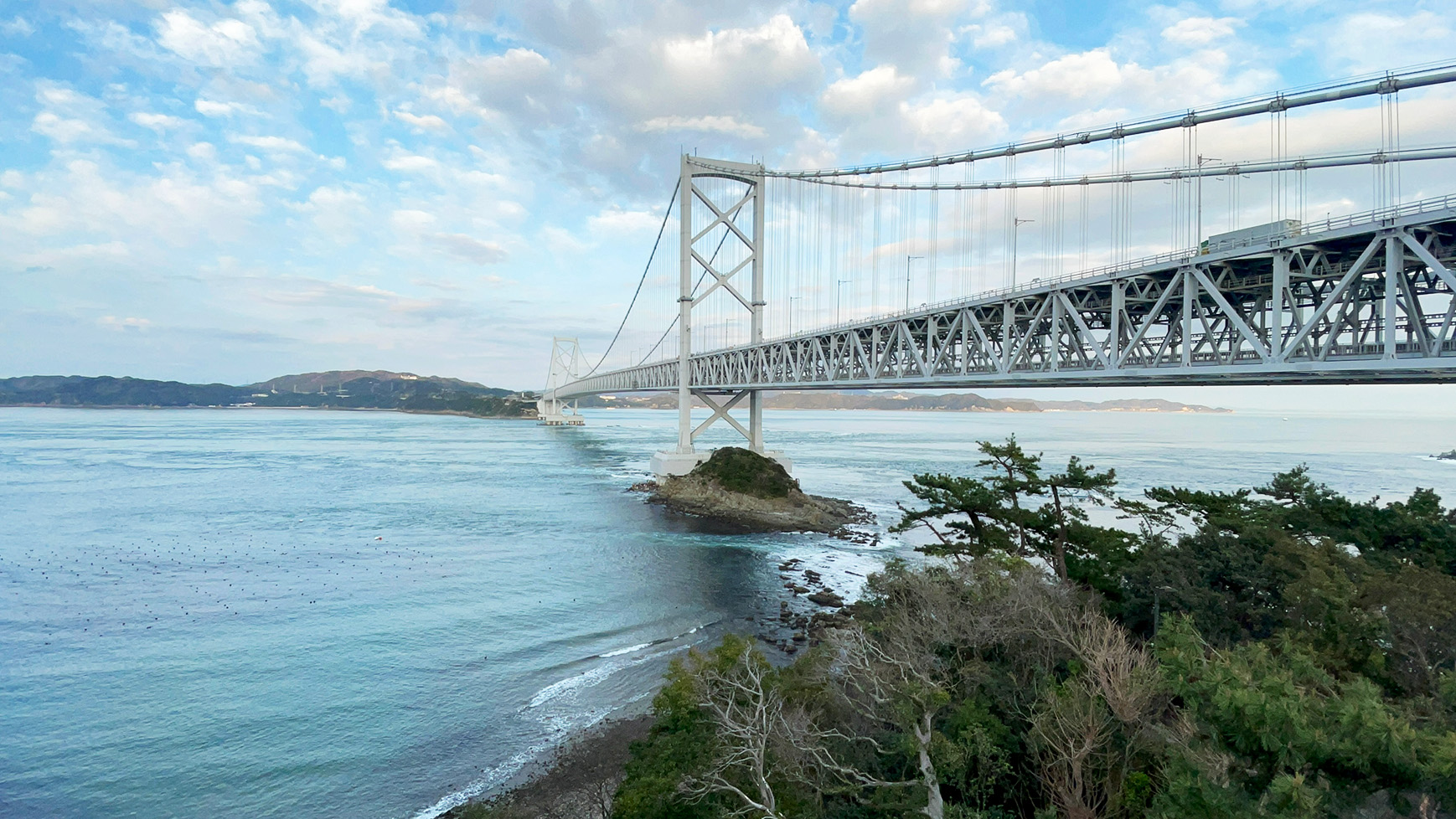
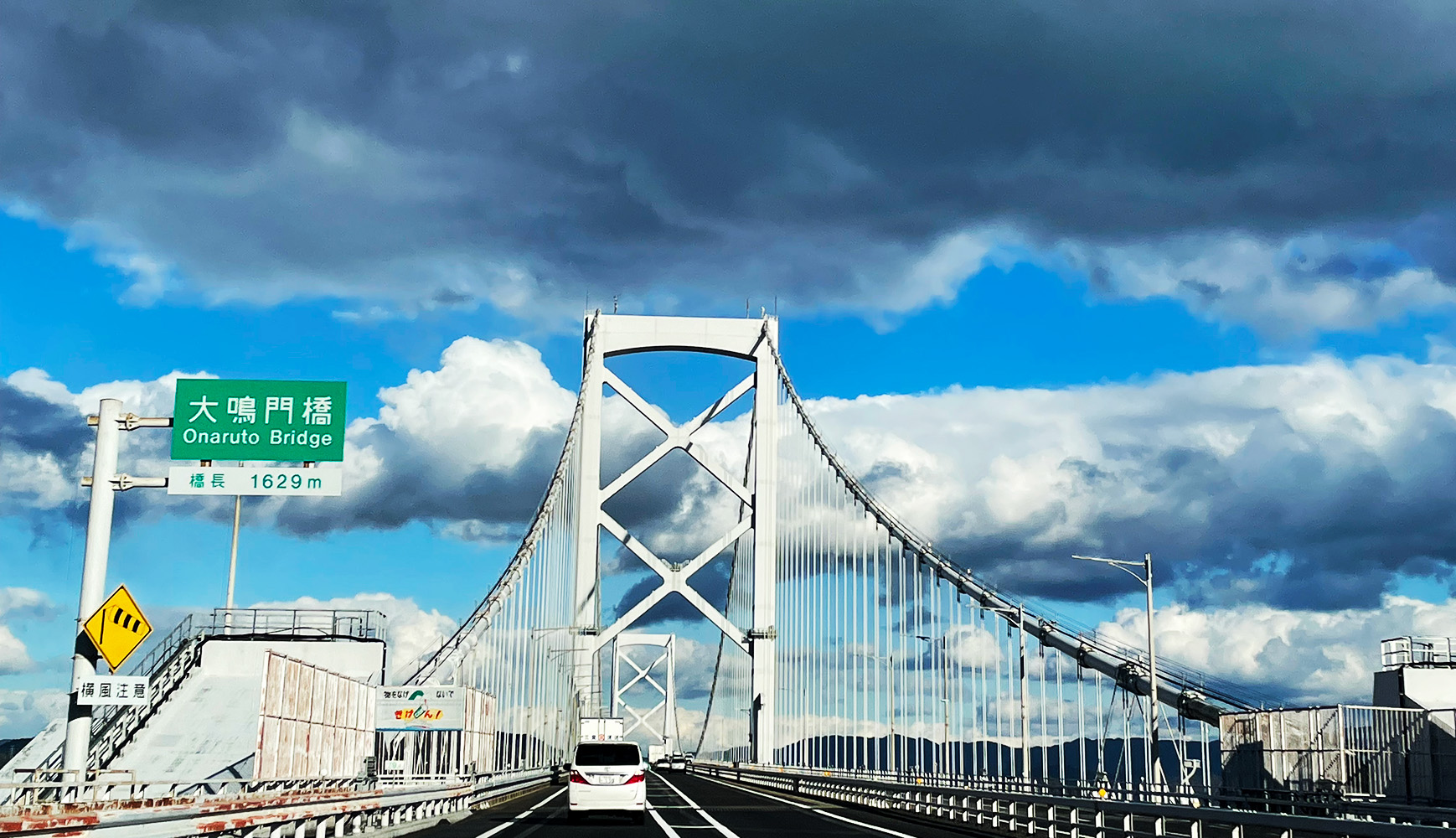
The Honshu-Shikoku bridges are vital transport infrastructure linking Honshu and Shikoku, and massive structures maintained under demanding conditions including exposure over the sea, work at height, strong winds and salt damage.
Keeping a long-span bridge in service for decades requires more than a durable bridge structure. The equipment used for inspection, repair, monitoring and control must also be maintainable safely and economically over the long term.
Honshu-Shikoku Bridge Expressway Company is pursuing longer structural life and lower lifecycle costs under its goal of 200-year bridges. Power for maintenance equipment must be designed within the same long-term operating philosophy.
Specialized Platforms Supporting Long-Span Bridge Maintenance
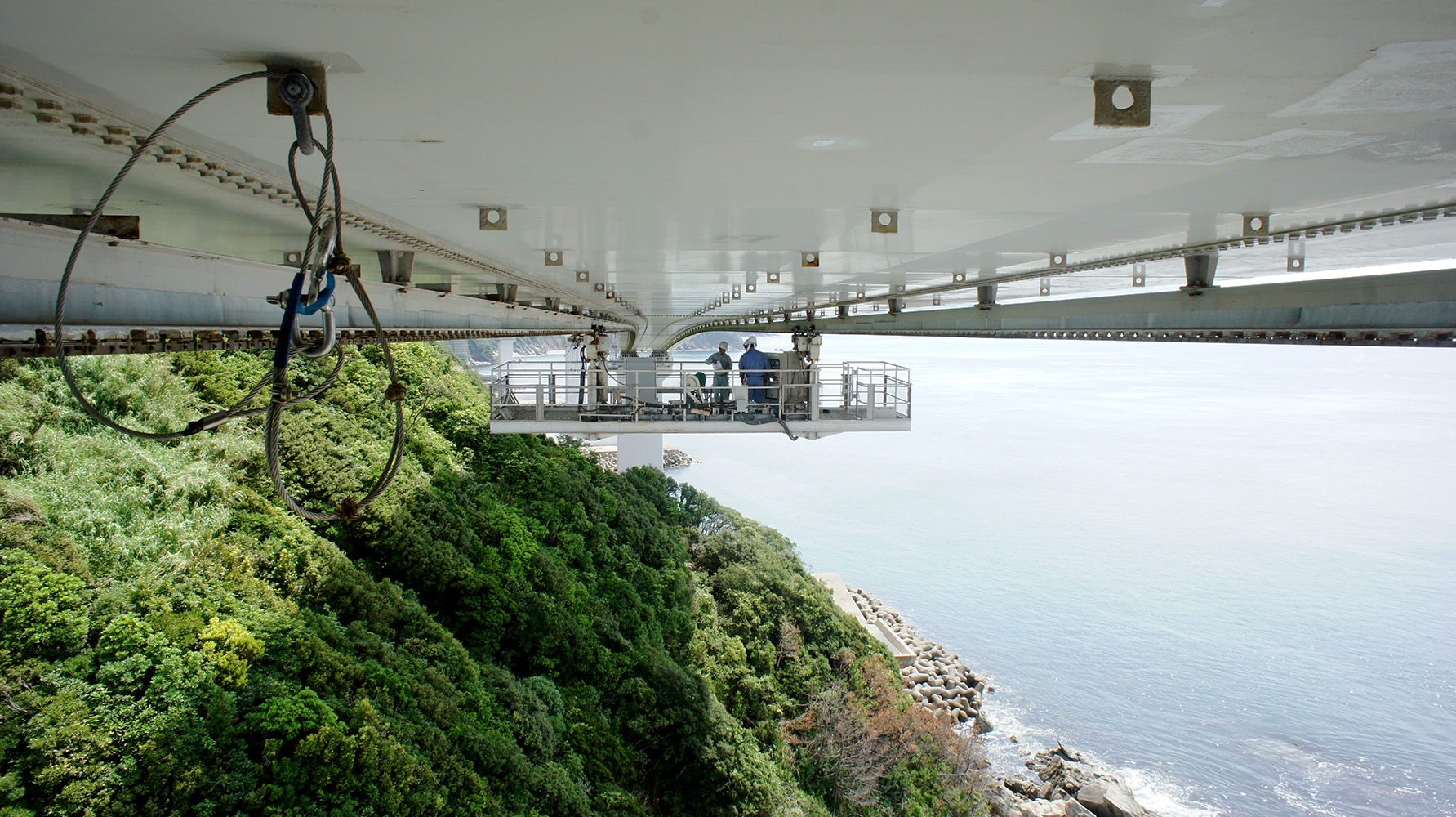
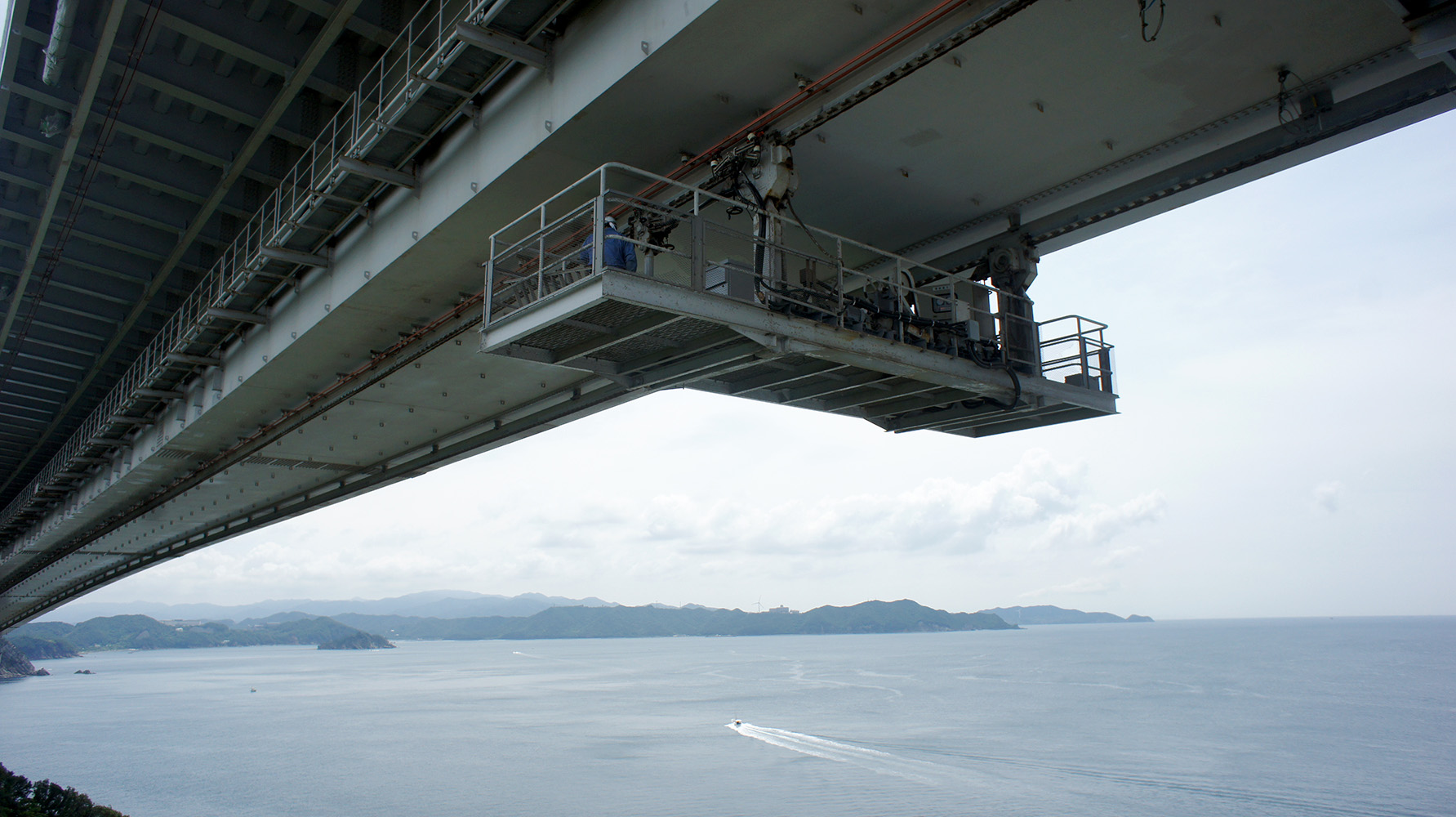
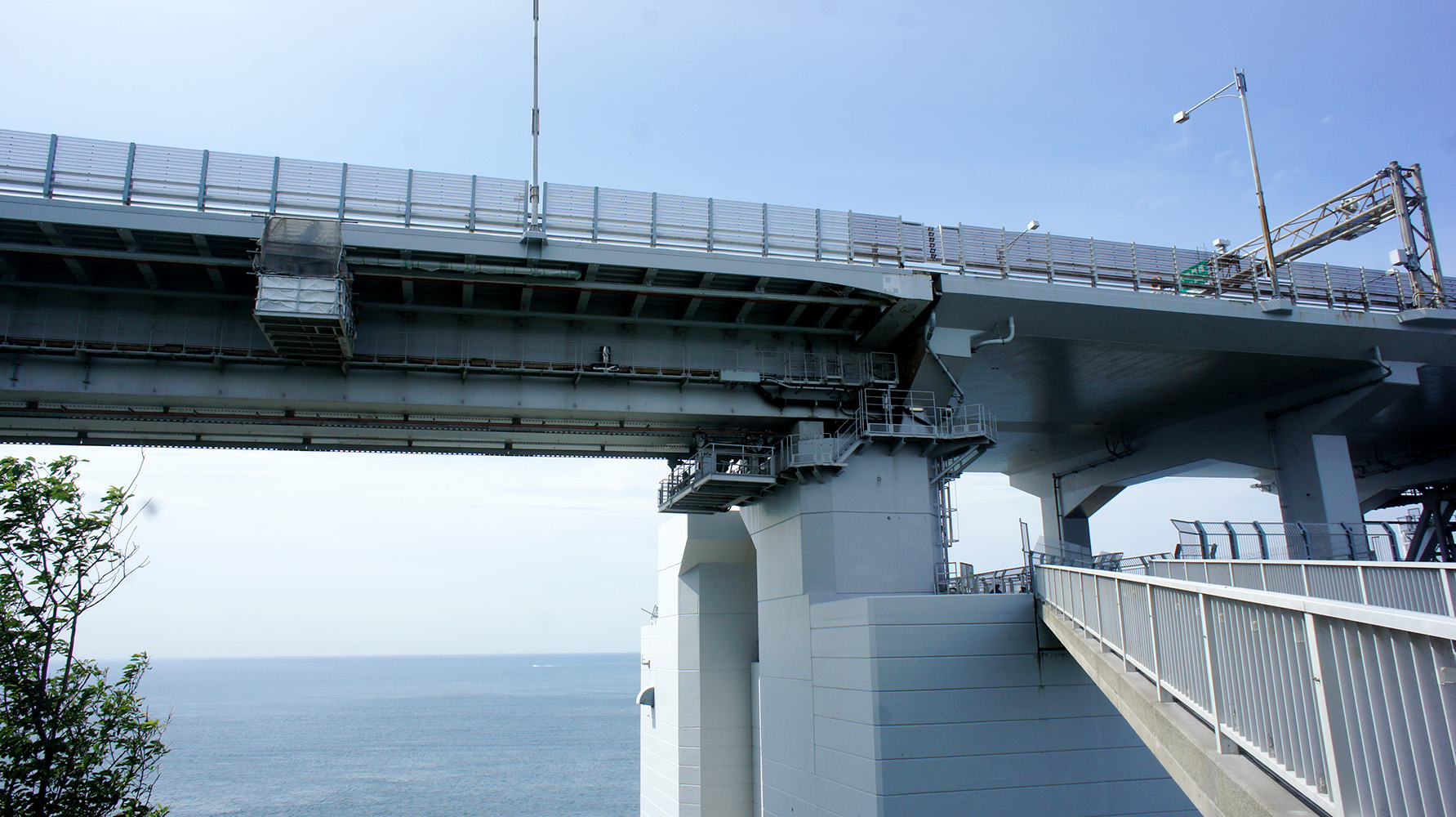
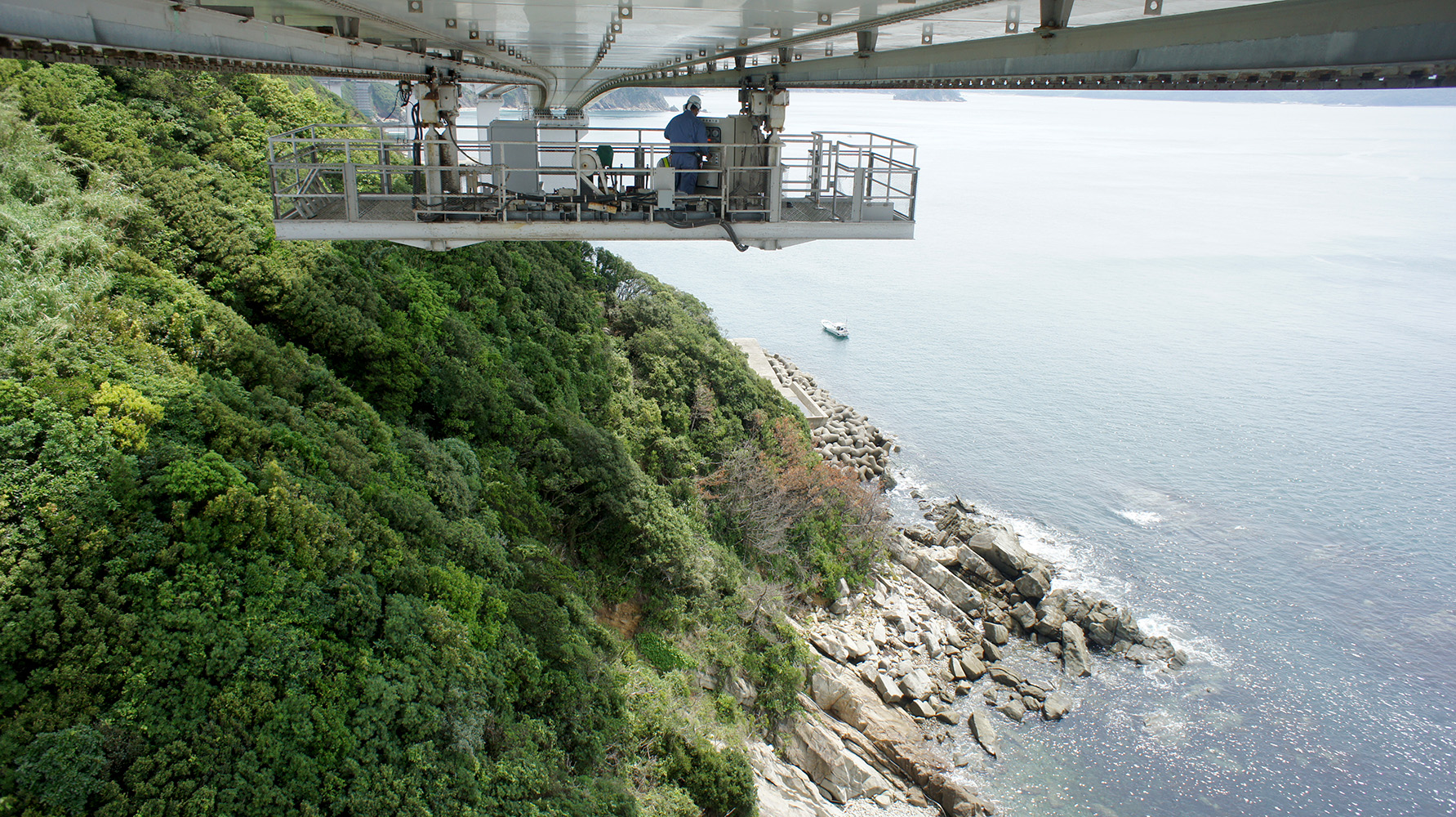
The Honshu-Shikoku bridges use several types of specialized maintenance platforms according to bridge structure and inspection location, including exterior-girder platforms, interior-girder platforms, tower platforms and cable platforms.
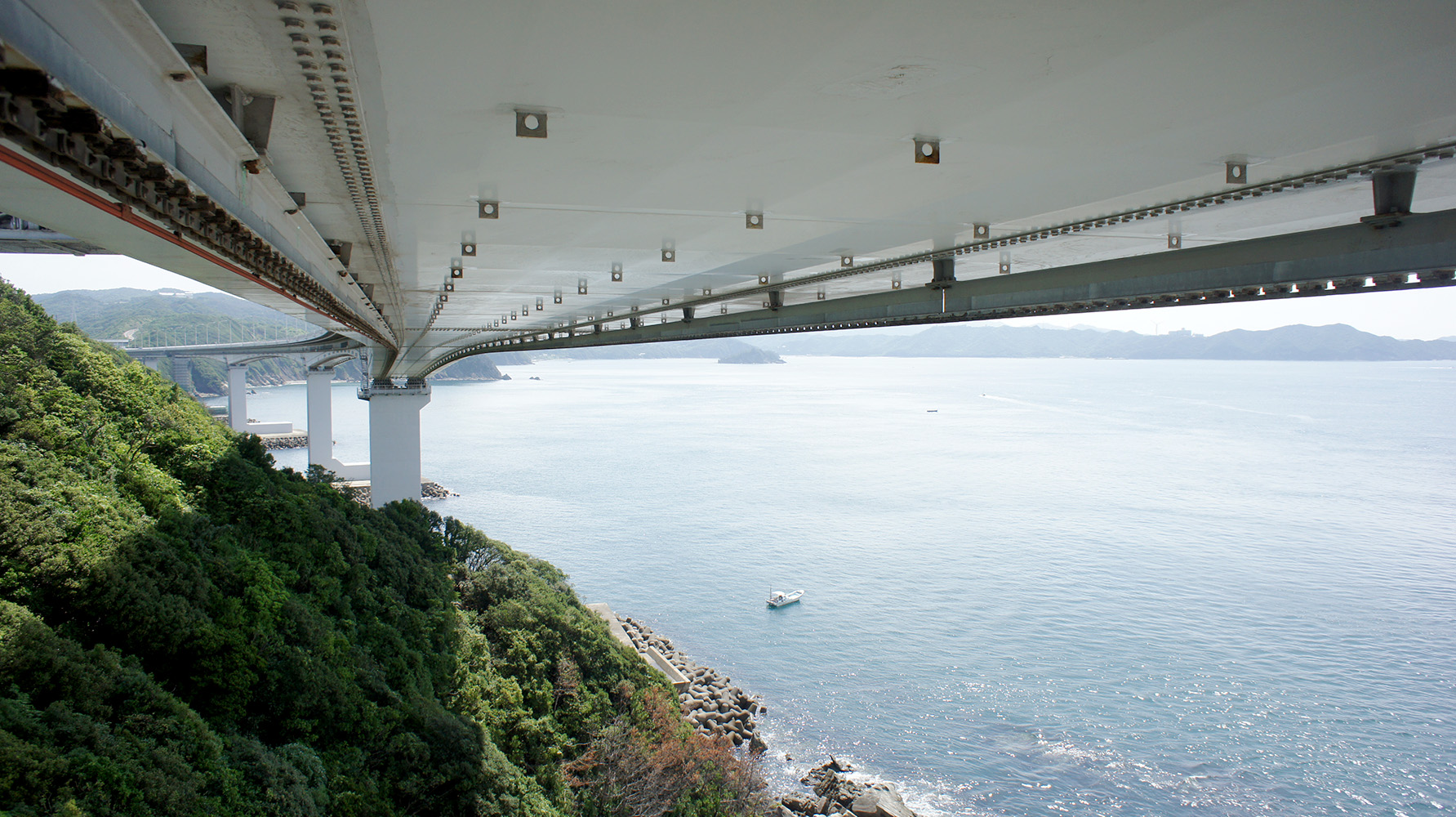
These platforms carry workers and equipment to areas that are difficult to reach with conventional scaffolding, including beneath and inside girders, bridge sides, main towers and cable zones.
The safety and efficiency of bridge maintenance depend on reliable operation of these platforms. Their power source is not merely an accessory; it is infrastructure that makes the maintenance work possible.
The Problem Was Not the Platform, but the Power-Supply Infrastructure
Operating a mobile maintenance platform requires power for traction motors and work equipment. Traditionally, the platform received power from trolley wires installed along the bridge.
- Salt-laden wind and salt deposits
- High humidity, rainwater and temperature changes
- Bridge vibration and wear of current-collection components
- Inspection and replacement of long-distance wiring
- Repair and rewiring work at height
If the trolley-wire system deteriorates before the maintenance platform itself, additional inspection and maintenance are required merely to keep the bridge-inspection equipment operational.
Fixed power equipment
    ↓
Trolley wires on the bridge
    ↓
Current collector
    ↓
Mobile maintenance platform
    ↓
Traction motors and work equipment
From Fixed Power to Power That Moves with the Platform
Personal Energy was adopted to reduce the maintenance burden of trolley-wire infrastructure.
Instead of continuously receiving power from fixed supply equipment, the platform carries its own energy storage and power-conversion functions. It charges from an external source and operates independently on stored energy while moving or performing work.
This is a mobile power system combining on-grid charging with off-grid operation. Its purpose is not simply to carry batteries, but to reduce the extensive fixed power-supply infrastructure previously installed along the bridge.
Utility power and charging equipment
        ↓
Personal Energy
        ↓
Energy storage and power conversion
        ↓
Mobile maintenance platform
        ↓
Traction motors and work equipment
The power source moves to where it is needed, reducing dependence on long trolley-wire runs and current-collection components.
Reducing permanently installed electrical equipment on the bridge limits the assets requiring inspection and replacement.
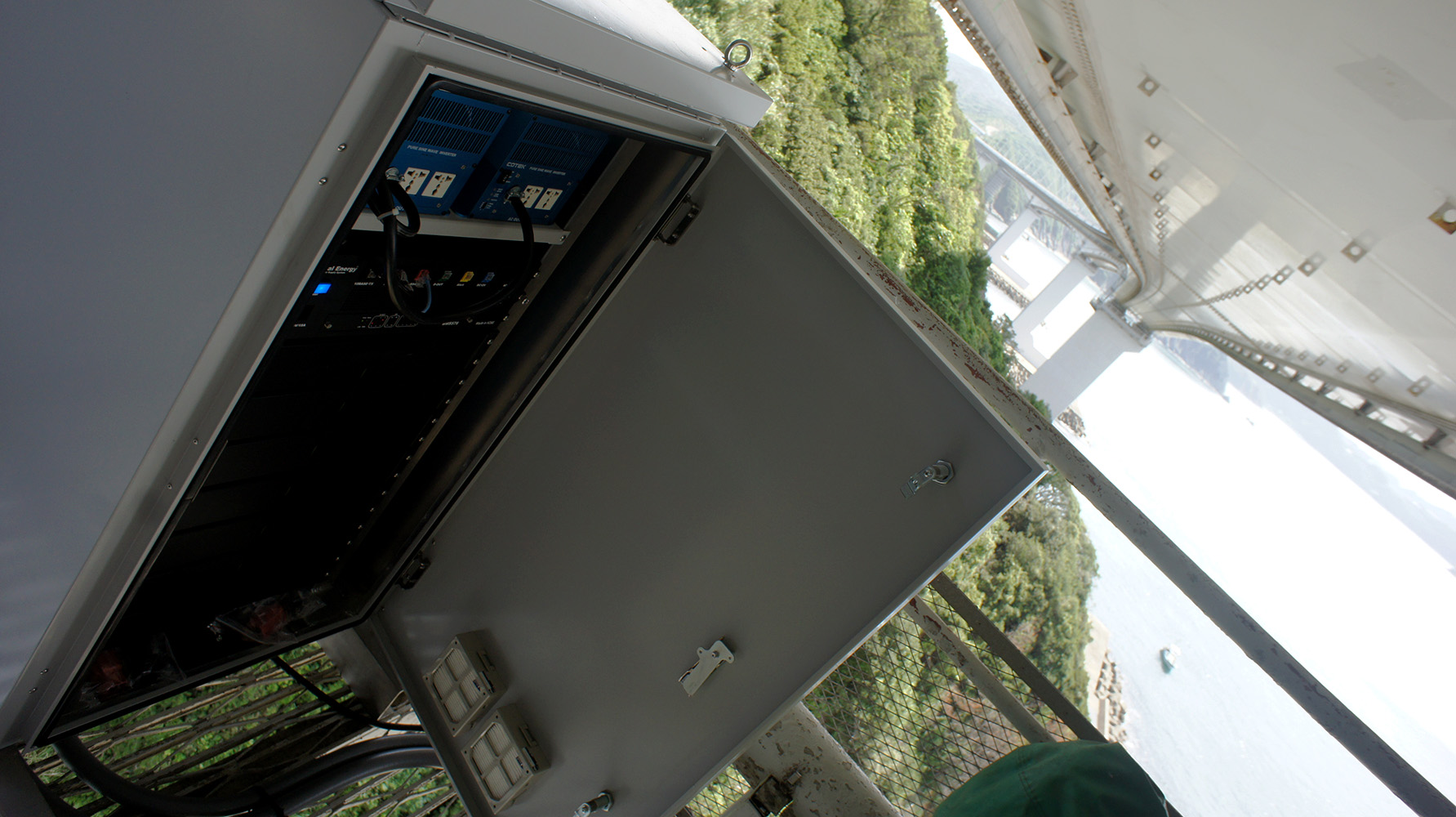
Eleven Salt-Resistant Units Delivered in 2014
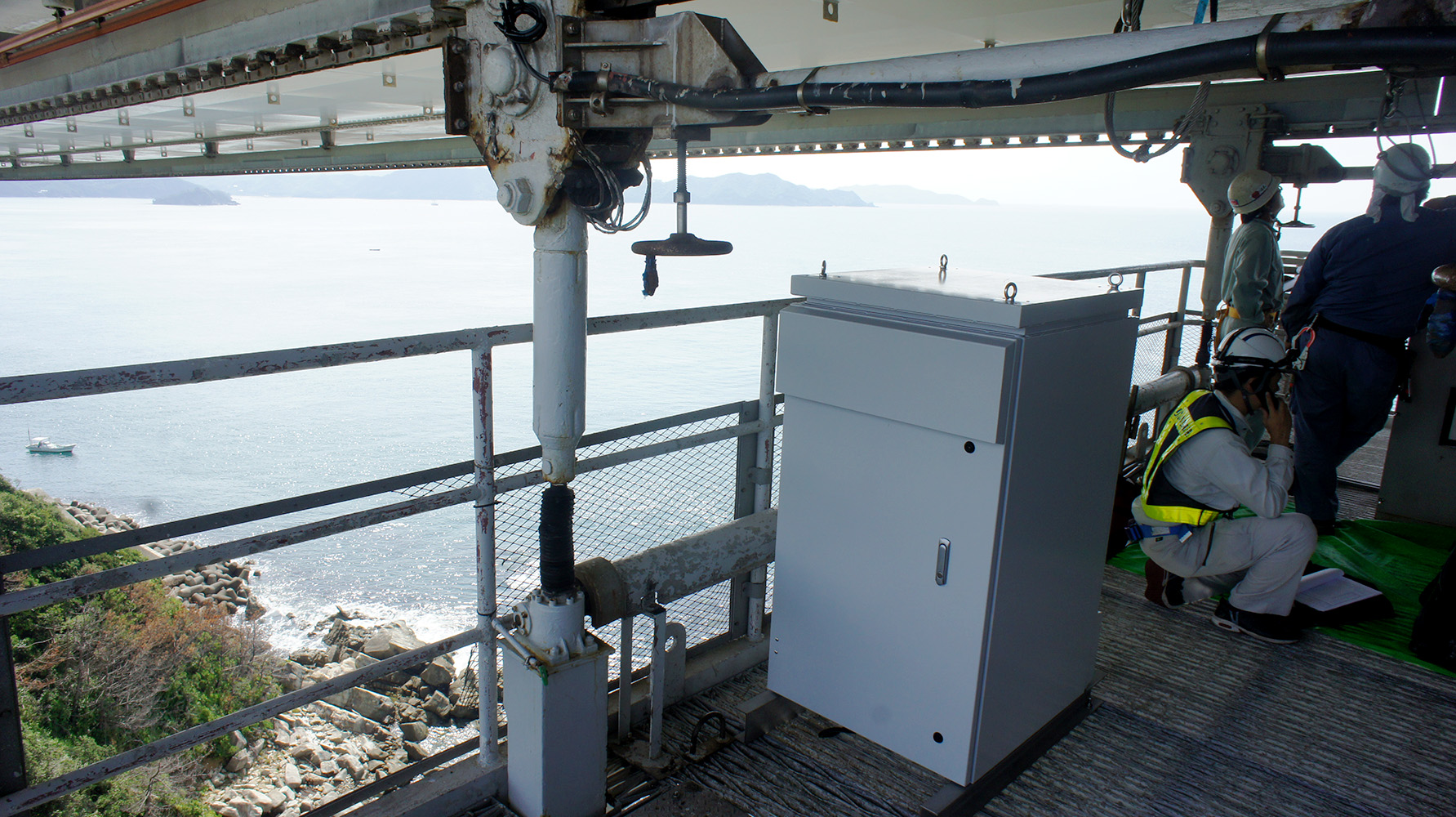
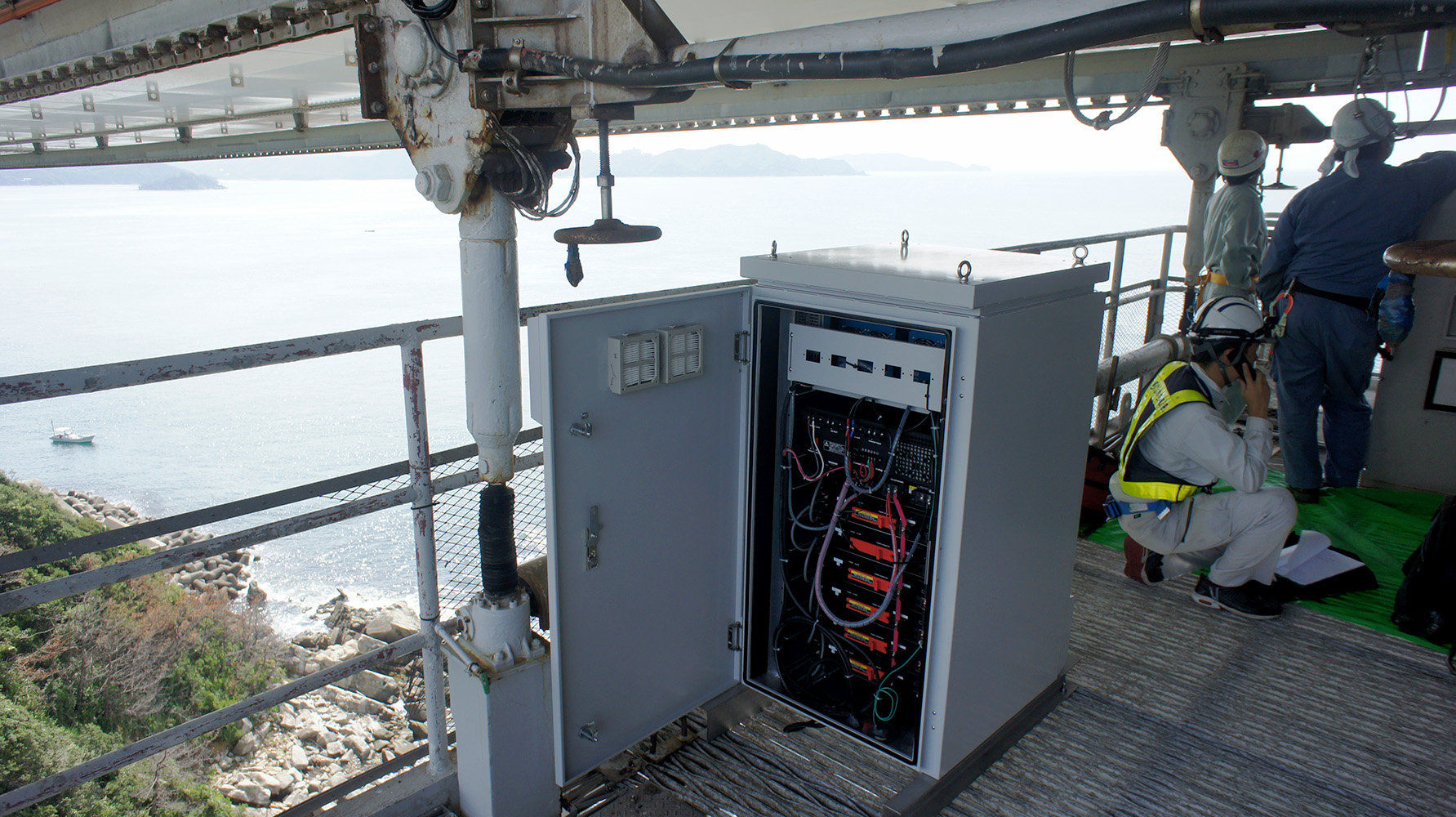
In 2014, a total of 11 Personal Energy units, including units delivered the previous year, were supplied for Honshu-Shikoku Bridge Expressway Company. They serve as inverter power sources for mobile maintenance platforms in place of trolley-wire power.
| Product | Output | Storage capacity | Units | Specification |
|---|---|---|---|---|
| Personal Energy | 2kW / 200V | 7.2kWh | 3 | IP65 salt-resistant specification |
| Personal Energy | 3kW / 200V | 4.8kWh | 8 | IP65 salt-resistant specification |
- Suitable for marine conditions and salt exposure
- Capable of installation on a maintenance platform
- Able to operate independently through repeated charge-discharge cycles
- Able to supply 200 V loads
- Suitable for long-term continuous service
- Able to reduce maintenance frequency
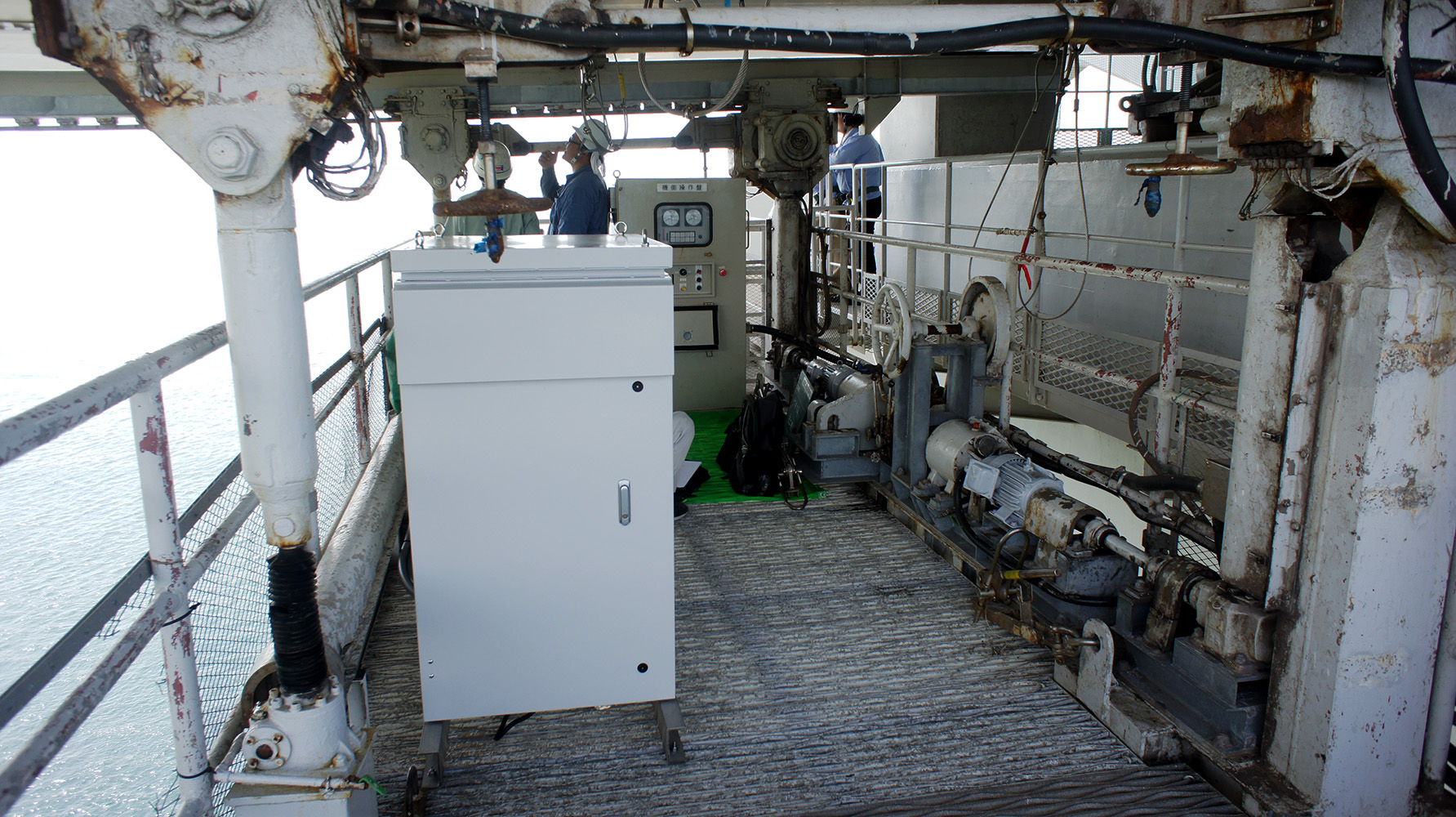
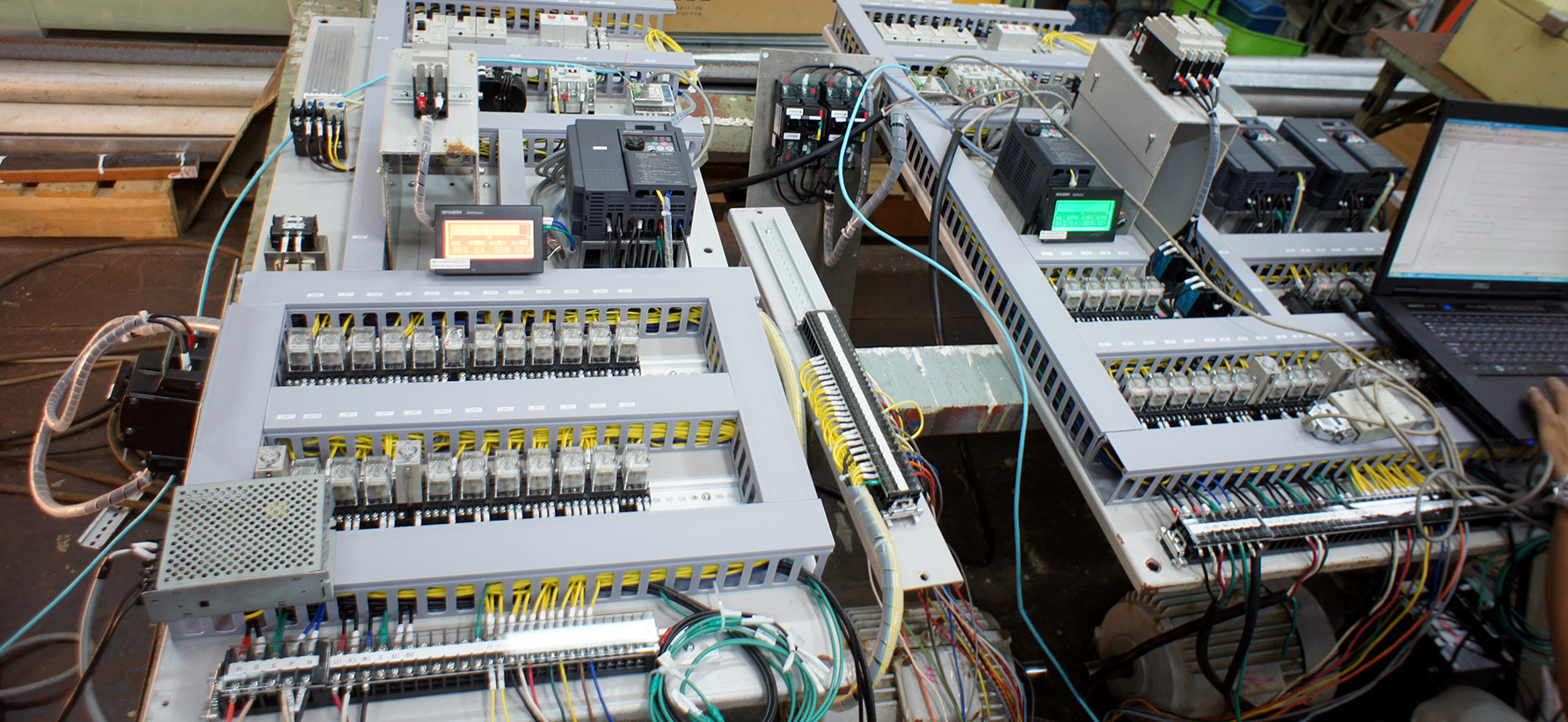
Durability Required in a Harsh Environment
Power equipment on a bridge operates under conditions very different from indoor equipment. It is simultaneously exposed to salt-laden winds, high humidity, rain, ultraviolet radiation, temperature changes, bridge vibration, platform vibration and repeated charge-discharge cycles.
In a conventional energy-storage system, durability concerns extend beyond the batteries to the enclosure, terminals, wiring, connections, inverter, charger and control equipment. Personal Energy was designed as an integrated system covering power conversion, charging, control and enclosure—not as a battery alone.
Because the equipment is exposed to marine wind, salt and rainwater, environmental protection must cover the enclosure and all connection points.
For long-term service, replaceable components and a structure that can be maintained on site directly affect equipment life.
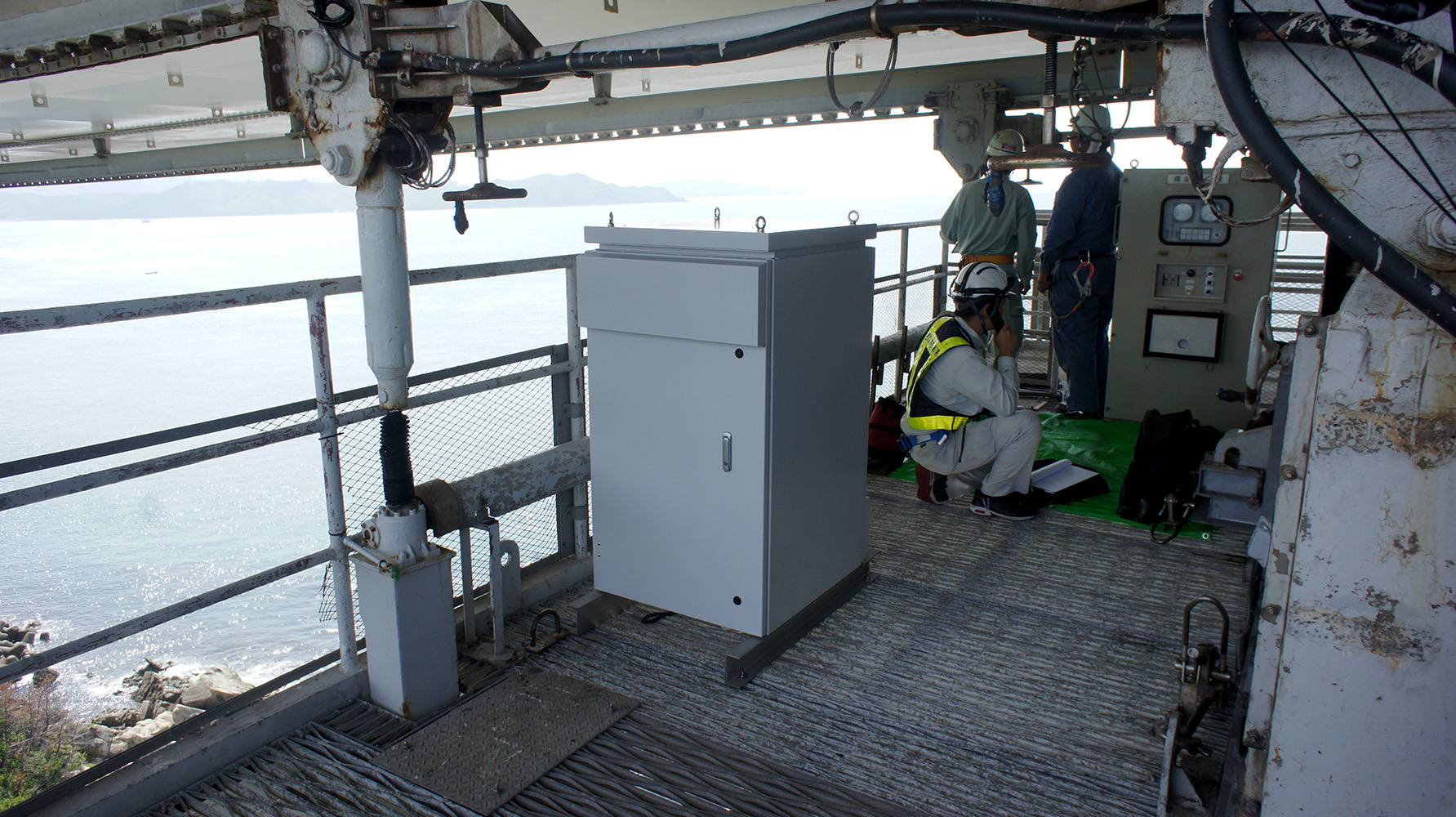
What It Means to Remain in Service After 12 Years
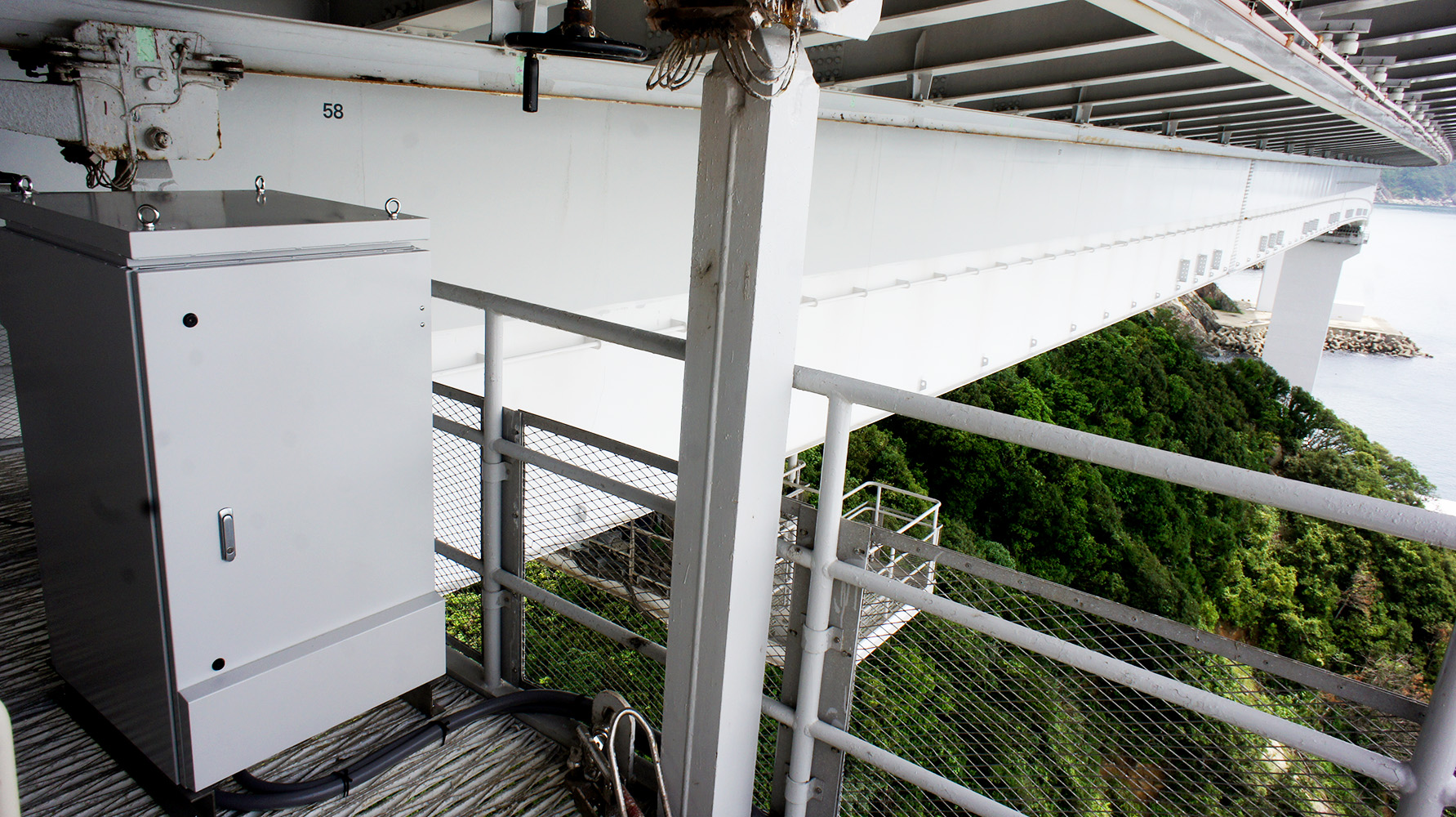
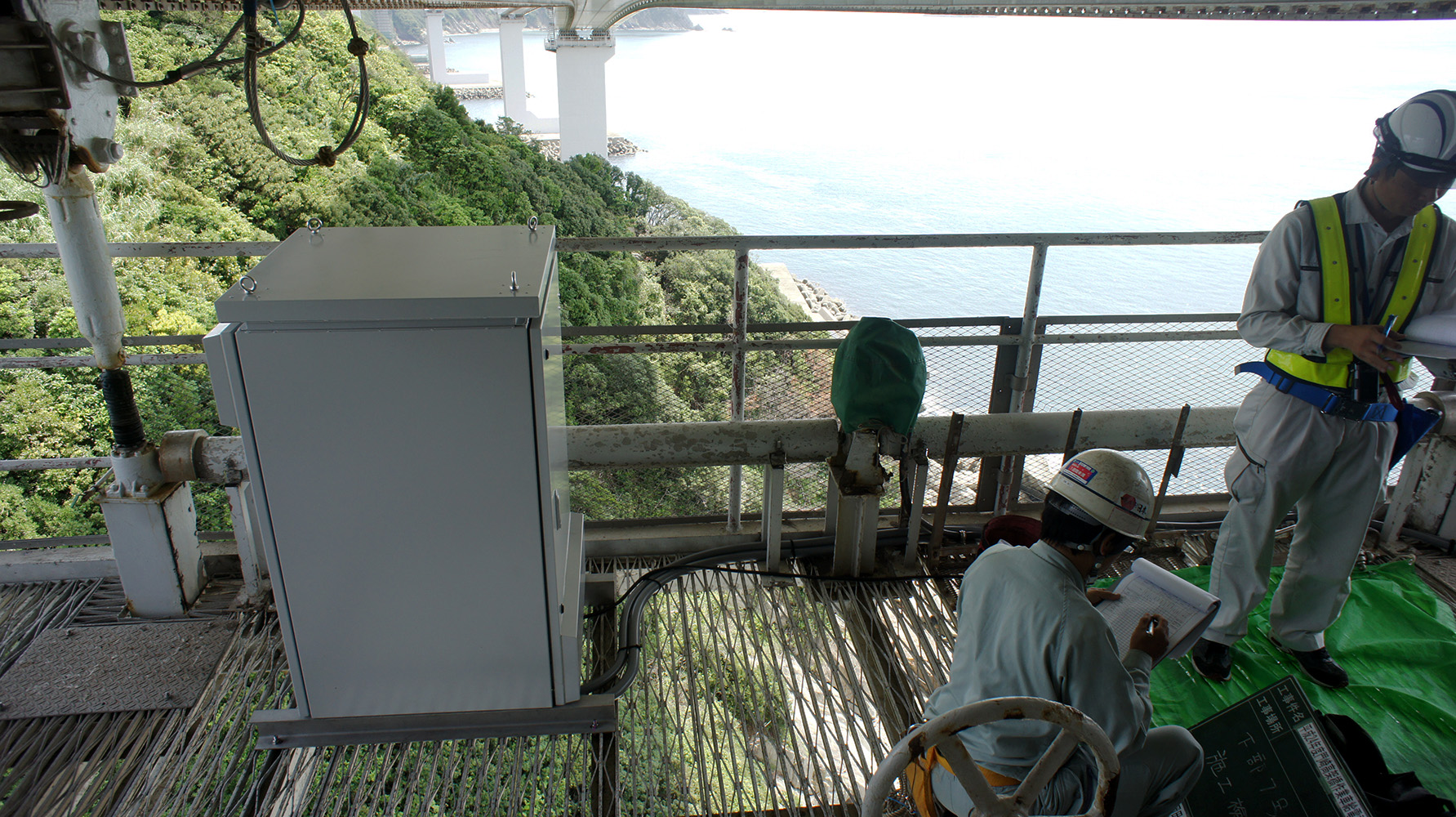
Twelve years after delivery in 2014, the system remains in use for maintenance work.
This record should not be interpreted as meaning that the batteries required no replacement for 12 years. The relevant achievement is that the system as a whole has remained in continuous service for 12 years with the necessary inspection and maintenance.
- The original power-supply concept remains effective
- The benefits of reducing fixed supply equipment continue
- Equipment life can be extended through appropriate maintenance
- The system is designed for maintenance, not routine wholesale replacement
- The configuration has become established in platform operations
| 2013 | Initial equipment delivered |
|---|---|
| 2014 | Delivery of 11 units announced |
| Since 2014 | In service as power for mobile maintenance platforms |
| 2026 | Still in service 12 years after delivery |
What We Reduced Was Not Electricity Cost, but Maintenance Work on the Bridge
The economics of this system cannot be evaluated only by battery price or electricity cost. The relevant comparison is the lifecycle cost of the entire power-supply infrastructure, including trolley wires.
Total cost of ownership
= Initial installation cost
+ Periodic inspection cost
+ Component replacement cost
+ Work-at-height cost
+ Material transport cost
+ Worker travel cost
+ Work coordination cost
+ Traffic and operations coordination cost
+ Losses from equipment downtime
- Inspection and replacement of trolley wires
- Replacement of current-collection components
- Corrosion repair of power-supply equipment
- Repair of long-distance wiring
- Electrical work at height
- Transport of replacement materials
- Fault response for fixed power-supply equipment
Work on a bridge requires more time and cost for preparation, safety measures, access and permits than maintenance of ground-level equipment. Even one avoided replacement cycle produces benefits far beyond the price of the components.
Fewer Maintenance Visits Improve Safety
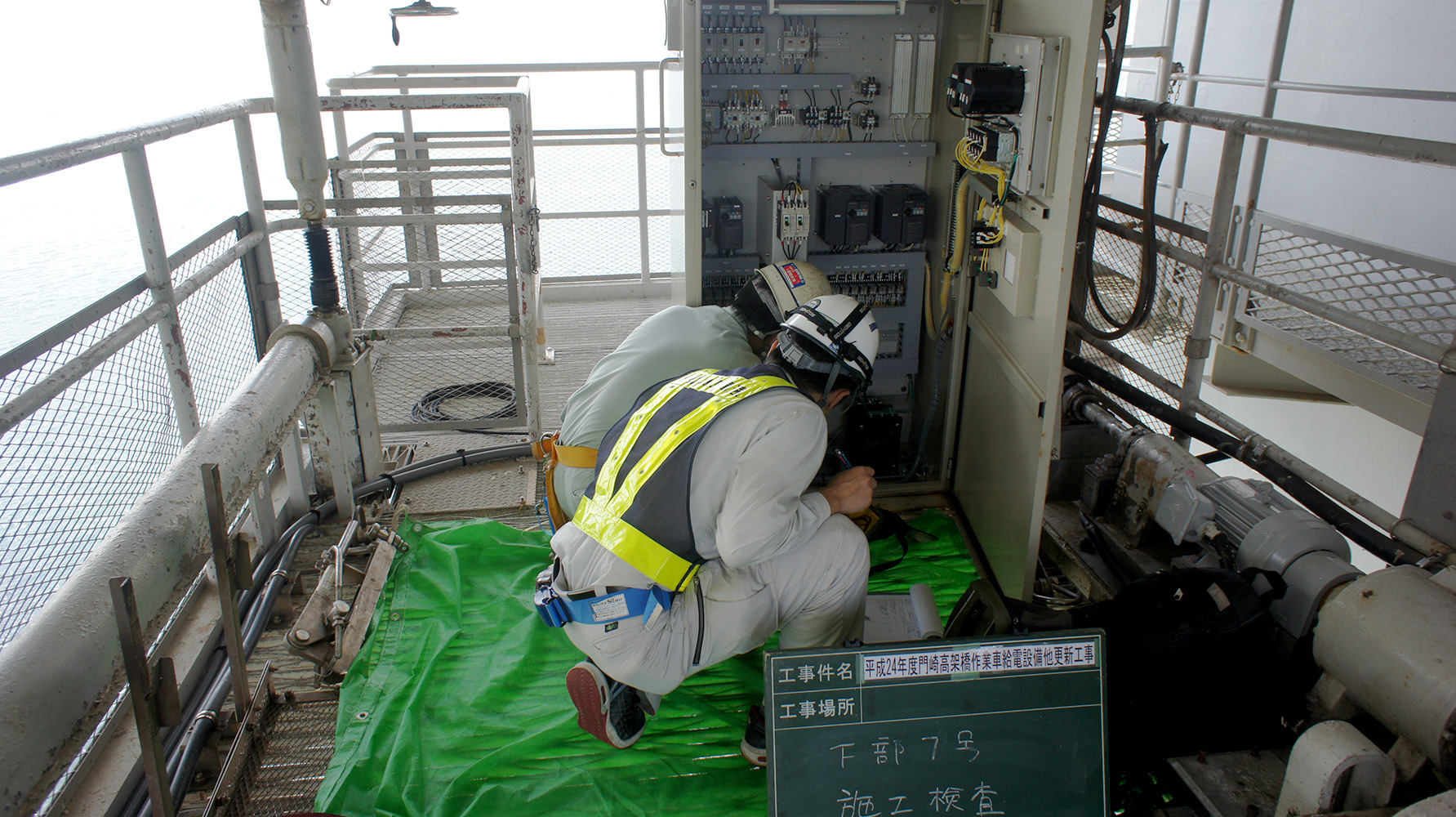
Maintenance work itself carries risk in infrastructure applications. On a long-span bridge, work may take place over the sea, at height, in confined spaces, under strong winds and vibration, and close to road or rail traffic.
Reducing even one inspection or replacement visit is therefore more than a cost saving. It reduces the number of times workers must enter hazardous locations and improves the overall safety of maintenance operations.
Maintainable equipment is not merely equipment that is easy to repair.
It is equipment that reduces the need to enter hazardous locations in the first place.
Power Infrastructure That Enables Robotics and Digitalization
Honshu-Shikoku Bridge Expressway Company is developing technologies such as main-tower inspection robots, magnetic-wheel gondolas, remotely operated cleaning equipment, sensors and image analysis to improve long-span bridge inspection and repair.
However, the labor-saving benefit of robots and sensors is limited if they still require extensive power cabling, frequent battery replacement or inspection of fixed wiring.
In digital and robotic systems, long-term power availability is as important as the equipment itself. Personal Energy is not an accessory for operating machinery; it is enabling infrastructure for autonomous and unmanned operation.
Control software alone does not keep a robot moving.
Automation becomes practical only with power that remains available in the field.
Distributed Power Changes the Structure of Infrastructure Maintenance
Traditional infrastructure commonly distributes power from a central source through long cable runs. On long-span bridges, in tunnels, ports and mountainous areas, longer fixed wiring increases the number of inspection points, potential failure points and replacement scope.
Distributing power close to the load and allowing it to move with the equipment shortens wiring, reduces single points of failure, limits fault impact, shortens recovery time and supports temporary operation.
This Honshu-Shikoku bridge deployment implemented, as early as 2014, a concept similar to what would now be called distributed power, edge power or a mobile microgrid.
Power source
  ↓
Long-distance wiring
  ↓
Work equipment

Wide inspection, failure and replacement scope
Power + work equipment
Power + work equipment
Power + work equipment

Independent operation where needed
Deployment Summary
| Customer | For Honshu-Shikoku Bridge Expressway Company |
|---|---|
| Delivery years | 2013 and 2014 |
| Published quantity | 11 units total |
| Application | Inverter power for mobile maintenance platforms |
| Previous method | Power supplied through trolley wires |
| Implemented method | Hybrid on-grid/off-grid mobile power system |
| Output | 2kW / 200V, 3kW / 200V |
| Storage capacity | 7.2kWh, 4.8kWh |
| Environmental specification | IP65 salt-resistant specification |
| Operating period | 12 years since 2014 |
| Current status | Still in operation |
References
- Kei Communication Technology Inc., “Notice of Personal Energy Delivery for Honshu-Shikoku Bridge Expressway Company” (November 1, 2014; Japanese)
- Honshu-Shikoku Bridge Expressway Company, “Long-Span Bridge Maintenance Technology (Maintenance Equipment)” (Japanese)
- Honshu-Shikoku Bridge Expressway Company, Honshi Technical Report, Vol. 48, No. 140 (Japanese)
- Kensetsu no Kikaika, “Mechanical Equipment for Long-Span Bridge Maintenance” (Japanese)
Revision History
| 2026-07-14 | Published. |
|---|---|
| 2026-09-25 | Synchronized the English text with the Japanese canonical page, including the implementation scope, operating constraints, and long-term operating record. |