ETHERNET STANDARD
What is IEEE 802.3?
IEEE 802.3 is the family of standards defining Ethernet for LANs, access networks and metropolitan networks. It combines a common Media Access Control (MAC) specification and management information with Physical Layer (PHY) specifications selected for speed, transmission medium, distance and modulation.
The word Ethernet is often associated with LAN cables and RJ45 connectors. IEEE 802.3, however, spans twisted pair, optical fiber, coaxial media, electrical backplanes, automotive communications, Single Pair Ethernet and PoE. Ethernet is a technical architecture combining common frame processing with many different physical layers, rather than a single cable format.
Frame handling and media access
Standardizes frames, addressing and access to the transmission medium.
Conversion to electrical and optical signals
Encodes and decodes frames as physical signals appropriate to the speed, distance and medium.
Manage link state
Connects link status, errors and statistics to monitoring and management.
A connected Ethernet cable does not by itself ensure continuity of the service it supports.
A link may remain up while packet loss, reduced optical power, insufficient PoE capacity, a switch failure, a power-quality event or an upstream authentication outage makes the service unavailable. Physical links, management systems, power and upper-layer services therefore need to be observed separately.
OUR TECHNICAL CONTINUITY
Developing the communications equipment we needed, then building a technology system for continuous operation
Kei Communication Technology Inc. began by developing the network equipment and communications technologies required to meet needs that existing products could not satisfy.
By building networks with equipment developed in-house and operating customer systems over long periods, we established the need to manage not only connectivity, but also identity, condition monitoring, fault diagnosis and maintenance within one operational system.
Because the continuity of communications equipment is also governed by power quality, we extended this technology into remote monitoring, UPS systems, energy storage and distributed power.
Our technical lineage is the continuous development of the equipment, identity, monitoring, power and maintenance capabilities required to keep networks operating.
Connect
Build Ethernet equipment and networks.
Identify
Identify devices under our own OUI and maintain manufacturer accountability.
Monitor
Continuously observe live equipment through our own SNMP implementation and MIB.
Power
Extend fault analysis to PoE, power supplies and UPS systems.
Sustain
Operate communications, monitoring, power and maintenance as one system.
Implement continuous network operation through power and maintenance
Beginning with communications equipment development and network implementation, we have consistently expanded our technology across device identity, SNMP monitoring, fault analysis, power quality, UPS systems and distributed power. Our current power business remains part of the same network-technology lineage established at our founding.
DEVICE IDENTITY
OUI and MAC addresses: who identifies network equipment?
Ethernet uses MAC addresses to identify individual interfaces. Within that identification system, the OUI is the organization-specific prefix indicating the manufacturer or assigned organization.
Kei Communication Technology
The IEEE OUI / MA-L assigned to and operated by our company.
Read about our OUI →Connect our OUI to lifecycle management
- 01 Assign a non-duplicated identifier to each device using our OUI as the organizational basis.
- 02 Link model, serial number, installation location and monitoring target within the same identification system.
- 03 Maintain a continuous history from shipment and installation through faults, repairs, replacement and retirement.
- 04 Use our own MIB and SNMP monitoring to understand the state and operating history of identified equipment.
An OUI is the technical basis indicating the organization to which an identifier block is assigned. By connecting this identification system to monitoring, maintenance, fault analysis and replacement records, we support long-term operation, traceability and explainability throughout the device lifecycle.
POWER OVER ETHERNET
With PoE, the Ethernet switch is both communications equipment and power infrastructure
Power over Ethernet (PoE) carries communications and electrical power over the same cabling for supported twisted-pair PHYs. This enables wireless access points, IP cameras, IP phones, sensors and control terminals to be installed through communications cabling.
PSE
Power-sourcing side
PoE switches and injectors. Design must cover not only per-port power, but also the total device power budget, input supply, heat dissipation and redundancy.
PD
Powered-device side
Access points, cameras, phones and sensors. Actual consumption must be verified at startup, under changing load and after cable losses.
| Design item | Operational consequence | Required measure |
|---|---|---|
| Total switch power budget | Required power cannot be supplied to every port | Calculate maximum load, startup demand and future expansion |
| Upstream power source | Communications and endpoints stop together during an outage | Design UPS protection, distributed power and circuit separation |
| Cabling and temperature | Voltage drop, heating and reduced delivery capacity occur | Verify cable category, bundling, distance and temperature conditions |
| Remote restart | On-site intervention is required during faults | Separate port-control and monitoring privileges and retain an operation log |
Endpoint backup power depends on UPS protection for the PoE switch.
PoE simplifies cabling while concentrating power delivery at the switch. The PoE switch, input circuit and UPS can therefore become single points of failure. The network topology and electrical single-line diagram should be reviewed as one dependency model.
ETHERNET FOR AI
AI clusters depend on an integrated network and power design
In a GPU cluster, performance and availability are determined by the combined operation of inter-GPU communications, NICs, switches, optical transceivers, cabling, storage, cooling, PDUs, UPS systems and incoming power infrastructure. Higher link speed reduces transfer time, but the cluster cannot continue processing when power, cooling, optical links or management systems stop.
Alongside standardization work for 200 Gb/s, 400 Gb/s, 800 Gb/s and 1.6 Tb/s Ethernet, IEEE 802.3 is assessing requirements for AI-oriented Ethernet interconnects, including signaling rates above 200 Gb/s, through the Ethernet for AI Assessment activity.
Can the required data move between GPUs without becoming a bottleneck?
Are congestion, retransmissions or packet loss disrupting synchronized processing?
Can power and cooling support NICs, switches and optical modules continuously?
Can link faults be distinguished from compute-node faults?
Ethernet and InfiniBand are different technology families
InfiniBand is not part of IEEE 802.3 Ethernet. The two are compared, selected or combined according to workload, but both require NICs, switches, optical connectivity, management, power and cooling. Our scope covers the physical infrastructure and operating conditions required to sustain these network technologies.
SINGLE PAIR ETHERNET
Ethernet is extending from data centers to field devices
Single Pair Ethernet (SPE) uses one conductor pair. It extends IP networking to edge devices in industrial systems, vehicles, buildings, sensors and remote sites under cabling, distance and power conditions different from conventional four-pair Ethernet.
IEEE 802.3 continues to address long-reach 100 Mb/s SPE, automotive Ethernet, and powering and cabling conditions for Single Pair Ethernet. As more field devices adopt Ethernet, sensing, control, monitoring, power delivery and cybersecurity increasingly need to be designed as one system.
Industrial systems
Connect PLCs, I/O, sensors and drives to IP-based management.
Mobility
Combine lightweight cabling with high observability in vehicles, vessels and other mobile platforms.
Remote infrastructure
Integrate communications and power design for base stations, monitoring sites and outdoor equipment.
OPERATIONS / POWER QUALITY
Diagnose Ethernet faults across both communications and power
Some symptoms presented as network faults originate in the power system. Momentary interruptions, voltage sags, overvoltage, surges, grounding conditions, insufficient supply capacity, inadequate PoE power and thermal protection can appear as switch reboots, port-down events, endpoint restarts or intermittent communications.
| Observed symptom | Possible communications cause | Possible power cause |
|---|---|---|
| Link drops intermittently | Connector, optical level, PHY or cable | Voltage drop, reboot, insufficient PoE power or heat |
| Multiple endpoints disappear simultaneously | Upstream switch, VLAN, loop or authentication | Shared supply, UPS, branch circuit or PSE shutdown |
| Only the remote site becomes unreachable | Carrier line, router, name resolution or VPN | Local outage, depleted battery or charging fault |
| No logs remain | Monitoring path, time synchronization or log forwarding | Equipment shutdown after a brief interruption or loss of monitoring-system power |
SNMP / REMOTE MONITORING
In-house SNMP monitoring and remote control
Use MIBs, OIDs, polling and traps to continuously track equipment condition and fault transitions.
Read more →POWER QUALITY / INTERRUPTION
Momentary interruptions, voltage sags and network outages
Explains how short voltage reductions and outages affect communications equipment, PoE endpoints and servers.
Read more →CURRENT FOCUS / JULY 2026
IEEE 802.3 continues to expand across higher speeds, AI, power delivery and field deployment
IEEE 802.3 remains an actively developing standards family. As of July 2026, work includes 1.6 Tb/s Ethernet, 200 Gb/s-per-wavelength optical PHYs, Ethernet Metadata Services, Ethernet for AI, cable-based power delivery and coordination with safety requirements.
200G, 400G, 800G and 1.6T Ethernet
Physical layers and interfaces for very-high-speed Ethernet supporting large-scale data centers and AI clusters.
Official IEEE material →Ethernet for AI Assessment
An assessment of requirements for Ethernet interconnects for AI, including signaling rates above 200 Gb/s.
Official IEEE material →200Gb/s per wavelength MMF
Work on multimode-fiber PHYs for short-reach, high-density connections, including AI data centers.
Official IEEE material →Ethernet Metadata Services
Work to define optional metadata services, including per-packet metadata, while retaining the existing Ethernet frame format.
Official IEEE material →Power Delivery Coordination
Coordination of power delivery over Ethernet cabling and related PHYs with other standards and safety requirements.
Official IEEE material →Single-Pair Ethernet Powering
Work to clarify cabling conditions for Single Pair Power over Ethernet and align them with powering classes.
Official IEEE material →Activity names and status are current as of July 2026. IEEE 802.3 task forces, study groups and ad hoc groups may change, complete their work or be reorganized as standardization progresses.
APPLICATIONS
Connect standards to real-world continuity conditions
| Application | IEEE 802.3 elements | Operational issues addressed by our company |
|---|---|---|
| AI and data centers | High-speed Ethernet, optical PHYs, NICs and switches | UPS, power quality, monitoring, power SPOFs and cooling dependencies |
| Wireless LAN and surveillance cameras | Ethernet, PoE and optical uplinks | PoE power budget, no-break power, remote restart and monitoring |
| Manufacturing and logistics | Industrial Ethernet, SPE and time synchronization | PLCs, WMS, sensors, momentary interruptions, noise and recovery time |
| Healthcare and care facilities | PoE, IP endpoints and the wired foundation for wireless APs | Equipment shutdown, nurse-call systems, monitoring and power continuity |
| Municipal, disaster-response and remote sites | Optical Ethernet, SPE, PoE and management information | Power outages, lightning, off-grid operation, batteries and remote maintenance |
OPERATIONAL AUTONOMY / ECONOMIC SECURITY
Technical autonomy through direct control of network configuration, settings, monitoring and recovery
From an economic-security perspective, organizations need to understand not only equipment sources, countries of manufacture and component composition, but also the architecture and external dependencies of the network as a whole. Operational capability must support changes, faults and replacement under both normal and abnormal conditions.
Maintaining device identity, configuration management, monitoring data, fault isolation, equipment replacement and reconfiguration within one operating system makes it possible to understand system condition and determine recovery actions during abnormal conditions.
Technical autonomy means directly managing the equipment and information that form the network, while retaining the capability to make decisions and restore operation. This supports both stable operation of critical infrastructure and economic security.
Identity autonomy
Manage our own OUI, MAC addresses, model data, serial numbers and installation locations.
Monitoring autonomy
Use our own SNMP implementation, MIBs and logs to make system condition explainable.
Power autonomy
Reduce interruption conditions through UPS systems, distributed power and power-quality monitoring.
Maintenance autonomy
Retain the capability to diagnose and recover when external services are unavailable.
Our Position
Infrastructure autonomy requires more than deploying Ethernet.
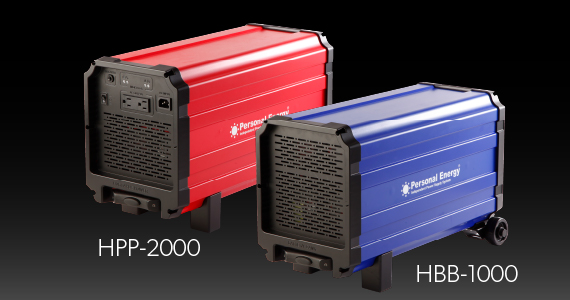
We connect our own OUI, proprietary SNMP protocol stack, live customer monitoring infrastructure, UPS systems, power-quality technologies and domestic maintenance into a technical system capable of identifying, observing, powering and restoring networks.

Conclusion
Unify network and power diagrams to sustain Ethernet operation
IEEE 802.3 defines how equipment is connected. Operational continuity also requires identified devices, ongoing monitoring, reliable power delivery and recovery under abnormal conditions. As Ethernet expands across AI, PoE, industrial systems, healthcare and disaster response, the dependency between networks and power becomes stronger.
Kei Communication Technology Inc. treats Ethernet, its own OUI, SNMP, power quality, UPS systems and distributed power as one technical lineage, supporting the design and operation required to sustain communications infrastructure.
References
This page contains technical information independently prepared and published by Kei Communication Technology Inc. It is not an official page operated or endorsed by IEEE or the IEEE Standards Association. Explanations of IEEE 802, OUI, EUI-48, EUI-64 and related identifiers are based on publicly available information from IEEE and the IEEE Registration Authority.