Chronological Record / 2026-07-15
The change worth recording is not the discovery of a new crisis. It is that the head of government stated in the Diet that the status quo has a time limit and that Japan may lose its opportunity within two years.
The earlier articles remain unchanged. Rather than rewriting the past after the statement, this article preserves their original dates and adds the later political fact as a new chronological record.
Parliamentary Record / July 15, 2026
1. On July 15, 2026, the Prime Minister Spoke of Running Out of Time
In the party leaders’ debate with Democratic Party for the People leader Yuichiro Tamaki, Prime Minister Takaichi argued that Japan must build an economy resilient to risks involving energy, food, and national security.
“Now is the time to strengthen the economy. Now is the time to push the engine of growth.”
“If conditions are still bad two years from now, I believe Japan will truly have lost its opportunity.”
The context extended beyond refundable tax credits and consumption-tax rates. The Prime Minister referred to energy, food, security, and supply resilience, and stated that Japan would not become stronger unless action began immediately.
Source: Democratic Party for the People, Full Transcript of the Party Leaders’ Debate, July 15, 2026
Deadline / Policy Window / Irreversibility
2. “Two Years” Is Not a Growth Target but the Time Remaining Before Choices Disappear
Economic policies normally have deadlines for measuring results. In this case, however, the two-year period was not presented merely as a target for recovery. It was framed as the point at which Japan could lose the opportunity itself.
Losing the opportunity does not mean only running out of budget. It includes irreversible changes: skilled workers retire, contractors close, asset renewal peaks, investment moves overseas, supply-chain positions disappear, and local services withdraw. Once these capacities are lost, later funding may no longer be able to restore them.
Running out of time is not the day when money can no longer be spent. It is the point at which people, equipment, contractors, technology, and supply routes can no longer be reacquired even with money.
Timeline / Prior Record / Structural Change
3. The Crisis Did Not Appear Suddenly
2026-01-01
Design Principles for Escaping the Boiled Frog
The article explained how individually rational choices—efficiency, centralized management, standardization, and optimization—can accumulate into a System of Systems with no escape path. It identified autonomy, distribution, and asynchrony as the exit.
2026-05-17
Q2 Reassessment: The Future Was Visible as Structural Signals
The Q2 article reexamined energy, logistics, food, finance, information, and security as one interdependent structure and concluded that physical infrastructure ultimately becomes the binding constraint.
2026-07-14
Smart Shrink: Choose the Functions to Preserve While Choice Is Still Possible
As population, labor, and fiscal capacity decline, the article argued against preserving everything at the same level. It proposed selecting critical functions and sustaining them through consolidation, distribution, remote monitoring, preventive maintenance, and mobile power.
2026-07-15
Infrastructure Parasite: The Structure of Knowing but Failing to Prepare
The article recorded a society that treats power, communications, cloud services, and logistics as permanent assumptions without examining renewal, personnel, fuel, fallback routes, or recovery time.
2026-07-15
Prime Minister Takaichi: “Japan Will Lose Its Opportunity in Two Years”
The head of government stated in the Diet that Japan could lose its opportunity within two years unless growth and supply resilience were strengthened immediately.
Boiled Frog / Status Quo Bias / Delayed Action
4. The Boiled Frog Is Not Someone Who Fails to Notice the Crisis
Most people and organizations understand population decline, labor shortages, infrastructure aging, energy dependence, and fiscal constraints. The problem is not a lack of knowledge.
During normal operations, the cost of the status quo emerges gradually in the future. Reform, by contrast, immediately creates budgets, construction, reassignment, closure, coordination, and conflict with existing interests. People and organizations repeatedly choose the option with less pain today rather than the option that is structurally correct.
Status quo
Avoids immediate conflict and cost. Losses are spread into the future, and responsibility remains difficult to assign.
Structural reform
Requires immediate decisions on budgets, closure, consolidation, reassignment, and accountability. Current decision-makers must absorb the pain.
The boiled frog is not unaware of the rising temperature. It understands the risk but continues to avoid the pain of change until the deadline for meaningful choice has passed.
Growth / Supply Capacity / Physical Constraint
5. Pressing the Growth Switch Does Nothing Without People and Equipment to Supply the Result
Fiscal spending, subsidies, tax reductions, and regulatory reform can stimulate demand and investment. They do not automatically increase the economy’s physical supply capacity.
Semiconductors, AI, energy, logistics, construction, healthcare, care, and government all compete for workers from the same shrinking labor force. A project cannot proceed without contractors. Equipment cannot operate without staff. A generator cannot sustain service without fuel and maintenance. Budget does not become supply capacity by itself.
Capital
The condition for beginning investment. Money alone cannot create equipment, people, or time.
Supply capacity
The ability to combine people, contractors, equipment, materials, fuel, logistics, and permits into execution.
Maintenance capacity
The ability to inspect, repair, renew, and restore the function after implementation.
Japan’s constraint is not only insufficient demand. It is the shortage of people and organizations able to convert funding into physical supply and preserve that supply afterward.
Smart Shrink / Selection / Resource Allocation
6. The Next Two Years Require Selection, Not a Miracle Reversal
Japan cannot strengthen every industry, region, facility, and institution in its previous form. When people and equipment are limited, growth policy must be accompanied by decisions about what to preserve, combine, redesign, and retire.
This is not an argument for accepting decline. It is a design for preventing uncontrolled shrinkage, in which functions disappear randomly wherever maintenance, transport, or staffing fails first.
Refusing to choose does not preserve everything. It allows functions to disappear accidentally wherever repair, delivery, or professional service becomes unavailable first.
What to consolidate
Specialist personnel, advanced equipment, high-volume processing, procurement, data analysis, and 24-hour monitoring.
What to distribute
Power, communications, data, monitoring, alternate sites, inventory, and mobile equipment.
What to preserve through a different method
Education, healthcare, transport, delivery, government access, and maintenance through remote, mobile, shared, or demand-responsive models.
What to retire
Facilities, duplicate equipment, and operating methods that can no longer be sustained, after replacement functions are secured.
Two-Year Plan / Critical Functions / Execution
7. What Must Be Executed During the Two-Year Countdown
- Define the functions that must not stop. Define water, healthcare, communications, logistics, identity, and control by function rather than by organization or building.
- Define maximum tolerable downtime. Classify functions that permit no interruption, several minutes, several hours, or several days.
- Identify when people and contractors may disappear. Record retirement, closure, end-of-life parts, and support termination before failure occurs.
- Prevent consolidated hubs from becoming single points of failure. Distribute power, communications, data, monitoring, inventory, and alternate sites.
- Use fallback capability during normal operations. Use, monitor, maintain, and practice with equipment instead of storing it as emergency-only inventory.
- Verify that budgets can be converted into supply capacity. Secure contractors, labor, materials, fuel, schedules, permits, and maintenance.
- Record deadlines and accountable owners. Convert “everyone understands” into “who will do what by when.”
Record / Verification / Accountability
8. This Article Does Not Predict Success or Failure Two Years From Now
Economic outcomes depend on international conditions, exchange rates, interest rates, technology, private investment, and disasters. The result two years from now cannot be stated with certainty today.
What can be recorded is that, on July 15, 2026, the Prime Minister believed that Japan had to act immediately and could lose its opportunity within two years.
At the same time, public records and earlier articles already documented population decline, labor shortages, aging infrastructure, dependence on power and communications, limits of public aid, uncertainty in standby equipment, and status quo bias.
The review two years from now should examine more than the final result. It should ask what was known in July 2026, which options remained, what was executed, and what was postponed.
Conclusion / Two-Year Countdown
9. Japan’s Status Quo Now Has a Deadline
Prime Minister Takaichi’s statement did not predict that Japan would certainly fail in two years. It expressed the view that continuing the status quo could eliminate policy, industrial, workforce, and supply-capacity options by that time.
That concern did not suddenly emerge in 2026. Population decline, labor-supply constraints, infrastructure aging, dependence on imported energy and food, and concentration in power, communications, and cloud services had already been visible.
The question is not whether Japan can produce a miracle in two years. It is whether it can select the functions that must not stop and reallocate limited people, equipment, and capital while choice still remains.
Escaping the boiled frog does not mean jumping to another place. It means acknowledging that the temperature continues to rise and choosing the pain of change over the comfort of the status quo.
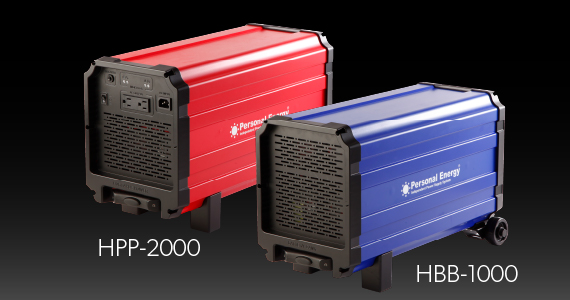
We do not propose excessive backup for every facility. We identify critical functions and maximum tolerable downtime, then combine no-break power, extended runtime, communications, monitoring, local control, and mobile equipment.
FAQ
Frequently Asked Questions
Q1. What did Prime Minister Takaichi mean by saying Japan could lose its opportunity in two years?
She expressed the view that Japan must strengthen economic resilience, supply capacity, energy security, food security, and national security immediately or face a narrower range of policy options two years later.
Q2. Why preserve earlier articles instead of rewriting them?
Keeping the original publication dates and wording makes it possible to verify what risks and countermeasures were documented before the later political statement.
Q3. Is growth investment alone sufficient over the next two years?
No. Funding cannot create supply capacity when skilled workers, contractors, drivers, fuel, power equipment, communications paths, and maintenance organizations are unavailable.
Q4. Does the boiled-frog metaphor mean that people are unaware of the crisis?
In this article it refers to people and organizations that understand the risk but continue to choose the status quo because change creates immediate cost, conflict, and responsibility.
Q5. Where should companies and local governments begin?
Identify the functions that must not stop, their maximum tolerable downtime, dependencies on power, communications, personnel and contractors, single points of failure, fallback methods, deadlines, and accountable owners.
Define the Functions That Must Remain Available Within the Next Two Years
We help governments, healthcare and care facilities, factories, logistics sites, communications infrastructure, and unmanned facilities identify critical functions, maximum tolerable downtime, power SPOFs, communications dependencies, remote monitoring needs, portable UPS configurations, and off-grid options.
Rather than protecting an entire facility uniformly, we select the loads that must not stop and combine no-break power, extended runtime, mobility, local control, and monitoring. Review the functions to preserve