Key Point
An infrastructure parasite benefits from critical infrastructure while failing to examine the conditions required to sustain it.
When power and communications work, renewal, skilled labor, fuel, transfer procedures, alternate paths, and local control remain invisible. During disruption, those hidden dependencies surface at the same time.
The problem is not that the risks are unknown. They are already documented in public sources but often remain absent from facility-level design.
Definition / Dependency / Invisible Support
1. What Is an Infrastructure Parasite?
An infrastructure parasite describes a condition in which modern society delegates essential functions to external systems—electricity, communications, cloud services, logistics, water, HVAC, payment, and identity—and operates on the assumption that those services will remain available. This structure has delivered high efficiency and convenience.
The problem begins when users treat those services as permanent facts without identifying their fallback conditions. They assume that a utility, communications carrier, public agency, maintenance company, or cloud provider will restore service, while leaving their own maximum tolerable downtime and autonomous operating time undefined.
Responsible infrastructure use
Use the service while understanding quality conditions, outage impact, maximum tolerable downtime, and fallback options.
Infrastructure parasite
Treat the service as a permanent assumption and unconsciously leave renewal, maintenance, restoration, and alternatives entirely to external parties.
Three Blind Spots / Public Evidence / 2026
2. Three Overlooked Realities That Should Be Recorded in 2026
These are facts already recorded in public documents concerning the consequences of a society that depends on power and communications during a major disruption.
Blind Spot 1
Assets and maintenance capacity decline together
Renewal demand rises while the workforce and contractor capacity required for inspection, construction, and restoration become constrained.
Blind Spot 2
Equipment can stop without a visible blackout
Voltage dips and momentary interruptions can stop digital controls even while lighting remains on.
Blind Spot 3
Public aid and standby equipment do not guarantee continuity
The existence of a generator or public response does not guarantee the required capacity, timing, connection, fuel, or operator.
Blind Spot 1 / Grid Renewal / Resilience / Maintenance Capacity
3. “The Limit of the Power Grid” Is a Limit on the Ability to Sustain Reliable Supply
Japan's power system maintains exceptionally low outage duration and outage frequency by international standards. As a result, many users organize daily life and business around the assumption that electricity will continue to be available.
At the same time, Japan's Agency for Natural Resources and Energy reports that many transmission assets built in the 1970s are aging and will require replacement or major rehabilitation. Investment is also required for disaster resilience and for connecting additional renewable generation.
Grid renewal is not a simple parts replacement. It requires surveys, engineering, land coordination, materials, heavy equipment, road access, transport, work at height, outage coordination, switching, testing, patrols, and maintenance personnel.
During a disaster, power, roads, communications, water, hospitals, and logistics are damaged at the same time. Engineers, vehicles, fuel, materials, contractors, and access routes are finite. When multiple regions need them simultaneously, restoration capacity itself becomes the supply constraint.
The limit of power infrastructure is not only a shortage of generation. It is the limit created by the amount of renewal, resilience investment, construction capacity, maintenance labor, and restoration resources required to preserve reliable supply.
Public Record
Japan's Agency for Natural Resources and Energy states that major earthquakes, typhoons, and floods have repeatedly tested the resilience of the power system since 2011.
The same material shows that many transmission towers built in the 1970s are now 40 to 50 years old and that replacement and major rehabilitation needs will continue to rise.
Blind Spot 2 / Voltage Quality / Digital Loads
4. Equipment Can Stop Even When There Is No Visible Blackout
Most users recognize a power disturbance only when the lights go out. In factories, logistics, healthcare, communications, and data centers, however, a short voltage dip or momentary interruption can stop control and network equipment.
Even events too brief for people to notice can cause PLCs, industrial PCs, network switches, PoE devices, servers, medical equipment, sensors, inverters, and electronic access systems to stop, reboot, disconnect, or enter fault states.
The result may be a building with its lights still on but electronic locks that will not open, gates and ticket barriers that will not authenticate users, cashless payments that cannot be completed, reservations that do not appear at terminals, and warehouse or shipping data that no longer updates.
Even when network equipment and servers restart automatically, cloud sessions, authentication, time synchronization, and control sequences may not recover automatically. Local intervention, reauthentication, power cycling, or configuration checks may be required before operations resume.
Buildings and transport
Electronic locks fail to open, security gates and automatic doors stop, and ticket barriers or access-control systems reject users.
Payment and reservations
Cashless payment, card authorization, POS, reservation, reception, seating, and entitlement data become unavailable.
Logistics and manufacturing
WMS, barcode systems, label printing, conveyors, and PLCs stop, so goods cannot be located or dispatched even when inventory exists.
Healthcare and communications
Electronic records, patient information, nurse-call systems, monitoring devices, telephones, and networks become temporarily unavailable.
Power-quality failures do not always darken the entire building. Authentication, communications, payment, and control can stop without users recognizing the event as a blackout.
What people notice
Whether lighting went out and how long the outage lasted.
What equipment experiences
Voltage dips, interruptions, phase variation, restoration transients, broken sessions, and disrupted restart sequences.
Digital society must design for power quality, not only outage duration.
Blind Spot 3 / Limits of Public Aid / Self-Continuity
5. Large-Scale Disasters Must Be Planned Around the Limits of Public Aid
During a disaster, national and local governments, emergency services, utilities, communications carriers, and the military conduct rescue, restoration, supply distribution, shelter support, and infrastructure recovery. In a large-scale regional disaster, however, they cannot immediately support every person and every facility.
Japan's 2014 White Paper on Disaster Management states that major disasters demonstrated both the difficulty of rapidly supporting all affected people and the possibility that public agencies themselves could be damaged and lose function. It describes this as the “limits of public aid.”
In a metropolitan earthquake or a Nankai Trough event, municipalities, hospitals, shelters, roads, power assets, and communications systems may be damaged simultaneously. Limited personnel, vehicles, fuel, generators, communications equipment, and supplies must be allocated by priority to life safety, firefighting, government continuity, core medical services, and shelters.
Public aid therefore does not guarantee that an individual hospital, care facility, factory, logistics hub, apartment building, or unmanned site will receive power at the required time, capacity, voltage, phase, and connection condition.
The limits of public aid do not mean that public support will disappear. They mean that the broader and more simultaneous the damage becomes, the harder it is to deliver the required people, equipment, time, and transport capacity to every location immediately.
Even delivered power may not be usable
A portable generator or mobile power unit may arrive and still fail to match the facility.
- Capacity is insufficient for the required load.
- Phase, voltage, frequency, or grounding method does not match.
- Transfer panels, connection panels, cables, or connectors are unavailable.
- No qualified person is available to connect and operate the equipment safely.
- Fuel cannot be replenished continuously.
- Damaged roads or flooding prevent delivery.
- No no-break system supports the load until generator power is available.
Critical facilities do not need to reject public aid or attempt to provide everything alone. They need to design how power, communications, procedures, and personnel will sustain essential functions until external support arrives, connects, and reaches stable operation.
Public Record
Japan's Cabinet Office states that in a large-scale regional disaster, public agencies may be unable to support all affected people rapidly and may themselves suffer functional paralysis. It therefore emphasizes self-help and mutual assistance during the period before public support becomes available.
Emergency Generator / Inspection / Real Load
6. An Emergency Generator Carries the Same Risk as an Inexperienced Driver Attempting a Long Journey
Japan's Ministry of Economy, Trade and Industry stated in 2020 that standby generators had failed during disasters because inspections had not been performed and defects had remained undiscovered.
What an inexperienced driver and an emergency generator have in common
An emergency generator, like a vehicle, depends on an engine, fuel, a starting battery, cooling, lubrication, and exhaust. Asking an inexperienced operator to use a generator that has not run for a long time during a disaster is like asking an inexperienced driver to take a vehicle that has sat unused on a long emergency journey.
A vehicle being parked on site does not prove that it can complete a safe long-distance trip. In the same way, a generator being installed does not prove that it can supply the required load.
A successful engine start is only the beginning. Starting batteries, fuel, cooling, lubrication, exhaust, automatic transfer switches, breakers, wiring, real load, trained operators, and refueling must all function before electricity reaches critical loads.
A brief no-load test cannot reveal whether voltage and frequency remain stable under actual load, whether the unit trips on overload, whether automatic transfer works, or whether fuel can sustain operation.
Common check
Did the engine start?
What must actually be verified
Did the system transfer, carry the rated load, continue operating, receive fuel, handle abnormalities, and return safely to normal power?
Checks similar to those required for a vehicle
- Is the starting battery charged?
- Is the fuel sufficient and free from degradation or water contamination?
- Are coolant, lubricant, belts, and hoses in serviceable condition?
- Can more than one person operate the system?
- Has the generator been tested with the actual load?
- Can fuel be replenished during extended operation?
Source: METI, “Ensuring Reliable Operation of Emergency Standby Generators During Natural Disasters”
Generator Start Gap / Fuel Constraint / UPS / Portable Power
7. A Generator Supplies Power Only After Its Rotation Stabilizes
A generator converts the rotational energy produced by an engine or turbine into electrical energy. Without fuel it cannot run, and without rotation it cannot produce electricity.
When an outage occurs, the starting battery first cranks the engine. The engine accelerates, voltage and frequency stabilize, and only then does the transfer system connect the load from utility power to generator power.
Starting a vehicle does not, by itself, complete the journey. A generator likewise supplies a facility only after engine speed, voltage, and frequency stabilize and the transfer system connects the load.
There is therefore an unavoidable interval between utility failure and actual generator supply. Depending on the system and its settings, this may take several seconds or tens of seconds. During that interval, communications equipment, servers, PLCs, medical devices, monitoring systems, and authentication equipment may already stop, reboot, disconnect, or enter fault states.
After the generator begins operating, fuel becomes the next constraint. Runtime depends on tank capacity, fuel consumption, load ratio, resupply routes, and road conditions. During an extended outage, fuel logistics may fail before the generator itself does.
Generator
Uses fuel to support long-duration supply.
UPS
Bridges the interruption from utility failure until generator power stabilizes.
Battery
Provides immediate, silent short- to medium-duration power without fuel.
Portable power
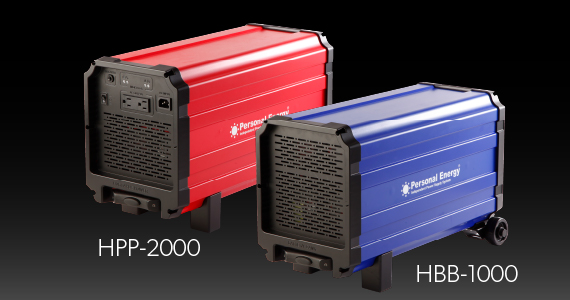
Supports generator failure, construction, capacity shortages, and alternate locations.
Generators provide duration, while immediate supply and zero interruption are separate functions. Generators, UPS systems, batteries, and portable power should be combined according to maximum tolerable downtime and required runtime.
Digital Dependency / Cloud / Cashless / Smart Buildings
8. The Next Crisis Will Hit a Society Far More Dependent on Power and Communications
Today's society depends far more heavily on electricity and communications than it did during previous major disasters. Electronic medical records, cloud applications, cashless payment, WMS and ERP, online government, smartphones, electronic identity, automatic doors, access control, elevators, water-pressure pumps, and remote monitoring are now routine operating assumptions.
Digitalization has made services faster and enabled fewer people to operate more functions. At the same time, paper, cash, local control, mechanical keys, local records, and human verification have declined as fallback options.
As a result, buildings and equipment may remain physically intact while the information, authentication, control, and payment functions required to use them become unavailable.
| Function | Normal-operation efficiency | What happens when power or communications stop |
|---|---|---|
| Medical information | Electronic records, cloud sharing, online reservations | History, prescriptions, test results, and reservations cannot be accessed |
| Payment | Cashless payment, POS, linked inventory | Goods may exist but cannot be sold or settled |
| Logistics | WMS, automated warehouses, optimized routing | Goods may exist but cannot be located, counted, or dispatched |
| Identity and access | Electronic locks, IC cards, smart keys | Doors do not open and gates or ticket barriers reject users |
| Reservations and reception | Online booking, cloud reception, seat management | Reservations do not appear and order or entitlement cannot be verified |
| Building systems | Central monitoring, water control, HVAC, elevators | The building remains, but water, ventilation, vertical transport, and access stop |
| Government and public services | Online applications, resident data, cloud operations | Applications, inquiries, certificates, and evacuee records become difficult to process |
In modern society, buildings, goods, and equipment may remain physically present, yet authentication, information, control, and payment cease to function without power and communications.
The problem is not digitalization itself. The problem is failing to design what will replace the fallback methods that digitalization removed.
Cascade Failure / Daily Life / Labor Constraint
9. Cascading Failure Appears as “Cannot Get Home, Cannot Buy, Cannot Deliver”
Loss of power and communications does not end with technical equipment. Its effects spread through railways, roads, shops, logistics, water, healthcare, and government—the systems that make daily life possible.
Most people understand cascading failure only when trains stop with no clear restart time, convenience-store shelves empty, or cashless payment fails while water and food remain physically out of reach.
Railways and roads
Railways stop and crowds accumulate at stations. Dark traffic signals slow intersections, while congestion delays buses, ambulances, delivery vehicles, and restoration crews.
Retail and payment
POS, card authorization, electronic money, and inventory systems stop. Goods may remain in the shop but cannot be sold. If ATMs and cash transport also stop, cash is not a complete fallback.
Logistics and store inventory
Warehouse management, sorting, labels, route planning, and fuel supply stop. When inbound supply stops while demand surges, water, food, batteries, and daily necessities can disappear from shelves quickly.
Buildings and daily life
Elevators, water-pressure pumps, HVAC, electronic locks, and automatic doors stop. A building may remain undamaged while upper floors lose water and toilets or living functions become unusable.
Healthcare and care
Electronic records, testing, dispensing, reservations, nurse calls, and medical equipment are constrained. Routine care and emergency demand converge on limited staff.
Government and information
Resident records, evacuee lists, certificates, consultations, and damage assessment slow down. Communications failure also makes it harder to locate people who need support.
One example of cascading failure
- 1. A blackout or voltage dip stops traffic signals, communications, and controls.
- 2. Railways, road traffic, shops, warehouses, and building systems stop operating.
- 3. Stranded commuters increase and crowds concentrate at stations, roads, and shelters.
- 4. Deliveries slow and water, food, batteries, and daily necessities decline in stores.
- 5. Payment, healthcare, government, and inquiries shift to manual work.
- 6. Drivers, technicians, medical staff, care workers, and public employees who were already scarce face concentrated demand.
- 7. Normal operations, public response, and restoration compete, delaying recovery across society.
A major disaster does not merely turn off electricity. It simultaneously creates people who cannot travel, cannot buy, cannot receive deliveries, cannot obtain water, and cannot receive normal care.
Recruit Works Institute projects broad labor shortages in transport, construction, care, and healthcare by 2040. During disruption, evacuation support, inquiries, manual processing, and restoration converge on the same already-constrained workforce.
Source: Recruit Works Institute, “Future Forecast 2040: The Coming Labor-Supply-Constrained Society”
Status Quo Bias / Loss Aversion / Diffusion of Responsibility
10. Why Do People Change Only After a Crisis?
Most organizations are not unaware of the risks of power failure, communications loss, labor shortages, and equipment failure. They already understand many of the required measures: backup power, alternate circuits, secondary sites, spare parts, manual procedures, and training.
Action is still delayed because the cost and friction of change are immediate and certain, while the timing and scale of a future crisis remain uncertain.
Cost of maintaining the status quo
Aging equipment, single circuits, understaffed operation, and insufficient backup may remain hidden while daily work continues.
Cost of change
Budget approval, redesign, construction, outage coordination, interdepartmental negotiation, responsibility, and training create immediate burdens.
During normal operations, a possible future loss feels smaller than the certain cost, coordination, and conflict required today. The status quo therefore appears to be the least painful choice.
Inaction can feel safer for the individual
A person who proposes a new safeguard must explain cost-effectiveness, specifications, liability, and maintenance. If a problem occurs after implementation, the proposer and decision-maker may be scrutinized.
Continuing the existing system is easier to defend with “nothing has happened before,” “there is no precedent,” or “there is no budget.” The choice to maintain the status quo is also less likely to be recorded as one person's decision.
What is unsafe for the organization can therefore remain the personally safer option for each individual.
The more people who know, the more responsibility can diffuse
When a problem crosses departments, facilities may treat it as an IT issue, IT may treat it as a facilities issue, and management may assume that the responsible departments are already handling it.
No one denies the risk, yet no one determines who owns the budget, who designs the measure, who decides, or who trains. This is not simple indifference; it is collective inaction produced by diffused responsibility.
Normal-operation decision pattern
- 1. The risk is understood, but uncertain timing lowers urgency.
- 2. Cost, construction, coordination, and conflict occur now rather than in the future.
- 3. More stakeholders diffuse responsibility and leave the first mover undefined.
- 4. “Nothing happened this year” legitimizes the next delay.
A crisis reverses the direction of loss
Once a crisis begins, the status quo is no longer safe. When power stops, communications fail, goods do not arrive, and users demand explanations, doing nothing becomes the largest immediate loss.
Budgets, rule changes, coordination, and alternate systems that were previously avoided are then implemented rapidly. People do not suddenly become more rational. The choice associated with the greater loss has changed.
Knowledge alone does not move people or organizations. Action begins when the perceived loss from failing to prepare exceeds the cost and friction of preparing.
Normal-operation planning therefore requires more than repeated warnings. It must identify who loses what, by when, if a function stops, and it must assign responsibility, budget, deadlines, and the minimum functions to preserve.
“Everyone understands” must be converted into “who will do what by when.”
Behavioral Evidence
Prospect theory shows that people evaluate outcomes relative to a reference point and weigh losses heavily. Research on status quo bias shows that existing choices become defaults that people resist changing. Bystander-intervention research shows that the presence of others can weaken individual responsibility and action.
References: Kahneman and Tversky (1979), “Prospect Theory”; Samuelson and Zeckhauser (1988), “Status Quo Bias in Decision Making”; Darley and Latané (1968), “Bystander Intervention in Emergencies: Diffusion of Responsibility.”
Phase Free / Daily Use / Emergency Readiness
11. Use Emergency Capability During Normal Operations
Equipment used only during emergencies accumulates little operating experience, while inspection gaps and faults are more likely to remain undiscovered. When it is finally needed, operators may not know how to use it, fuel or connection parts may be missing, or the intended load may not be supportable.
Phase-free power continuity is not the storage of disaster equipment. It means using the same equipment during normal operations for voltage-dip protection, maintenance, temporary power, mobile work, metering, and remote monitoring, so its condition and operating procedures remain familiar when a crisis occurs.
Normal operations
Voltage-dip protection, planned outages, maintenance, temporary power, mobile work, power measurement, and remote monitoring.
Disruption
Generator startup bridging, extended outages, communications continuity, critical-load operation, and relocation to another site.
Related Article
Phase-Free Power Continuity Through Chiba Prefecture's Earthquake Damage Scenario
Using a projected outage rate of 53% and approximately 870,000 evacuees, this article explains why emergency-only equipment should be replaced by power infrastructure that is used during normal operations.
Pre-Event Checklist / Minimum Continuity
12. Society May Not Change Quickly, but Critical Functions Can Be Defined Now
Changing an organization or society requires time to resolve budgets, authority, existing equipment, interdepartmental coordination, and responsibility. While structural reform remains pending, each facility can still identify the functions it must preserve and begin realistic preparation.
The purpose of preparedness is not to transform society all at once. It is to sustain the functions that must not stop until external support and restoration arrive.
Seven questions to answer before the event
- Which functions must not stop? Define them by function—patient monitoring, communications, water, control, refrigeration, access, payment, receiving, and shipping—rather than by entire building.
- How many seconds, minutes, or hours can each function tolerate? Classify zero-interruption, short-interruption, and long-interruption loads.
- What supports the load until generator power becomes available? Verify UPS systems, batteries, device-level batteries, capacity, and runtime.
- Can the system operate locally when communications fail? Define local control, recording, authentication, and reconciliation procedures.
- Can more than one person operate the equipment? Plan for nights, holidays, absence, retirement, and simultaneous impact.
- Can fuel, parts, cables, and maintenance personnel be secured? Include resupply, connection, repair, and delivery routes.
- When was the last real-load test? Test startup, transfer, supply, continued operation, refueling, and return to normal power.
Rather than waiting for a complete solution, begin by protecting one critical function for the time it actually needs. Those increments determine what remains available during a crisis.
Evidence Archive / Prior Warning / Preventability
13. Record Before the Next Crisis What Could Have Prevented the Damage
After a major power or communications failure, attention rapidly turns to emergency power, redundant communications, batteries, off-grid systems, remote monitoring, and business continuity.
These are not countermeasures discovered only after the damage. Aging grid assets, power-quality disturbances, the limits of public aid, generator failure, cloud dependency, and shortages of technical and logistics personnel are already visible in public records and field experience.
This article and the related archive do not attempt to predict a specific accident. They record, before the event, the known risks and the equipment, operations, testing, and fallback measures capable of preventing or reducing harm.
For matters that may later be described as “unknown at the time,” this archive records what was already known and what could have been prepared, together with the date before the event.
Records of risks and countermeasures identifiable in advance
Voltage dips, interruptions, and restoration
Records how even brief power disturbances can stop communications, control, identity, medical, and logistics equipment.
Momentary interruptions and voltage dips: symptoms, causes, and countermeasures
Local government, information systems, and single points of failure
Records how information-system availability can stop at one dependency such as power, communications, authentication, or cloud services.
Availability for local-government information systems
Healthcare, care, and emergency power
Records the medical and care functions that must continue during outages and the need for power equipment used during normal operations.
Oxygen concentrators and outage continuity
Distributed autonomy, remote monitoring, and primary data
Records architectures that preserve local operation and visibility when external infrastructure stops.
Autonomous communications sites and long-duration power
This archive becomes most important after the event. The later review must ask not only what failed, but whether the risk was identifiable beforehand, which measures were available, and what was postponed.
Conclusion / Foreseeability / Preventability
14. Why Was Harm That Could Have Been Prevented Not Prevented?
Aging transmission and distribution assets, shortages of construction and maintenance personnel, electronic failures caused by voltage dips, the limits of public aid in a large regional disaster, generator failures caused by inadequate inspection, and society's dependence on power, communications, and cloud services are already recorded in public documents and field cases.
When the next crisis causes harm, describing it as “unforeseen” will not be enough. The review will ask what was already known, which functions needed protection, and how many seconds, minutes, or hours of continuity should have been provided.
What could have prevented or reduced the harm?
No-break power
Use UPS systems and batteries to sustain communications, control, medical, and identity equipment until generator voltage and frequency stabilize.
Real-load testing
Verify not only engine startup but transfer, actual load, continued operation, refueling, and return to normal power.
Alternate communications and data paths
Preserve local control, records, authentication, and communications when cloud services or the primary circuit stop.
Equipment used during normal operations
Use, monitor, maintain, and train on the same systems during normal operations instead of storing them as emergency-only products.
Distributed critical functions
Avoid dependence on one power source, one communications path, one site, or one operator.
Autonomous runtime until restoration
Design the time for which minimum functions can continue until public aid, maintenance, fuel, and parts arrive.
Not every consequence can be prevented. But some harm can be prevented or greatly reduced by identifying the functions that must not stop and preparing no-break power, long-duration supply, communications, monitoring, operating procedures, and real-load testing in advance.
The purpose of this article is to preserve a prior record of what was already known and what could have been prepared before the next crisis.
It is too late to examine preventable harm only after the event. Record what must be protected and what should be prepared before the crisis. That is the conclusion of this article.
We do not provide power equipment that is stored only for emergencies. We design power, communications, monitoring, and distributed autonomy that are used, observed, maintained, and practiced during normal operations and remain functional during disruption.
FAQ
Frequently Asked Questions
Q1. What is an infrastructure parasite?
It is a pattern of relying on power, communications, cloud services, logistics, and building systems without examining the renewal, maintenance, workforce, fuel, fallback, testing, and recovery conditions that sustain them.
Q2. What does “the limit of the power grid” mean?
It does not mean immediate grid collapse. It means a constraint on sustaining reliable supply when aging assets require more renewal while the people, contractors, materials, and restoration resources needed to inspect, rebuild, maintain, and repair them are limited.
Q3. Can equipment fail without a visible blackout?
Yes. Voltage dips and momentary interruptions can stop controls, communications, medical devices, payment systems, and authentication equipment even while lighting remains on.
Q4. Is an emergency generator enough?
No. Transfer, actual load, fuel, operators, refueling, inspection, and the startup gap must all be addressed.
Q5. Where should an organization begin?
Identify critical functions and maximum tolerable downtime, then examine power, communications, people, single points of failure, local operation, alternatives, and the last real-load test.
Make Infrastructure Dependency Visible Through Power, Communications, and Monitoring
We help governments, healthcare and care facilities, factories, logistics sites, communications infrastructure, and unmanned facilities identify critical functions, maximum tolerable downtime, power SPOFs, communications dependency, remote monitoring requirements, portable UPS configurations, and off-grid options.
Rather than overprotecting an entire facility, we identify critical loads and combine no-break power, extended runtime, mobility, local control, and monitoring. Review infrastructure dependency