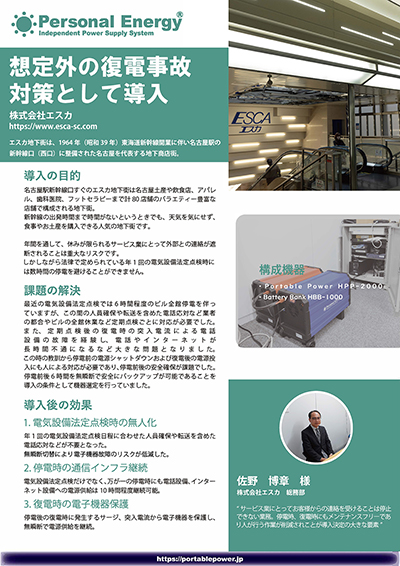
When a planned outage becomes a restoration-time incident
Esca Underground Shopping Center, directly connected to the Shinkansen side of Nagoya Station, periodically undergoes a whole-building outage for statutory inspection. The outage itself was expected. The risk that became visible was the loss of communications and business functions when utility power returned.
In an underground shopping center, loss of communications can immediately affect tenant operations, customer response, and safety confirmation. This case addresses a practical failure mode that occurred during a planned statutory outage, not an unplanned disaster.
The blind spot is power restoration
Whole-building outages required for statutory inspection are necessary for electrical maintenance. In recent years, Esca had been carrying out outages on the order of approximately six hours.
The problem was concentrated not during the outage, but at the moment of restoration. Inrush current, surges, and variation in manual re-energization could combine to destabilize communications equipment, causing telephone and Internet services to remain unavailable for an extended period.
- Communications equipment becomes unstable due to inrush current
- Manual power-up procedures introduce human error
- Telephone and Internet services remain unavailable after utility restoration
Operations that cannot stop and the human workload
Work does not disappear inside an underground shopping center simply because the building is without utility power. Staff deployment, guidance, safety checks, tenant support, and communications with security, maintenance, and management companies still remain.
The previous operating method depended on personnel remaining on site before and after the outage, shutting equipment down individually, restarting it manually, and then waiting for communications to recover. Because this approach depends heavily on people and time, both human error and recovery delay become operational risks.
Choosing a portable UPS
The design decision was not to protect everything. It was to identify the communications and control systems that must not stop and protect only that path.
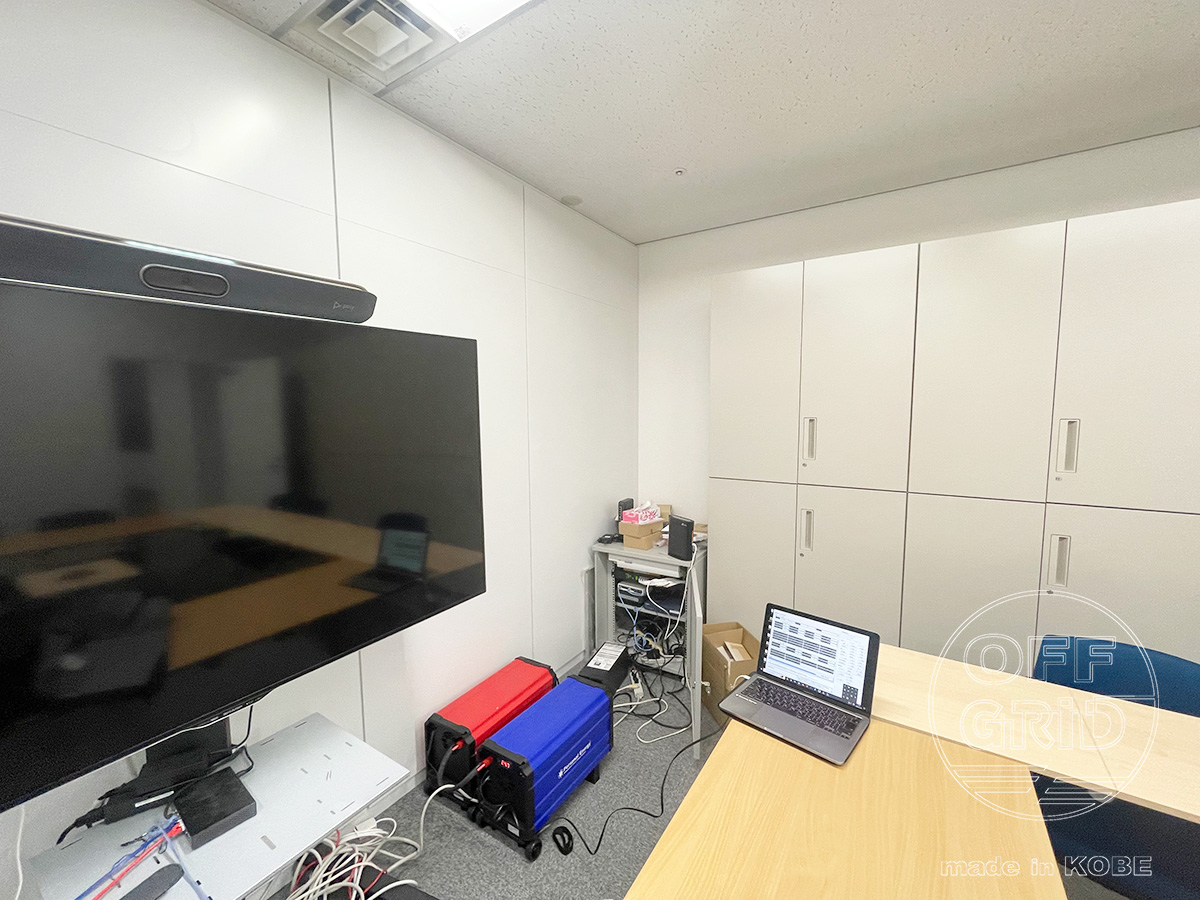
- Portable UPS in the approximately 6 kW class
- Power supplied to communications, telephone, and network equipment
- No-break operation so the outage and restoration sequence no longer requires equipment-level switching
By minimizing work before and after the outage, isolating communications equipment from restoration-time inrush current, and maintaining continuous operation without manual intervention, the portable UPS became a practical way to prevent a planned maintenance outage from turning into a business incident.
Operational results: less staffing, continuity, and incident prevention
The need to secure staff solely to remain on site for the annual statutory outage and recovery sequence was reduced substantially.
Telephone, Internet, and management communications were configured for more than approximately ten hours of continuity, regardless of whether the outage was planned or caused by an emergency.
Communications equipment is isolated from surges, inrush current, and unstable manual re-energization so that the outage can end without creating a second incident during restoration.
Customer-approved case-study PDF
This case is based on material used for internal explanation and deployment review with permission from Esca Co., Ltd. The downloadable PDF is the original Japanese customer-approved case-study material.
Public material describing restoration-time risk during statutory outages and the portable UPS configuration.
This is maintenance continuity, not disaster-only preparation
This project was not created only for rare emergency conditions. It addresses a scheduled outage that will occur as part of statutory maintenance and prevents that predictable event from becoming an operational incident.
The key point is that the same architecture also remains useful when an unplanned outage occurs. Communications continuity is built into normal maintenance operation rather than reserved for a special emergency mode.
Deployment Summary
| Customer / facility | Esca Co., Ltd. / Esca Underground Shopping Center |
|---|---|
| Protected functions | Telephone, Internet, and management communications |
| Trigger | Communications and business-recovery risk became visible when utility power returned after whole-building statutory inspection outages |
| Outage condition | Recent whole-building outages on the order of approximately six hours |
| Implemented method | Portable UPS in the approximately 6 kW class protecting communications, telephone, and network equipment without interruption |
| Runtime | Communications infrastructure configured for more than approximately ten hours of continuity |
| Operation | Reduced dependence on manual shutdown and restart before and after outages, while reducing restoration-time incident risk |
Revision History
| 2026-01-23 | Japanese case study published. |
|---|---|
| 2026-07-12 | Latest substantive update to the Japanese canonical case before V9.1 synchronization. |
| 2026-09-25 | English version synchronized from the Japanese CaseSpec V9.1 canonical page. |