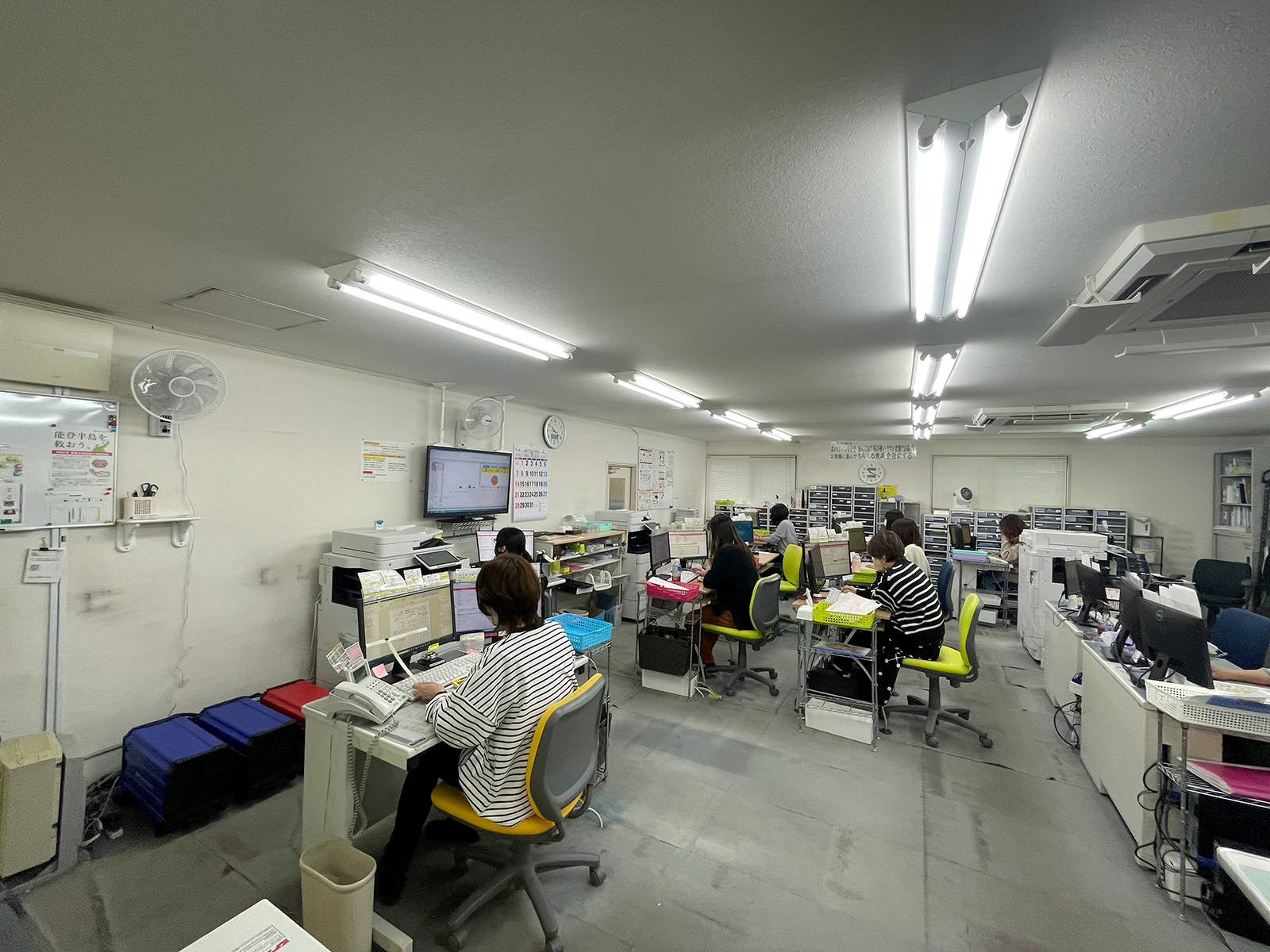
Keeping FAX available means keeping order intake available
Oriental Bakery operates an order center that receives orders from many business customers. FAX remains a practical order channel because it is less dependent on each customer\'s system environment and can be retained as a communication path during disruptions.
The protected function is not merely a communications medium. It is the business-input process that transfers orders confirmed by the cutoff time into the next day\'s production and shipping plan.
FAX reception does not work through the multifunction printer alone. The FAX server, router, ONU, network switch, multifunction printer, printing function, and the path used to confirm received data all have to remain available. If power is lost at any one point, orders can be missed or confirmation can be delayed.
The protected asset is not the multifunction printer.
It is the order path from receipt through confirmation to business processing.
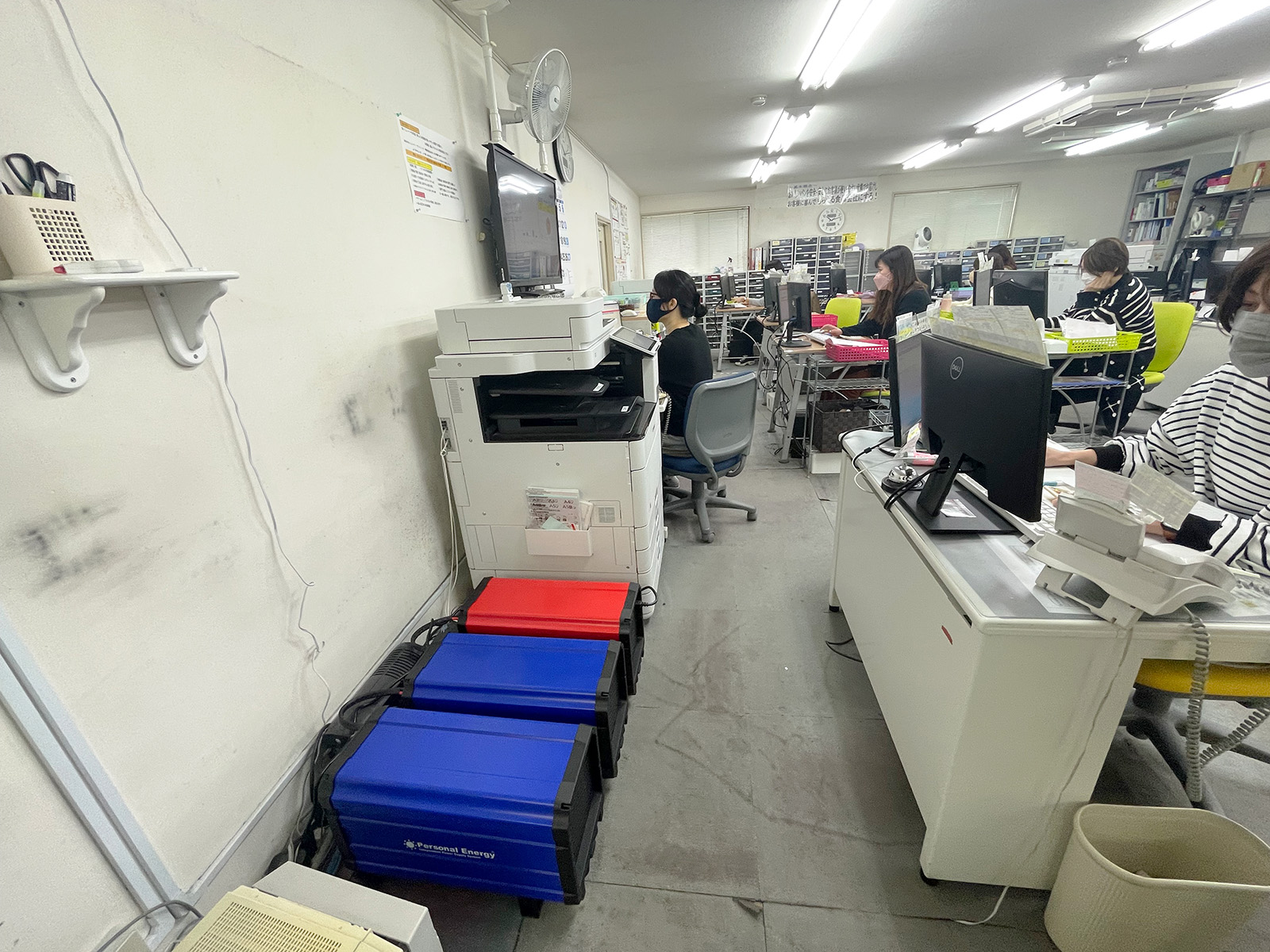
The sponge-and-dough process requires previous-day orders
Oriental Bakery uses the sponge-and-dough breadmaking process. A portion of the flour is mixed with water and yeast to make a sponge, which is fermented for several hours under controlled temperature and humidity before the remaining ingredients are added to make the final dough.
Because this maturation step takes time, production cannot simply begin immediately after an order arrives. The next day\'s production volume, product mix, and delivery destinations require orders to be confirmed by the designated cutoff time.
When customers are required to place orders before a cutoff because of production lead time, losing the order itself because a power outage prevents FAX reception is not acceptable. This is more than a delayed reception event; it can become an unrecoverable lost order for the next day\'s production and shipping cycle.
Previous-day orders are input data required to start the next day\'s production.
Stopping the order path therefore has the same operational effect as stopping the production process.
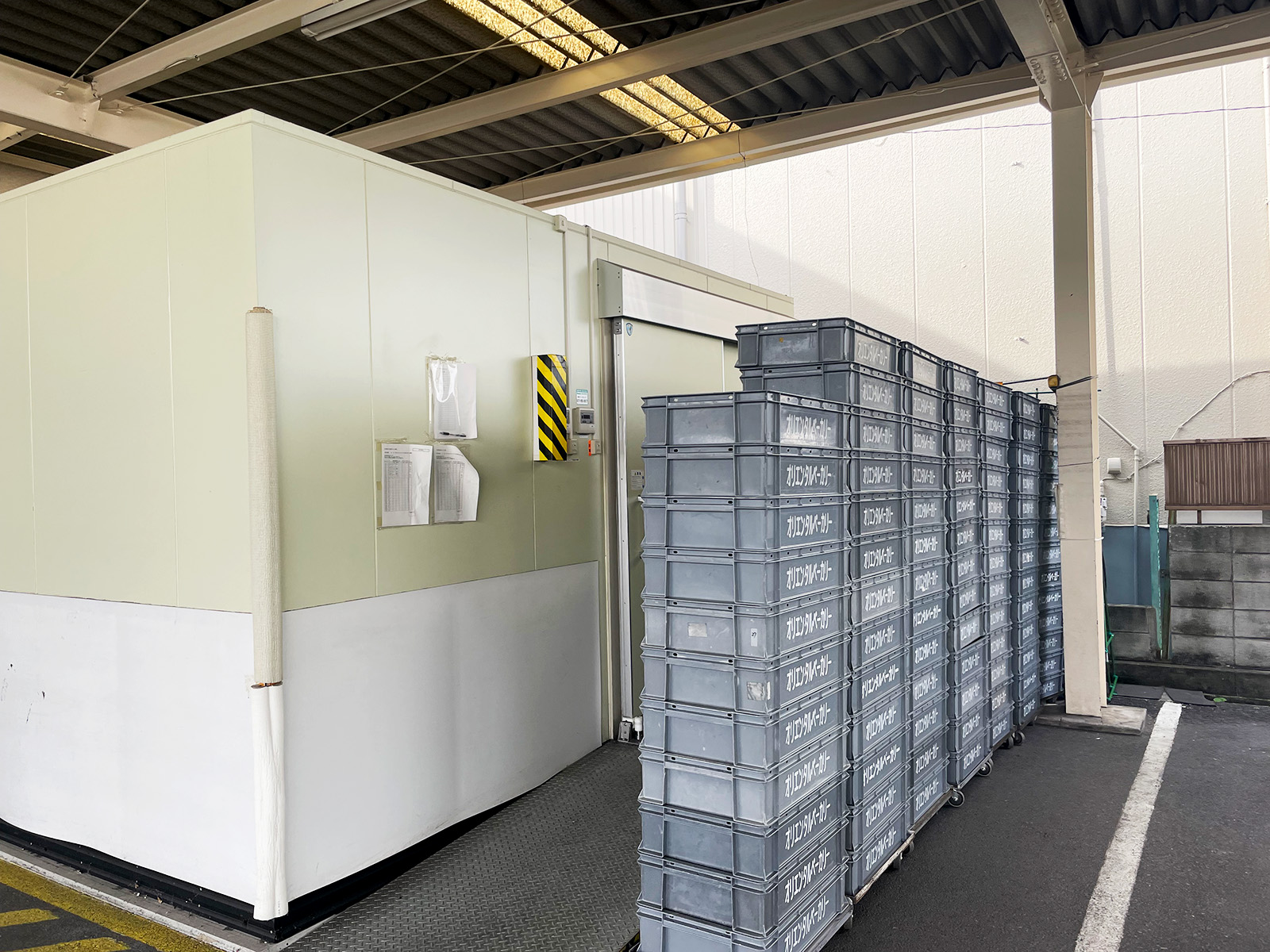
Production-process reference: Oriental Bakery recruitment website, “How Bread Is Made” (Japanese)
The existing UPS was limited to about 10 minutes
A conventional UPS is effective for riding through a momentary or short outage and allowing equipment to shut down safely. But roughly 10 minutes of runtime is not enough when order intake itself has to continue.
During a long-duration outage, if the existing UPS stops first, the multifunction printer may shut down even if the FAX server and network equipment remain powered, leaving received data unavailable for confirmation. Conversely, protecting only the multifunction printer is insufficient if the communications path has already failed.
| Conventional approach | Review in this case |
|---|---|
| Attach a small UPS to individual devices | Treat the entire order path as one critical load |
| Provide only a few minutes of runtime | Use expansion batteries to extend runtime to the period required for business continuity |
| Check equipment onsite after it stops | Notify staff of outages and power events so the initial response can begin earlier |
The challenge of variable load and inrush current from an MFP
A laser multifunction printer uses a fuser heater, motors, and paper-feed mechanisms, so power consumption can change substantially between standby and printing. Power-on and the start of printing can also create a large instantaneous inrush current.
A typical small UPS may interpret this instantaneous rise in current as an overload and shut down its output to protect the equipment. This is a protective action rather than a UPS failure, which means a design based only on steady-state consumption may not work in actual operation.
- Inrush current is detected as an overload
- Output stops when printing starts
- Printing of a received FAX is interrupted
- Calculated runtime does not match actual operation
- Follow rapid load changes
- Protect the multifunction printer and communications equipment together
- Maintain the path with no interruption
- Expand storage capacity to the required operating time
Protecting the MFP, FAX server, and communications path as one system
The project did not back up only the multifunction printer. It mapped the power path required to receive, store, print, and confirm a FAX through to the staff member who processes the order.
Communications line
  ↓
ONU / router / network switch
  ↓
FAX server
  ↓
Multifunction printer / printing
  ↓
Order confirmation / business processing
Protecting only the server, only the multifunction printer, or only the network equipment leaves a single point of failure somewhere in the chain. In a power BCP design, the protection boundary should be defined by the path required for the business function to work, not by the number of devices.
Bidirectional inverter and hot-swappable batteries
The portable UPS used in this project employs a bidirectional inverter to follow rapid load changes and supply stable AC power to the order path, including the multifunction printer. During an outage it maintains the path without interruption, while expansion batteries extend the available runtime.
The batteries support hot swapping, allowing storage capacity to be added or replaced without stopping the business workflow. The configuration can therefore continue order-intake operations while adapting to a longer outage.
Supply stable power to the multifunction printer through inrush current and print-load variation.
Keep the FAX server and communications path available during outages and momentary interruptions.
Add expansion batteries for the required operating period and replace them without shutting down the protected path.
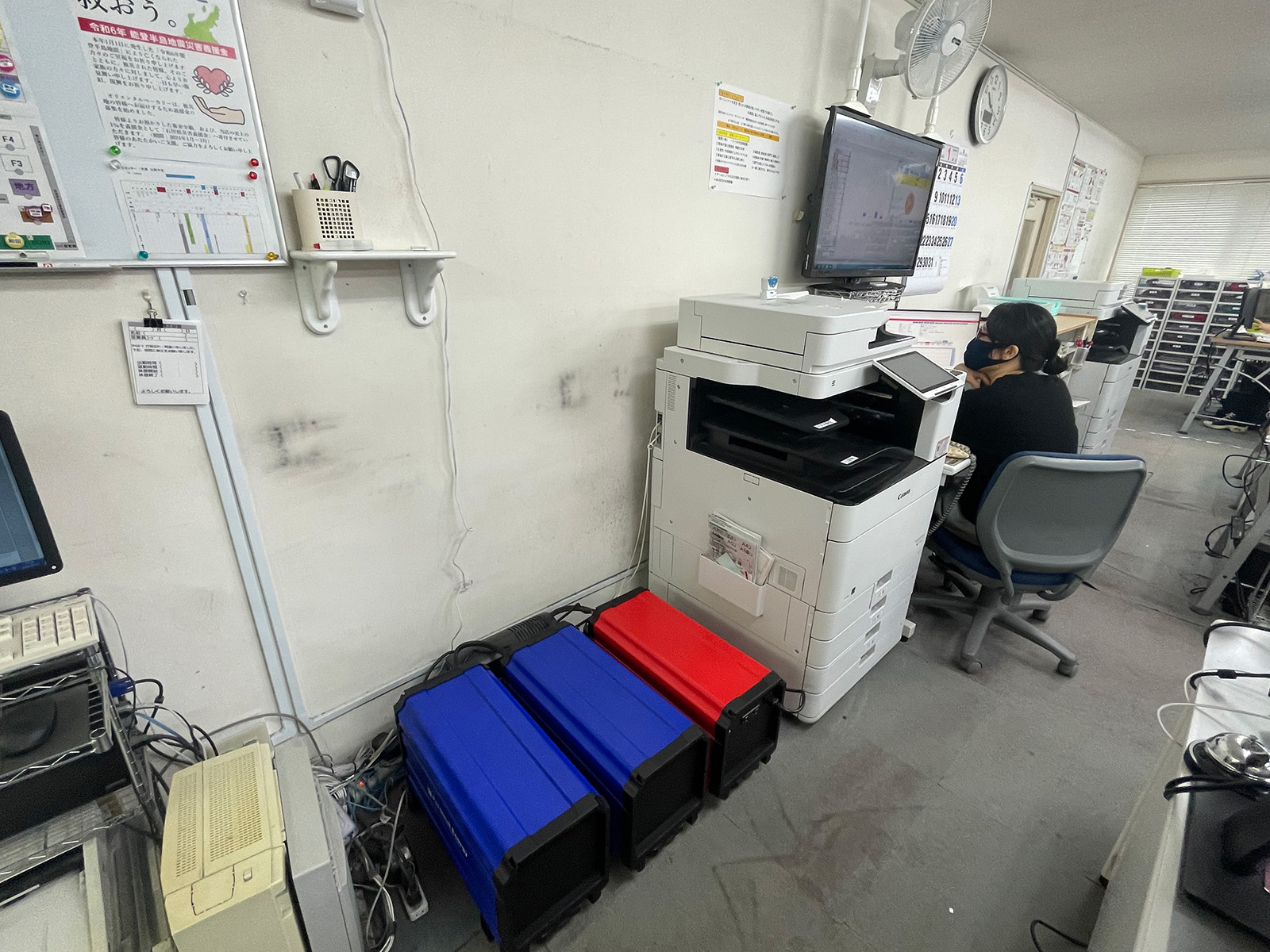
Outage notification and initial response
Even if the power path transfers successfully, a long-duration outage cannot be managed well if nobody knows that the outage has occurred. This project combines email notification of outages and power events so responsible staff can understand the situation early.
A portable UPS is not merely a device that buys time. It prevents the immediate stop while creating the time required for staff to assess the situation and take the necessary actions.
What this UPS implementation demonstrates
The point of this project was not simply to connect a larger UPS to a multifunction printer. It was to identify the devices and communications path that make the order process work, then design variable load, required runtime, notification, and maintenance as one protected power system.
- Food and logistics order centers
- FAX reception at medical facilities and pharmacies
- Municipal and disaster-response communications paths
- Hotel and facility reservation desks
- Operations that switch to paper-based workflows during system incidents
- Steady-state load and inrush current of the multifunction printer
- The complete path through the FAX server and communications equipment
- Required continuous operating time
- Notification destination and response procedure during an outage
- Installation location, temperature, and maintenance conditions
Before choosing UPS capacity,
define the business path that must remain available during an outage.
Deployment Summary
| Customer | Oriental Bakery Co., Ltd. |
|---|---|
| Target workflow | Previous-day order intake feeding the next day\'s production and shipping |
| Production premise | Several hours of fermentation and maturation in the sponge-and-dough process require orders to be finalized by the cutoff time |
| Protected equipment | Multifunction printer, FAX server, and network equipment |
| Previous constraint | Existing UPS runtime was about 10 minutes; variable load and inrush current from the MFP also had to be accommodated |
| Implemented method | Portable UPS with bidirectional inverter plus expansion batteries |
| Operations | No-break power, hot swap, outage and event notification |
| Purpose | Prevent loss of previous-day orders during an outage and reliably pass them into the next day\'s production and shipping plan |
References
- Oriental Bakery recruitment website, “How Bread Is Made” (Japanese) — Reference information on the production process, including the sponge-and-dough method.
Revision History
| 2026-07-27 | Original Japanese case published. |
|---|---|
| 2026-08-08 | Latest substantive update to the Japanese canonical case before the V9.1 migration. |
| 2026-09-25 | English version resynchronized from the Japanese CaseSpec V9.1 canonical page. |