Why we declined the project three times
Beginning around 2012, Dr. Tanabe approached us three times about converting the entire clinic to off-grid power. The system was commissioned in 2013. We declined each request.
The equipment was extremely costly, and reworking power distribution throughout the building required major electrical construction. This was fundamentally different from simply adding a battery: the clinic’s distribution circuits and everyday power supply configuration needed to be redesigned.
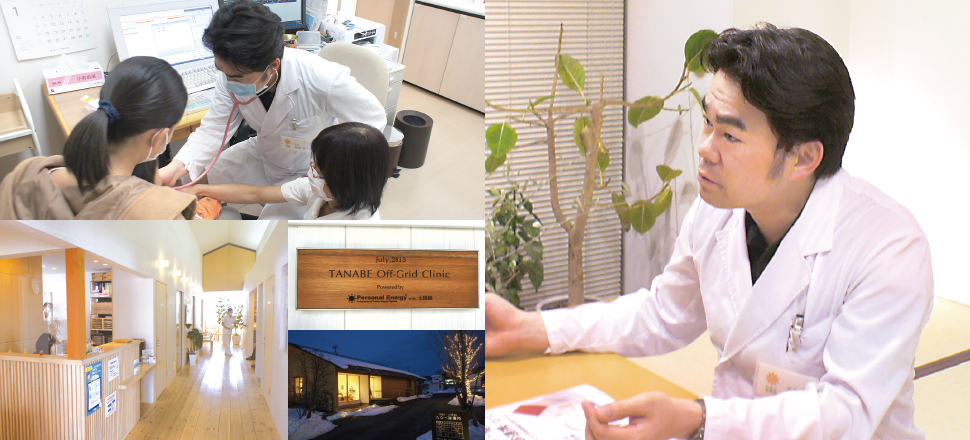
Dr. Tanabe’s determination ultimately persuaded us to undertake the work. Our company representative personally designed and installed the system. This is the background to Tanabe Clinic’s pioneering implementation.

PersonalEnergy® BMS576 custom model | Design and installation
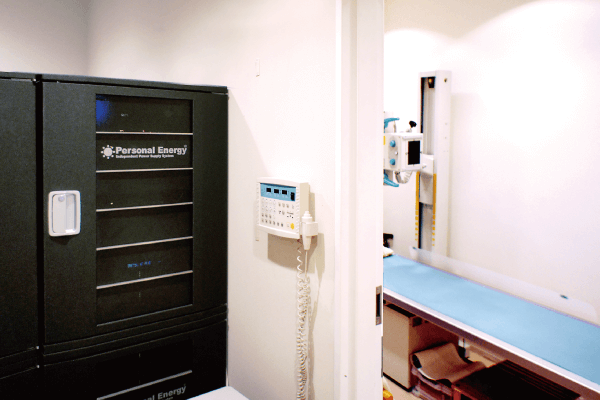
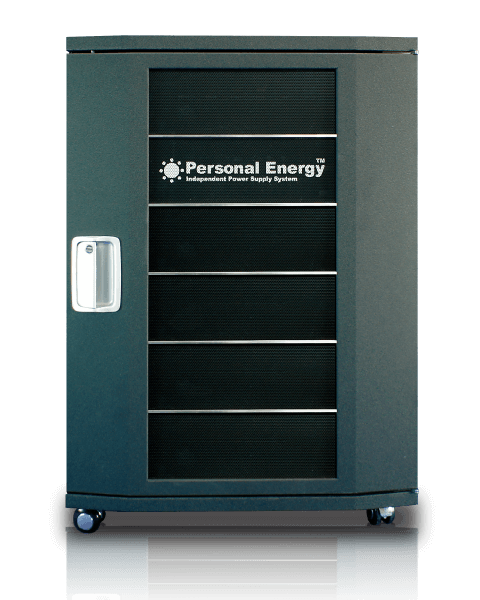
We designed and installed the custom PersonalEnergy® BMS576 to serve the entire building, not merely as emergency standby equipment. The system was designed to operate as part of the clinic’s ordinary daily electricity supply.
| System | PersonalEnergy® BMS576 custom model |
|---|---|
| Battery | Olivine-type lithium iron phosphate battery, 57.6 kWh |
| AC output | 12 kW + 11 kW |
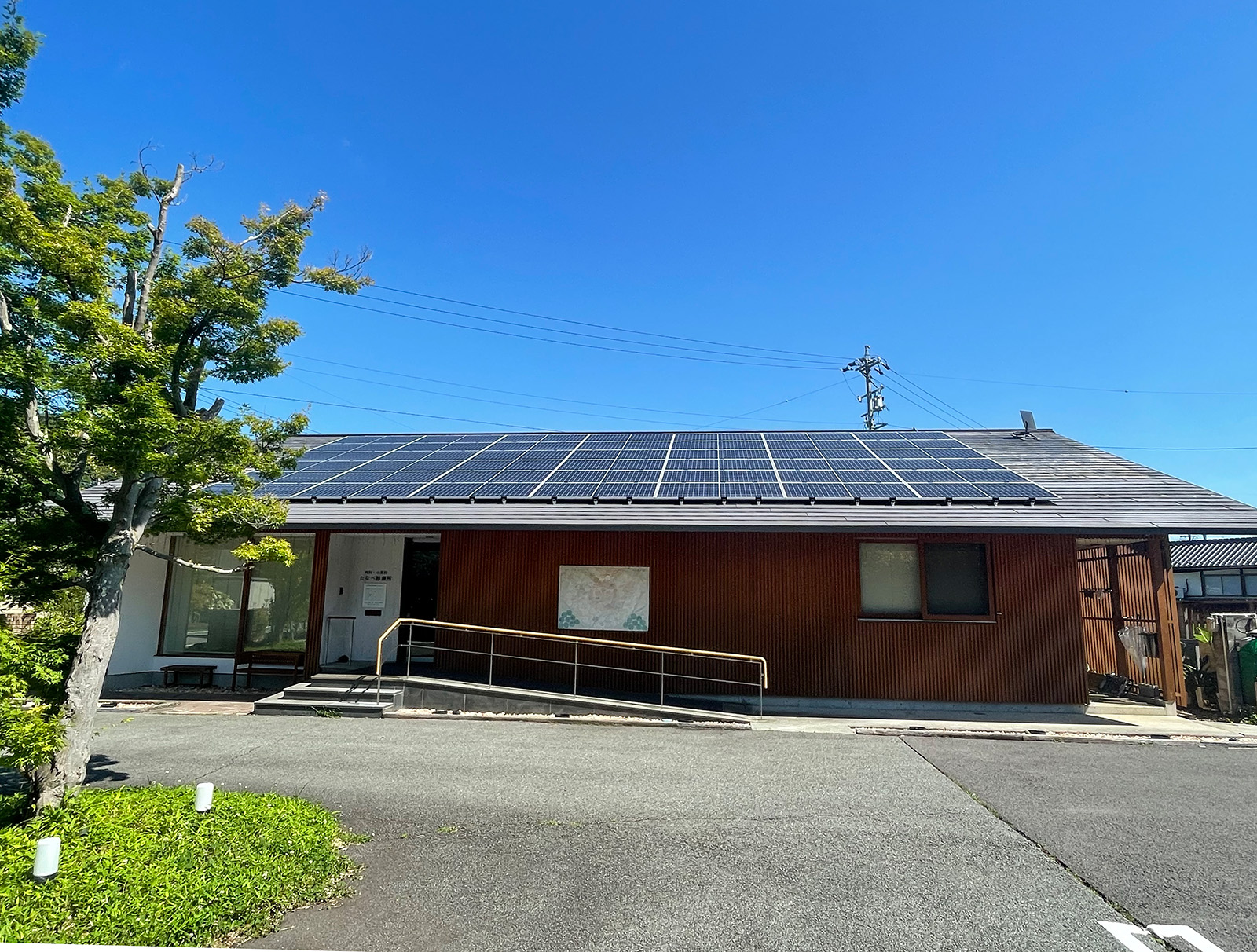
| Solar PV | 19.74 kW |
Reconfiguring the electrical system after construction
Tanabe Clinic is a newly built, single-story timber facility in Sakuho, Nagano Prefecture. The task was to modify its already installed electrical infrastructure. We divided the original single-phase three-wire system into three single-phase two-wire supply routes, arranging the loads to avoid phase imbalance.
Redesigning heating loads for severe winters
Winter heating demand is a key consideration in Sakuho. Heating loads were shifted to a wood-burning stove and underfloor heating, while electric heat-pump air conditioning (EHP) was configured for fully off-grid operation. Reducing and reallocating demand was as important as providing battery capacity.
Approximately 20 kW input requirement
The three two-wire routes and revised heating loads required approximately 20 kW of input power. The custom BMS576, 19.74 kW solar installation, 57.6 kWh battery and 12 kW + 11 kW AC outputs were combined to enable off-grid operation during clinical hours.
Off-grid power, connected reassurance: our 24/7 remote monitoring
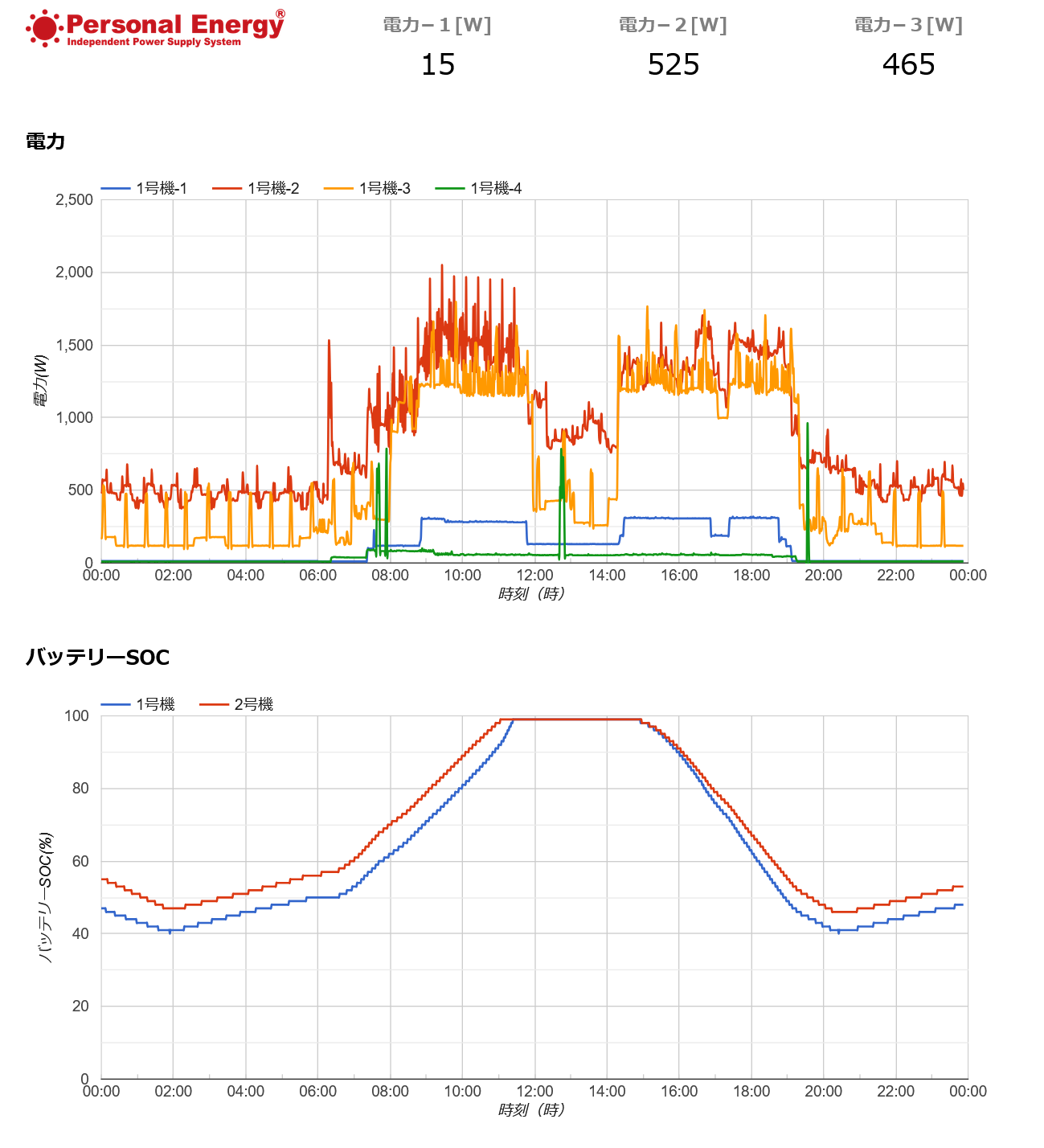
For more than ten years after installation, we have recorded power data at one-second intervals and monitored the installation remotely, 24 hours a day, 365 days a year. The same company that designed and installed the system continues to observe its daily operating condition. For another medical power application, see our ophthalmic hospital UPS case study.
The monitoring graph shows that the clinic operates on solar and stored energy during clinical hours. Battery SOC rises to 100% during the day and remains there for a period.
Between 20:00 and 06:00, after clinical hours, the system receives supplementary charging from utility power, targeting a 40–60% SOC range. This is an intentional daily practice: preparation for the possibility of a disaster on any given day.
Installation-era photographs
Other media coverage of Tanabe Clinic
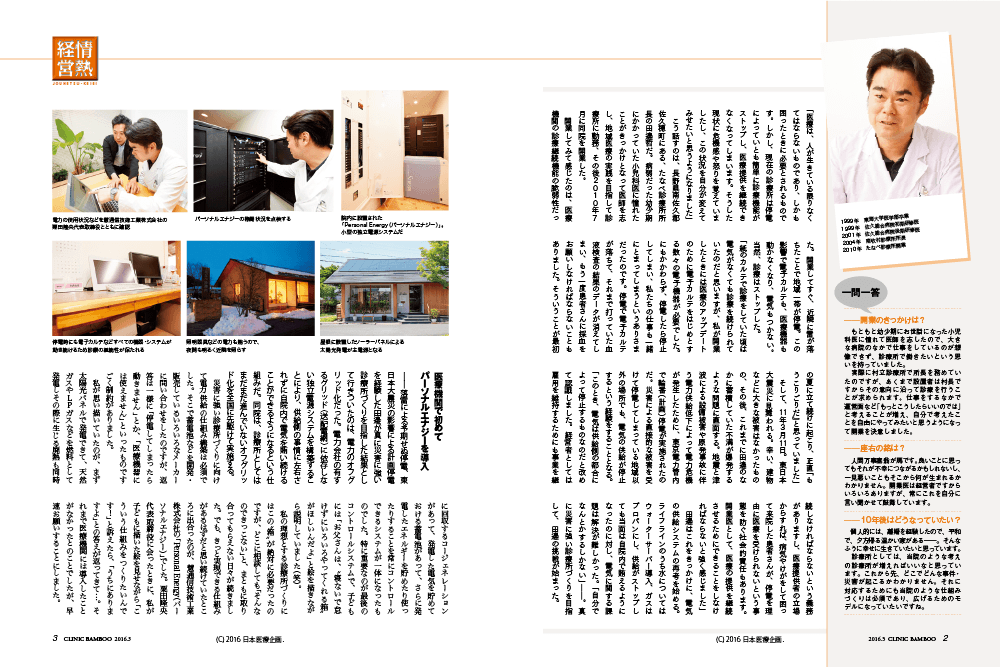
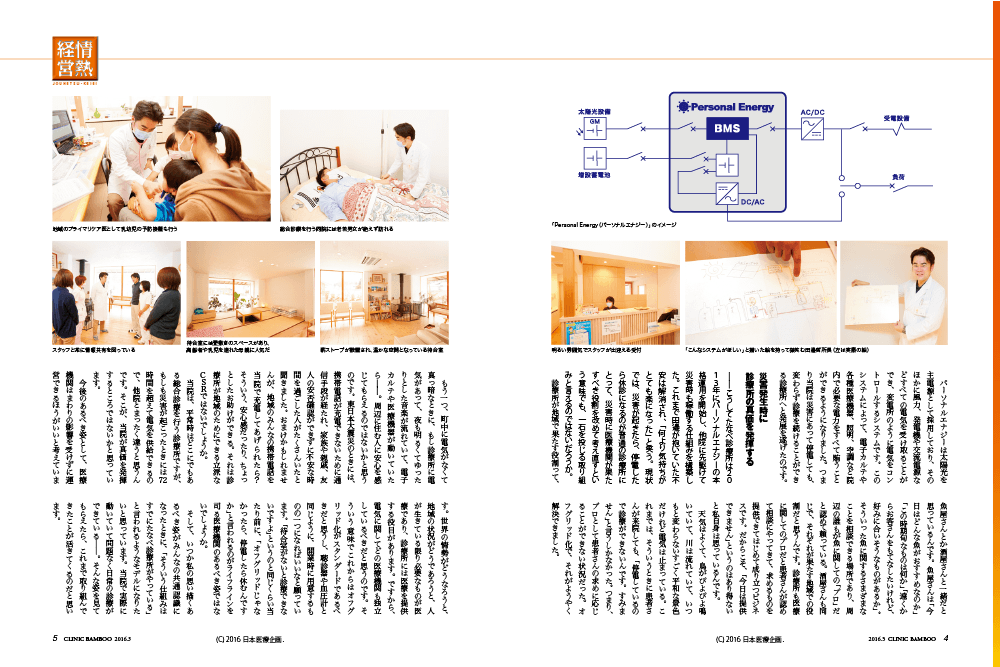
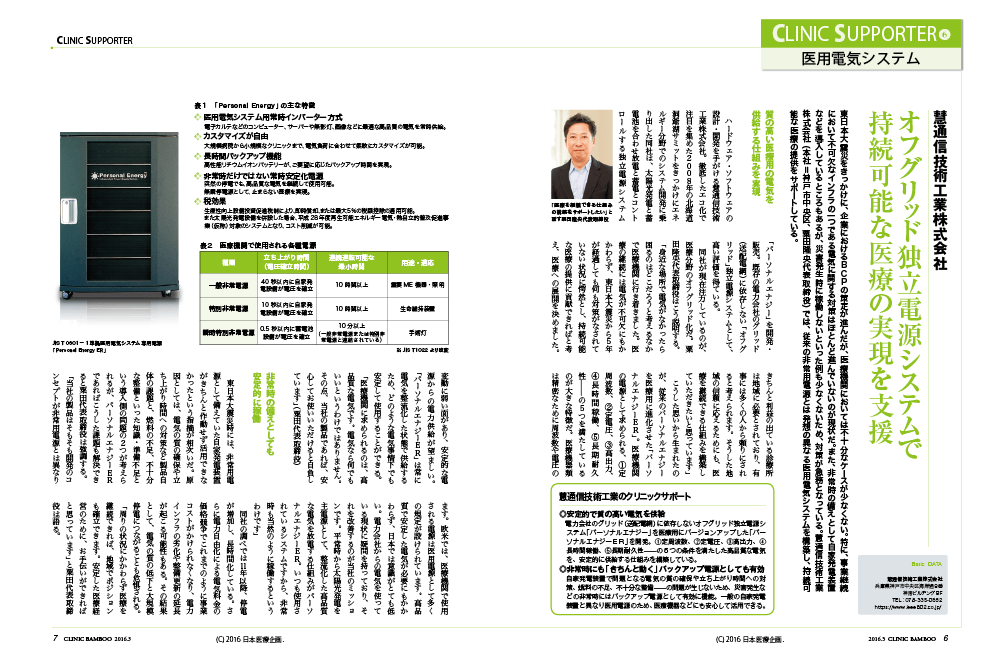
Tanabe Clinic’s approach has also been featured in medical and energy publications.
greenz.jp (October 16, 2014), interview with Dr. Tanabe (Japanese)
SOLAR JOURNAL (April 25, 2016), off-grid clinic energy storage feature (Japanese)
CLINIC BAMBOO, March 2016 — published article (PDF, Japanese)