Key Points
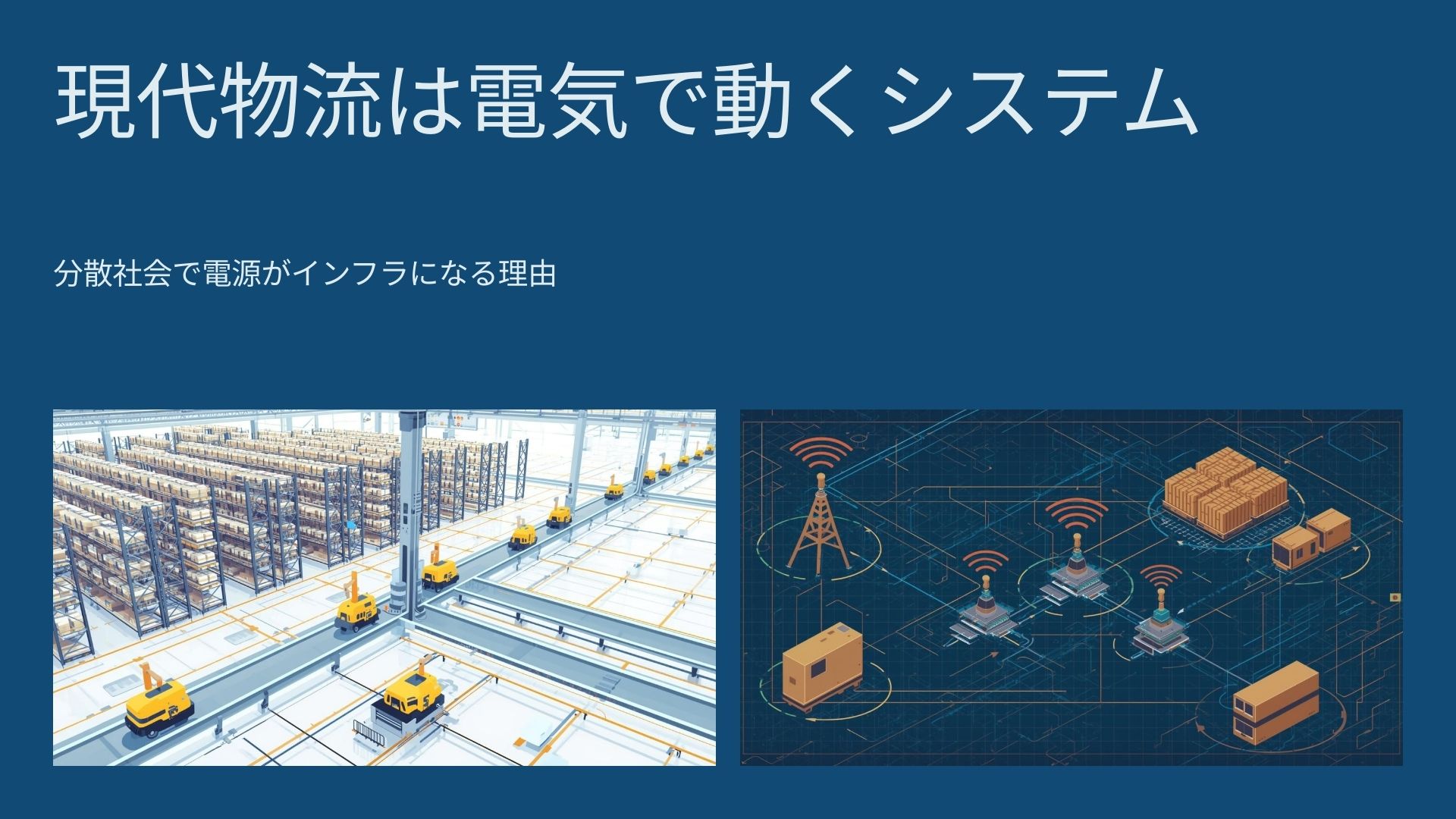
Modern logistics consists of four layers: physical assets, information, power and communications, and people and procedures. If one layer fails, inbound and outbound operations cannot continue even when all other equipment remains available.
Centralization expands efficiency and impact at the same time
Shared systems, common authentication, outsourcing, and integrated logistics networks improve efficiency, but they also enlarge the blast radius of a disruption.
Different causes produce the same operational outcome
Cyberattacks, power failures, momentary interruptions, communications loss, and authentication failures all appear operationally as blocked inbound and outbound work, shipment suspension, replanning, and increased inquiries.
Restart and return to normal operations are different
Starting a system does not restore processing capacity until inventory integrity, backlogged orders, vehicle scheduling, priorities, and customer communications have been reconstructed.
Continuity requires degraded-mode operations, not prevention alone
Essential supply must be preserved by limiting products and regions and using local data, alternative communications, paper records, and pre-approved priority rules.
Case / Cold Chain / System Isolation / Supply Impact
1. What a Disruption at a Major Temperature-Controlled Logistics Group Revealed
In July 2026, a major frozen-food and temperature-controlled logistics group confirmed a cyberattack against its servers. To protect customer information and data and prevent further damage, the group isolated systems used across its operations. The resulting disruption affected inbound and outbound work at refrigerated warehouses and the shipment of frozen foods.
The impact did not remain inside the group. Reports described consequences for restaurant chains, retailers, food manufacturers, consumer cooperatives, prepared-meal and catering operators, and school meal programs. Organizations that were not directly attacked still faced shortages, delayed deliveries, restricted sales, and menu changes because they depended on the same logistics network, refrigerated warehouses, or inbound and outbound systems.
The case was not defined by the disappearance of goods. It showed that when the ability to identify, retrieve, ship, and record delivery of goods stops, logistics cannot be executed even though inventory, warehouses, and vehicles still exist.
Identification of the case and limits of available information
This case is based on the system disruption disclosed by the Nichirei Group in July 2026. As of July 16, 2026, the attack method, intrusion path, and details of the individual systems affected had not been disclosed. This article does not speculate about undisclosed facts. It uses official statements and confirmed operational effects to examine structures common to logistics networks.
Official statement: Nichirei Corporation, “System Disruption Affecting the Nichirei Group, Second Report,” July 15, 2026 [Japanese]
Inventory / Identity / Location / Instruction / Proof
2. Why Goods Cannot Be Shipped Even When Inventory Exists
Logistics was once understood primarily as the work of transporting physical goods. Modern logistics, however, processes the information needed to identify an item, verify its condition, and authorize its movement before the item itself is moved.
Before movement
Decide which goods may be shipped
Orders, allocations, stock quantity, storage location, lot number, expiration date, temperature class, and shipping priority must be reconciled.
During movement
Retrieve goods from the correct location
WMS, handheld terminals, barcodes, RFID, wireless LAN, and material-handling equipment direct the work sequence and destination.
After movement
Confirm that shipment occurred
Inspection, labeling, loading, vehicle dispatch, delivery, inventory updates, billing, and traceability must be recorded.
LOGISTICS EXECUTION CHAIN
Replacing one step with manual work does not preserve accuracy, safety, or traceability when the information before and after that step cannot be connected.
Four Layers / Cyber-Physical System / Operations
3. The Four Layers That Make Modern Logistics Work
Logistics availability cannot be assessed by examining servers, warehouse equipment, and emergency power separately. Logistics is a cyber-physical system in which the following four layers must operate at the same time.
Layer 1
Physical assets
Goods, refrigerated and frozen warehouses, racks, conveyors, forklifts, AGVs and AMRs, trucks, and loading equipment.
Layer 2
Information
ERP, WMS, orders, inventory, dispatch, authentication, master data, labels, and traceability.
Layer 3
Power and communications
Utility distribution, UPS, generators, network switches, routers, wireless access points, PoE, circuits, and time synchronization.
Layer 4
People and procedures
Warehouse staff, transport management, maintenance, IT, partner communications, isolation decisions, manual fallback, and recovery sequencing.
Duplicating physical equipment does not create resilience if all systems depend on one authentication service. Redundant systems are not fully redundant when they still depend on the same network, the same power source, or the same operations team.
Concentration Risk / Shared Dependency / Third Party
4. Centralized Management and Outsourcing Expand Both Efficiency and Impact
Shared delivery networks, outsourced logistics, common warehouses, cloud WMS, centralized authentication, and integrated master data support lower inventory, better transport efficiency, visibility, and labor-constrained operations. Under normal conditions, the more organizations share a platform, the more duplicated investment can be reduced.
When many companies, stores, and products connect to the same platform, however, one outage can spread across several industries at the same time. A company may have functioning internal systems and still be unable to move its products when an outsourced warehouse, authentication service, dispatch function, or data exchange is unavailable.
Value during normal operations
- Consolidated inventory and facilities
- Improved transport efficiency and load factors
- Visibility through shared data
- Reduced duplication of equipment and personnel
Impact during disruption
- Failures spread to multiple business partners
- Alternative warehouses lack required data
- Manual capacity is exceeded
- Inquiries and exception processing concentrate at once
Outsourcing itself is not the problem. The problem is failing to see dependencies, maximum tolerable downtime, alternative paths, data portability conditions, and responsibility boundaries for degraded-mode operations across both the organization and its providers.
Cyber / Power / Communications / Common Operational Outcome
5. Cyber and Power Failures Have Different Causes, but the Same Logistics Outcome
Cyberattacks, power failures, momentary interruptions, and communications outages have different causes and require different controls. They must not be confused. At the operational level, however, they produce several common outcomes.
| Trigger | Immediate response | Operational result | Primary controls |
|---|---|---|---|
| Cyberattack | Isolation, disconnection, investigation, and validation of accounts and endpoints | WMS, ordering, dispatch, and inventory updates stop | Segmentation, backups, alternative authentication, local operation, and recovery procedures |
| Power failure or momentary interruption | Power transfer, safe shutdown, restart, and state verification | Communications, controls, handhelds, labels, and material handling stop | UPS, generators, batteries, priority loads, and real-load testing |
| Communications outage | Alternative links, local processing, and verification of connection, time, and authentication | Handheld connectivity, cloud queries, and instruction delivery stop | Link redundancy, local caching, PoE protection, and offline procedures |
A portable UPS does not prevent cyberattacks.
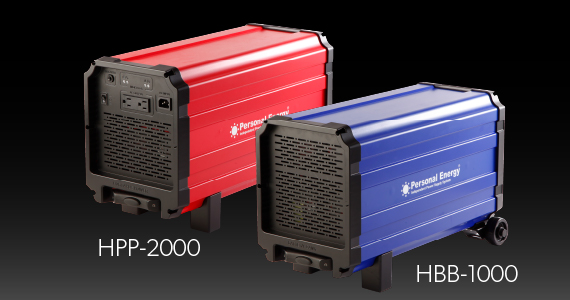
A UPS protects networks, authentication services, recovery terminals, local servers, label printers, and critical controls from power failures, momentary interruptions, and voltage disturbances. It supports safe shutdown during isolation, power continuity during investigation, phased restart, and temporary relocation of essential operations. Information-security controls and power-continuity controls are not substitutes. They are complementary measures for different failure causes.
Recovery Sequence / Data Integrity / Backlog
6. System Restart Is Not the Same as Logistics Normalization
Incident reports sometimes describe recovery as the point when servers or networks are brought back online. In logistics, restored connectivity alone does not return an operation to normal service.
-
1. Validate safe connections and authentication
Confirm that endpoints, accounts, networks, external connections, time synchronization, and privileges are in the correct state.
-
2. Reconcile inventory and transaction data
Compare orders, allocations, outbound movements, returns, in-transit inventory, and manually processed transactions before and after the disruption.
-
3. Classify the backlog
Reset shipping priorities according to deadlines, temperature class, social importance, customer inventory, and reachable delivery regions.
-
4. Replan vehicle and labor capacity
Rebuild the recovery plan using not only normal routes but also extra vehicles, personnel, loading time, and actual warehouse throughput.
-
5. Communicate one consistent operating status
Standardize the scope of reopening, shortages, alternatives, lead times, and order-acceptance conditions to reduce secondary load from inquiries.
Recovery time is not only the time required for power, servers, or communications to return. It is the time required to restore the ability to deliver the correct product to the correct recipient again.
Degraded Mode / Manual Fallback / Local Operation
7. The Core of Logistics BCP Is Degraded-Mode Operation Until Full Recovery
It is not realistic to duplicate every function and prevent every possible disruption. The critical decision is which supplies will be preserved, and by what method, while normal operations remain unavailable.
Limit the scope
Define in advance the products, customers, regions, and routes that receive priority, including healthcare, school meals, and essential goods.
Retain local information
Keep the minimum inventory, shelf-location, contact, and work-procedure data available when the central system cannot be used.
Define the limits of manual work
Set the number of transactions that paper forms or spreadsheets can process, along with verification, approval, and later data-entry procedures.
Pre-approve exception handling
Define when normal procedures for labels, substitutions, split deliveries, proof of receipt, and temperature records may be changed.
Make communications and power independent
Use alternative links, radio, local networks, UPS, and batteries to keep the equipment required for degraded-mode operations available.
Train the return to normal systems
Practice reconciling records from the manual period, preventing duplicates, and correcting inventory when transactions are returned to the normal system.
Returning to paper is not a complete solution. When transaction volume, mis-shipment risk, temperature control, traceability, and later data entry exceed the manageable range, manual work becomes a new source of failure.
Distributed Society / Local Hubs / Autonomous Infrastructure
8. In a Distributed Society, Each Logistics Hub Needs a Degree of Autonomy
Population decline, labor shortages, transport distance, geopolitical risk, and disasters are pushing supply chains toward combinations of regional hubs rather than dependence on one enormous central facility alone. The aim is to shorten the distance between production, storage, and consumption and preserve supply at a regional level.
Smaller distributed sites may not have the redundancy, permanent generators, or specialist electrical and IT staff found in large data centers. They still depend continuously on WMS terminals, wireless access points, PoE switches, monitoring, label printing, authentication, and sensors.
Power
Keep critical loads available
Protect the communications, authentication, controls, and work terminals needed for continuity rather than attempting to back up the entire facility.
Communications
Continue locally when the center is unavailable
Maintain alternative links and local networks so that limited functions continue during central-system disruption.
Operations
Enable local decisions
Authorize sites to ship, stop, substitute, and communicate within pre-defined limits without waiting for central approval.
A distributed society does not become resilient merely by increasing the number of small sites. Each site must be able to preserve a minimum level of power, communications, information, and decision-making on its own.
Design Principles / MTPD / SPOF / Test
9. Seven Decisions to Make Before Logistics Stops
1. Supplies that must not stop
Classify products, customers, regions, and time windows, then identify the supplies that receive the highest continuity priority.
2. Maximum tolerable downtime
Define how long the operation can tolerate loss of systems, warehouse functions, communications, and power.
3. Dependencies and single points of failure
Map outsourced warehouses, authentication, circuits, cloud services, maintenance, and personnel, not only internal systems.
4. Degraded-mode processing capacity
Quantify how many transactions manual work, local operation, and alternative warehouses can process, and for how long.
5. Priority of power protection
Identify network, authentication, WMS terminals, time synchronization, labels, and critical controls at circuit level.
6. Recovery sequence
Assign the order and owners for safety validation, authentication, data reconciliation, priority shipping, and normalization.
7. Test the stop and the return
Go beyond tabletop exercises by testing circuit loss, power failure, endpoint isolation, paper processing, data restoration, and additional transport capacity.
Conclusion
10. Logistics Availability Is Not Determined by Warehouse Equipment Alone
In modern logistics, the existence of goods, warehouses, and vehicles is not the same as the ability to move goods. Inventory becomes available to society only when information, authentication, communications, power, and work procedures remain connected.
Centralized management and outsourcing improve normal-time efficiency. At the same time, they create concentration risk in which failure of a common platform spreads across multiple companies, industries, and public services. The answer is not to reject centralization, but to design which functions and alternative paths remain available when it stops.
Cybersecurity controls, power-continuity controls, alternative communications, and degraded-mode supply measures are all separately necessary. Connecting them into one logistics-continuity design is the modern form of business continuity planning.
Distributed Infrastructure Series
Three Power Infrastructures for a Distributed Society
Part 1 / This page
Modern Logistics Runs on Power and Information
View logistics through four layers—physical assets, information, power and communications, and people—and examine cascading disruption and degraded-mode operations.
Part 2
Autonomous Distributed Communications Sites and Long-Duration Power
Conditions required to maintain IoT, local 5G, and distributed communications sites when central circuits and utility power are unavailable. Japanese article.
Part 3
Edge Data Centers and AI Automation
Power design that keeps edge processing and control available as AI moves from centralized clouds into operating sites. Japanese article.
Sources / Information Date
Primary Materials for the Case
- Nichirei Corporation, “System Disruption Affecting the Nichirei Group, First Report,” July 13, 2026 [Japanese]
- Nichirei Corporation, “System Disruption Affecting the Nichirei Group, Second Report,” July 15, 2026 [Japanese]
- FNN Prime Online, “Impact of the Nichirei System Disruption Expands,” July 16, 2026 [Japanese]
The case section is based on public statements and reporting available as of July 16, 2026. It may be updated as investigations, restoration work, and additional disclosures progress.
FAQ
Frequently Asked Questions
Q1. Why can logistics stop even when goods and vehicles are still available?
Orders, inventory, storage location, lot number, expiration date, temperature class, picking, labels, vehicle dispatch, and proof of delivery are linked through information systems. Goods cannot be shipped safely and accurately when those records cannot be verified or updated.
Q2. Does a UPS prevent cyberattacks?
No. Cyberattacks are addressed through authentication, segmentation, monitoring, updates, and backups. A UPS is a power-continuity measure that protects communications, controls, and recovery work from outages and momentary interruptions.
Q3. What are degraded-mode operations?
They are operations that limit products, customers, regions, and processing volume so that a minimum level of essential supply can continue while normal functions are unavailable.
Q4. Which loads should receive priority power protection at a logistics site?
Networks, wireless access points, authentication, WMS terminals, time synchronization, label printing, critical control panels, and communications required for continued operations or safe shutdown.
Q5. Is the operation recovered as soon as the system restarts?
Not necessarily. Inventory integrity, backlogged orders, priorities, vehicle scheduling, and customer communications must be reconstructed before normal processing capacity returns.
Map Logistics Dependencies Across Power, Communications, and Operations
We examine WMS, wireless LAN, PoE, control panels, monitoring, authentication, labeling, and temporary operations to identify critical loads, maximum tolerable downtime, power single points of failure, communications dependencies, and degraded-mode requirements.
Rather than over-sizing backup for an entire facility, we identify the circuits required for logistics continuity and combine uninterrupted transfer, longer runtime, portability, alternative communications, and local operation. Review logistics-site continuity risks