From 2025, Tokyo fully implemented a program requiring designated suppliers of new homes and buildings to address solar installations together with insulation and energy-efficiency performance.
It is one of Japan's more far-reaching urban decarbonization measures.
This article examines what the program can realistically solve and what it cannot, comparing its structure with quantitative analysis from overseas.
1. The objective of the program is clear -- and rational
The aims of Tokyo's program are straightforward.
- Increase renewable-energy deployment in urban areas
- Secure energy efficiency at the construction stage
- Reduce CO2 emissions from the residential sector
These measures can be more cost-effective when built into new construction than when added through later retrofits, which makes the policy structure rational.
Under the physical constraints of a dense city, rooftop PV is also one of the limited renewable-energy options that can be deployed widely.
2. The quantitative limit also appears in the NZAu analysis
The limits facing the program are equally clear.
Quantitative analysis by Net Zero Australia (NZAu), an independent Australian research project, indicates that even with extensive deployment, rooftop PV and distributed energy resources have limits in the total volume they can provide.
Tokyo's program has the same structural constraint.
- Roof area has a physical upper limit.
- Solar conditions are not uniform across the city.
- Rooftop generation cannot by itself serve system peaks or industrial demand.
In other words, the program is directionally correct as an addition to the system, but it cannot become the system's main source of supply.
Figure 1. Projected Domestic Primary Energy Consumption (NZAu)
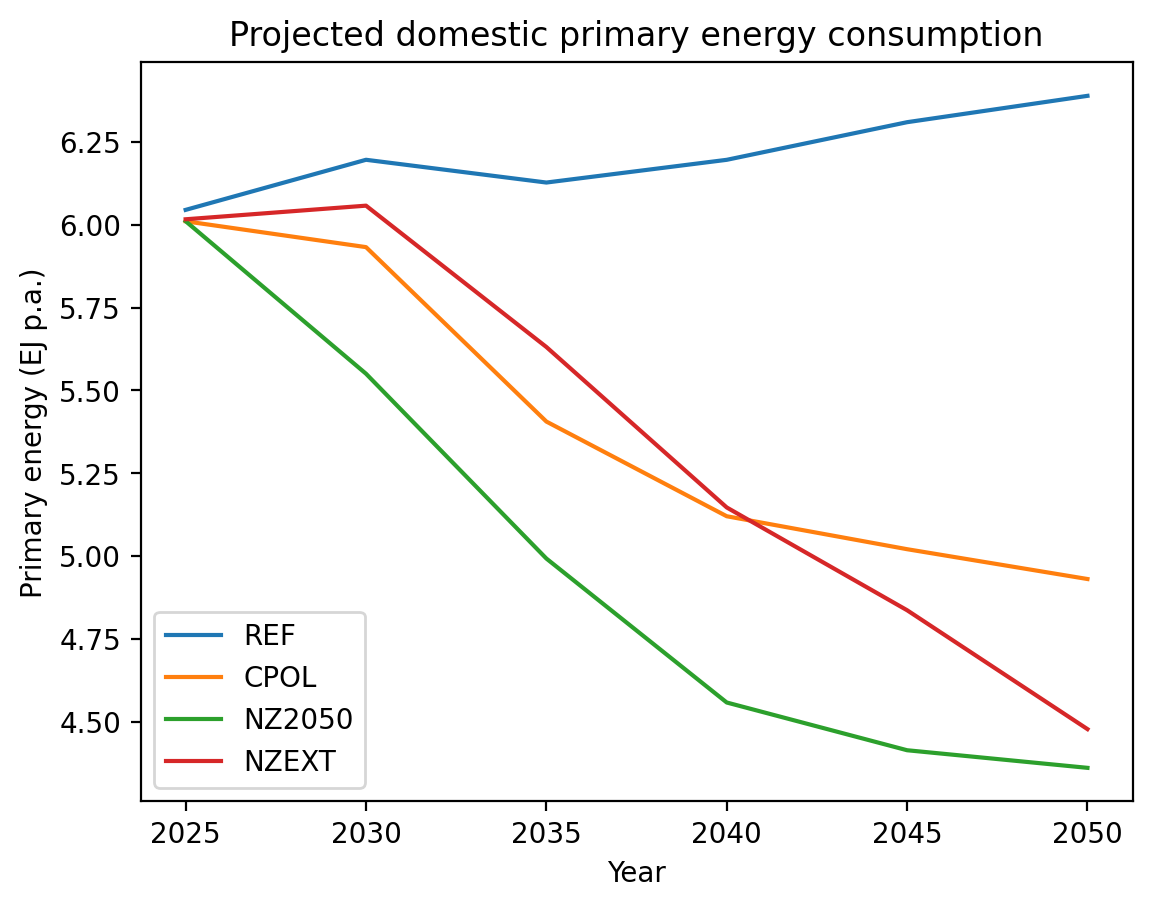
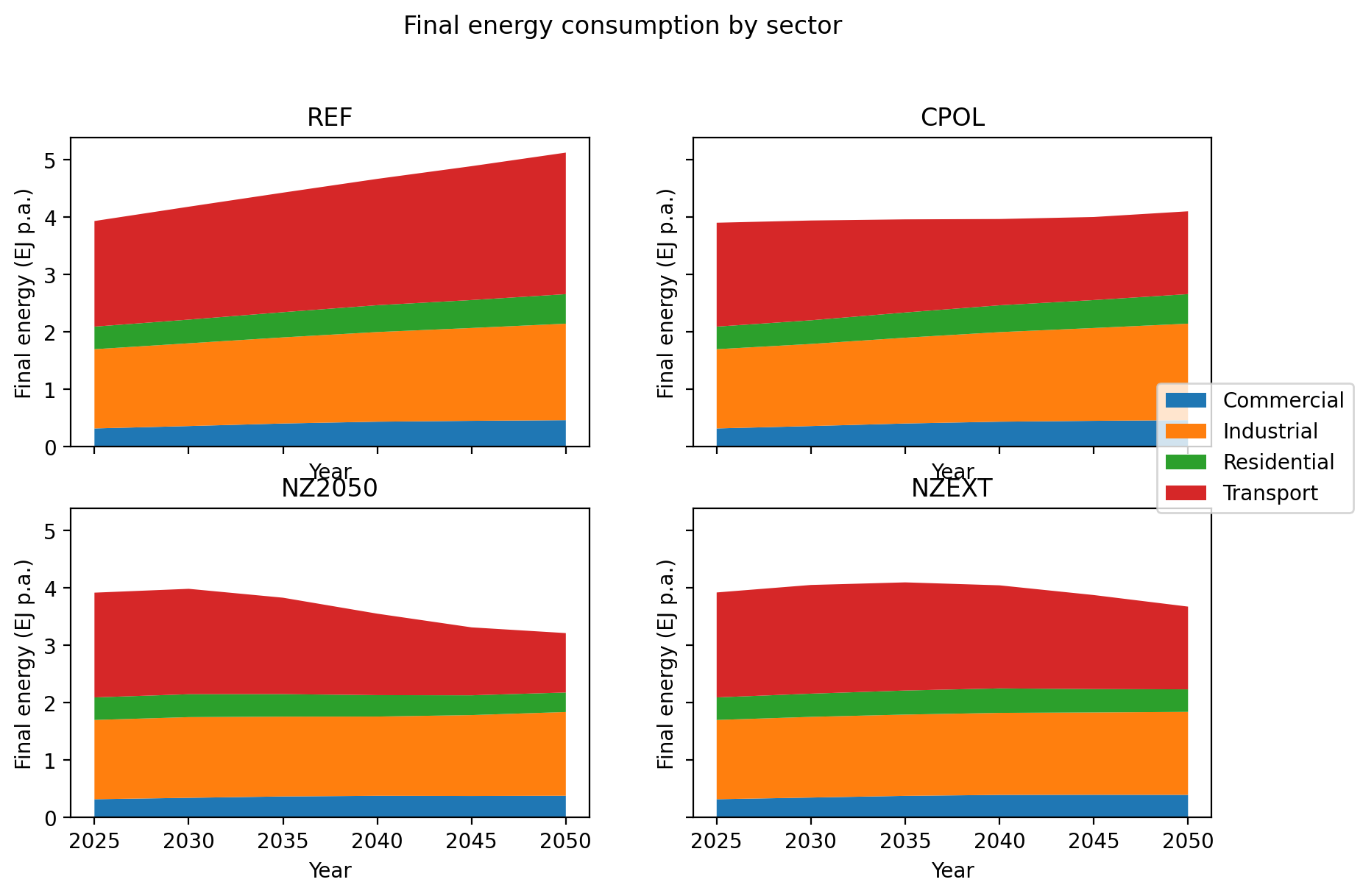
Figure 2. Final Energy Consumption by Sector (NZAu)
3. The unavoidable gap between expectations and delivery
The program also reflects a wider tendency in Japan to place excessive expectations on distributed renewable energy.
- The expectation that mandates alone will drive decarbonization
- The expectation that individual action can change the entire energy system
- The expectation that power-system problems can be solved at the housing level
In practice, unavoidable issues remain: concentrated replacement cycles, battery degradation and replacement cost, and the long-term sustainability of models that depend on subsidies.
That does not make the program a failure. A more accurate interpretation is that expectations placed on the program can exceed what its physical scope allows.
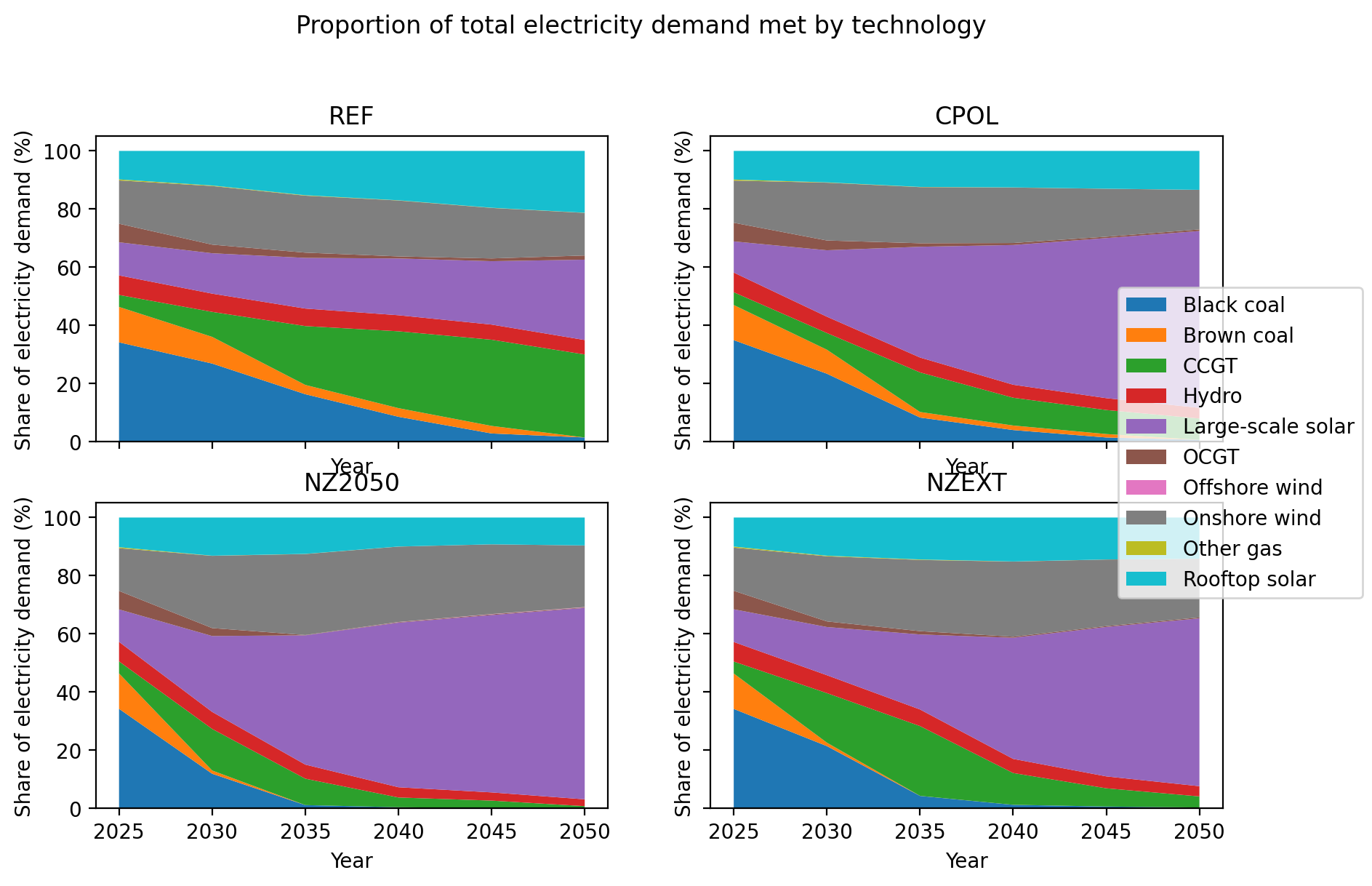
Figure 3. Share of Electricity Demand Met by Technology (NZAu)
4. The role Tokyo's program can realistically play
Tokyo's solar requirement is not a decisive measure that can take Japan to net zero on its own.
Its more realistic role is to reduce part of the dependence on the wider grid, secure a minimum level of resilience during disasters and outages, and ease demand peaks in urban areas.
In that sense, its role is to complement the centralized energy system.
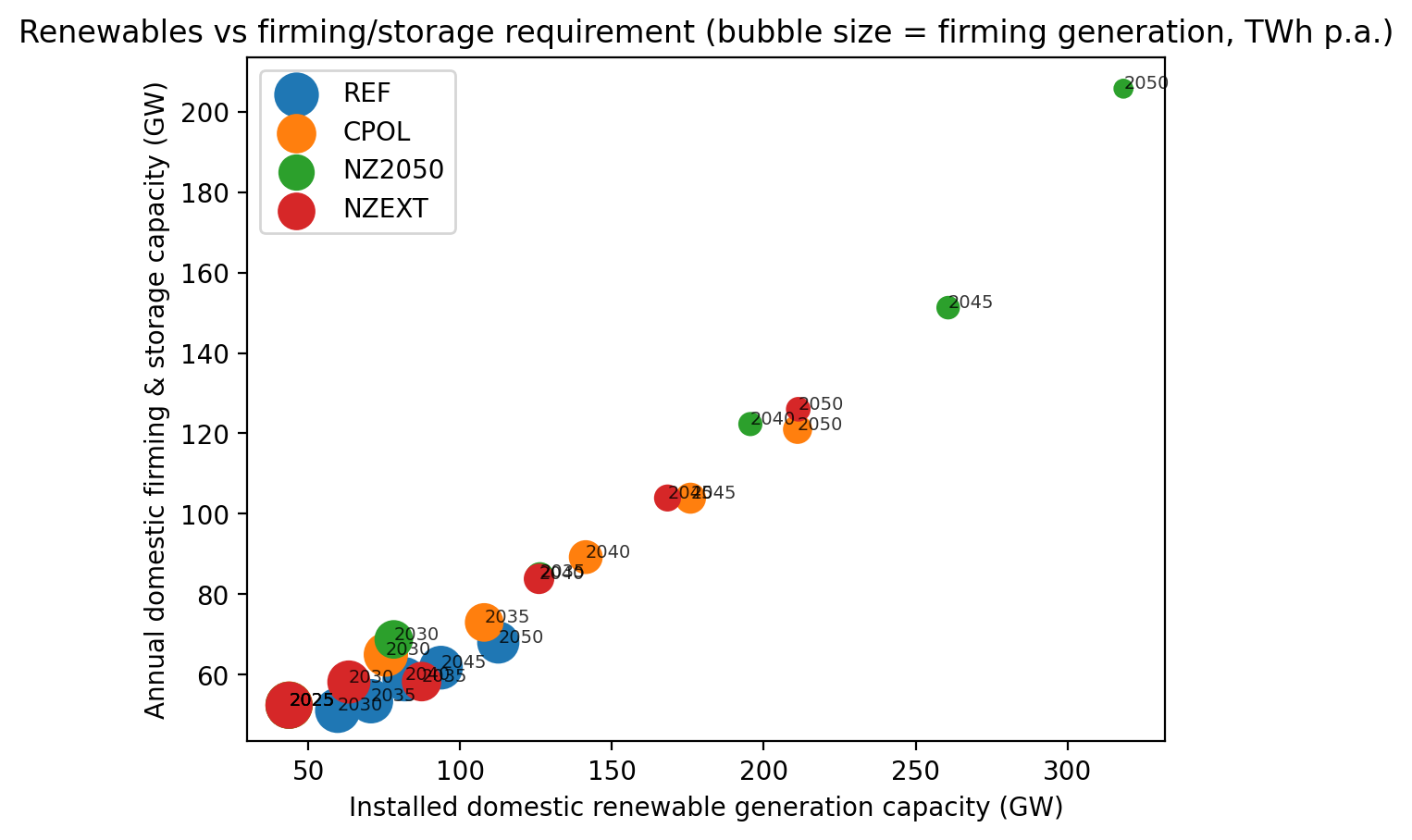
Figure 4. Renewable Capacity vs. Firming and Storage Requirements (NZAu)
5. Why choose a policy that does not directly restructure the grid?
Tokyo's program is designed without directly changing the structure of the power grid.
From the design characteristics of the program, this article considers direct intervention in transmission networks or major generation assets to involve more complex stakeholder coordination, longer construction periods, and greater political responsibility if delivery fails.
By contrast, regulation at the level of individual buildings has localized effects, distributes risk more easily, and makes implementation itself easier to demonstrate.
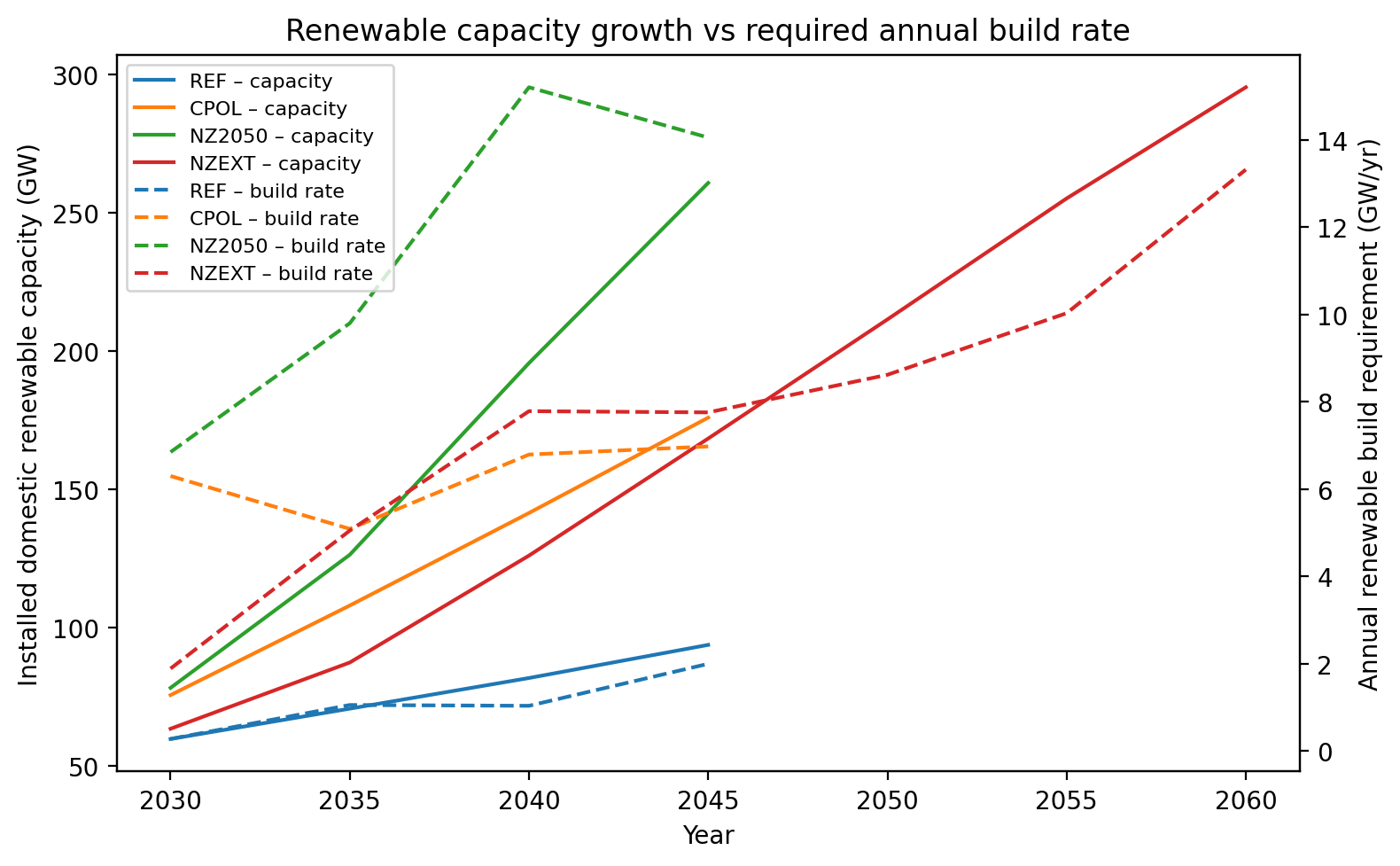
Figure 5. Renewable Capacity Growth vs. Required Annual Build Rate (NZAu)
Conclusion
Tokyo's program and the Australian analyses of renewable-energy transition are based on different geography and institutions, yet they point toward a similar structural conclusion.
- Distributed energy is necessary.
- But it is not universal or sufficient on its own.
- It needs to be positioned as a complement under the assumption that large-scale infrastructure can be delayed.
Because off-grid systems can operate independently of external conditions, they provide a practical way to distribute risk when large-scale infrastructure may not arrive on schedule, or when disasters and accidents force plans to change.
References
-
Tokyo Metropolitan Government, Bureau of Environment -- Building Environmental Reporting System
Primary source for covered suppliers and obligations related to insulation, energy efficiency, renewable-energy equipment, and EV charging infrastructure.
-
Net Zero Australia -- Buildings, rooftop photovoltaics and batteries
Quantitative analysis of buildings, rooftop PV, batteries, and building energy demand.
-
Net Zero Australia -- Final Results Pack
Final-results material underlying the NZAu figures referenced in this article.