Executive Summary
Business continuity should not be evaluated by utilization rate alone. A control, redundant path, recovery capability, or power system can create value by preventing a small failure from becoming a material loss.
The accounting blind spot
The cost of resilience is recognized. The avoided loss usually is not.
The valuation question
The relevant output is not equipment usage but cash flow, capacity, trust, and contractual performance protected.
The Yanagi Model analogy
Visible expenditure and delayed, intangible value can be connected through evidence, disclosure, and management dialogue.
The necessary caution
Regression identifies associations under assumptions. It does not automatically establish causation or a universal valuation multiple.
Accounting Blind Spot / Avoided Loss / Prevention
1. "Nothing Happened" Can Be an Economic Outcome
No board concludes that fire insurance was wasted simply because the building did not burn. The policy is evaluated against the loss it transfers and the solvency it protects. Business continuity investments should be considered with the same discipline.
Yet internal discussions often follow a different chain of reasoning:
No visible incident → no visible benefit → excess protection → unnecessary cost.
The error is the choice of measurement. A resilience asset is not necessarily purchased to generate standalone revenue. It may be purchased to protect a revenue system, a production commitment, a cold chain, an authorization process, a customer promise, or the time required to move safely into degraded-mode operation.
Yanagi Model / Non-Financial Capital / Delayed Value
2. What the Yanagi Model Tries to Make Visible
The Yanagi Model was developed by Ryohei Yanagi, former CFO of Eisai, as a framework for connecting non-financial capital with corporate valuation. Its empirical applications examine whether changes in ESG-related key performance indicators are associated with later changes in price-to-book ratio, while controlling for financial performance such as return on equity.
The management insight is broader than one regression equation. Expenditure on people, research, governance, safety, relationships, or environmental performance is visible immediately. The value may emerge later through future cash flow, lower risk, stronger execution, investor confidence, or strategic capability.
Model
State how non-financial capability may become future financial value.
Evidence
Test company data, including possible time lags, rather than relying only on narrative claims.
Disclosure and dialogue
Explain assumptions, limitations, and management implications to investors and internal decision-makers.
Important Distinction
The Yanagi Model is not an international accounting standard, and it does not convert every non-financial KPI into a balance-sheet asset. It is better understood as a valuation, disclosure, and dialogue framework for testing whether selected capabilities are associated with market valuation over time.
International Position / Recognition / Limits
3. International Recognition Is Real, but It Is Not Yet a Global Standard
Internationally, the strongest description is neither "unknown" nor "globally established." The model has credible recognition as an early and unusually transparent company-level effort to connect internal non-financial indicators with corporate valuation. Its name appears in English investor materials, and English-language corporate reports have used the framework to disclose relationships between ESG indicators and PBR.
Eisai has also worked with the Impact-Weighted Accounts Project at Harvard Business School on employee impact accounting. The International Foundation for Valuing Impacts presents Eisai as a case in which investments in employees were measured beyond conventional financial statements. That work is related to, but analytically distinct from, the original PBR regression applications of the Yanagi Model.
What can be stated confidently
- The model has been presented in English institutional-investor materials.
- Japanese companies have disclosed analyses using the framework in English reports.
- Eisai has international case-study recognition for impact accounting and human-capital measurement.
- The firm-level transparency of the original Eisai disclosure was unusual and pioneering.
What should not be overstated
- The model is not part of IFRS, ISSB, or another global accounting standard.
- The label "Yanagi Model" is not yet broadly recognized among CFOs worldwide.
- Company-specific regression results cannot be transferred mechanically to another company.
- Statistical association is not proof that one KPI caused a valuation change.
The internationally defensible position is that the Yanagi Model is a pioneering firm-level implementation with growing practical adoption, not a universally validated global valuation standard.
Attribution / George Serafeim / Evidence Quality
4. How to Use the "World-First" Assessment Responsibly
Ryohei Yanagi has reported that Harvard Business School Professor George Serafeim highly evaluated Eisai's work as the first case in which a single company conducted and disclosed detailed multiple-regression analysis of the relationship between ESG and corporate value.
The distinction matters. It should not be interpreted as the first academic study of ESG and financial performance, or the first use of regression in sustainability research. International academic research on ESG and financial outcomes predates Eisai's disclosure. The claimed novelty concerns a company using its own internal KPIs, lag structures, and valuation data, then publicly disclosing the detailed analysis as part of management and investor dialogue.
Recommended English attribution
According to Ryohei Yanagi, Harvard Business School Professor George Serafeim described Eisai's disclosure as the first detailed firm-level case to publicly connect ESG indicators and corporate value through multiple-regression analysis.
This wording preserves the source of the assessment. A public HBS source containing the same direct wording was not identified during preparation of this article, so it should be presented as an attributed assessment rather than an independently verified direct quotation.
Regression / Correlation / Decision Use
5. What Regression Can and Cannot Tell a CFO
Regression can make an internal hypothesis testable. It can indicate that a KPI and valuation moved together after controlling for specified variables and allowing for a stated time lag. It can also help management identify which indicators deserve deeper operational investigation.
It cannot, by itself, prove causation. A statistically significant relationship may reflect omitted variables, small samples, market cycles, model selection, measurement error, reverse causality, or company-specific characteristics. Multiple testing also increases the probability of finding apparently significant relationships by chance.
Useful management questions
- Is the proposed mechanism economically plausible?
- Does the result remain stable under different specifications?
- Is the time lag consistent with how the capability creates value?
- Can operational evidence support the statistical relationship?
Disclosure disciplines
- Separate correlation from causal language.
- Disclose assumptions, sample limitations, and model scope.
- Avoid presenting sensitivity estimates as guaranteed returns.
- Use results to prioritize inquiry, not to replace judgment.
Resilience Investment / Intangible Capability / Protected Value
6. The Same Valuation Problem Appears in Business Continuity
Human capital, R&D, governance, and business continuity are not identical asset classes. They do, however, share a valuation problem: the expenditure is visible immediately, while the value created or protected may emerge only over time or during disruption.
A redundant communication path, portable UPS, segmented backup, alternate operating site, recovery rehearsal, or manual fallback procedure may appear idle in normal operations. Its economic role is to contain failure propagation and preserve the option to continue, stop safely, recover in sequence, or transfer work elsewhere.
| CFO question | Conventional view | Resilience view |
|---|---|---|
| How often was it used? | Utilization rate | Disruption avoided or contained |
| What return did it generate? | Direct revenue | Cash flow, gross margin, and contractual performance protected |
| Is it redundant? | Duplicate cost | Failure containment and option value |
| Can insurance cover the loss? | Financial compensation | Operational continuity, market access, and trust may not be replaceable |
| Has the system recovered? | IT service is available | Business processing capacity and control have returned |
2026 Case / Logistics Dependency / Concentration Risk
7. A Logistics Disruption Shows Where Hidden Value Becomes Visible
In July 2026, a cyberattack on a major frozen-food and temperature-controlled logistics group disrupted warehouse intake and outbound shipment operations. The effects propagated beyond the organization to food service, retail, manufacturers, consumer cooperatives, and public meal services.
The case demonstrates a valuation point relevant to CFOs. A company that was not directly attacked could still lose sales, change menus, miss deliveries, incur additional labor, or damage customer trust because a concentrated logistics platform became unavailable. The value at risk was distributed across the supply chain, while the original failure was concentrated in one dependency.
A disruption at one shared platform can destroy value in organizations that were never compromised themselves.
A UPS does not prevent a cyberattack. Power resilience is one layer of a broader architecture that also requires identity controls, segmentation, monitoring, backups, alternate communications, local operating data, degraded-mode procedures, and tested recovery sequencing. The CFO question is not which single product prevents every failure. It is whether the organization has funded the combination of capabilities required to keep a failure from becoming an enterprise-wide loss.
Case source: official company disclosure dated July 15, 2026 . The company name is omitted from the main narrative so the article remains focused on the general dependency structure.
Related analysis: Modern Logistics Runs on Power and Information
Capital Allocation / Protected Cash Flow / Option Value
8. A Practical CFO Framework for Resilience Investment
A useful business case separates the cost of the asset from the value of the function protected. It should not rely on a single dramatic loss estimate. It should show a range of operating scenarios and identify which assumptions management can verify.
1. Critical Function
What must continue?
Define the service, production step, communication path, authorization, monitoring, or safety function that cannot be lost.
2. Tolerance
How long can it be unavailable?
Use maximum tolerable downtime, recovery time, backlog growth, and capacity-recovery targets rather than a generic outage duration.
3. Financial Exposure
Which value is at risk?
Estimate lost gross margin, spoilage, rework, penalties, emergency logistics, overtime, customer support, and delayed cash conversion.
4. Propagation
Where does failure spread?
Map shared systems, suppliers, outsourced logistics, communications, utilities, and single points of operational control.
5. Recovery Capability
What restores usable capacity?
Fund authentication, data integrity, local communications, power, staffing, work instructions, and staged restart - not only server availability.
6. Evidence
How will management know it works?
Use real-load tests, recovery exercises, measured runtime, dependency reviews, incident data, and post-test corrective actions.
A simple decision expression
Resilience value can be considered as the present value of expected losses avoided, recovery costs reduced, contractual and trust value protected, and strategic options preserved, less the lifecycle cost of the investment.
This is a decision framework, not an accounting-standard measurement. The purpose is to make assumptions explicit and comparable across capital-allocation alternatives.
Power Continuity / Portable UPS / Implementation
9. Portable Power as an Operational Option, Not an Isolated Product
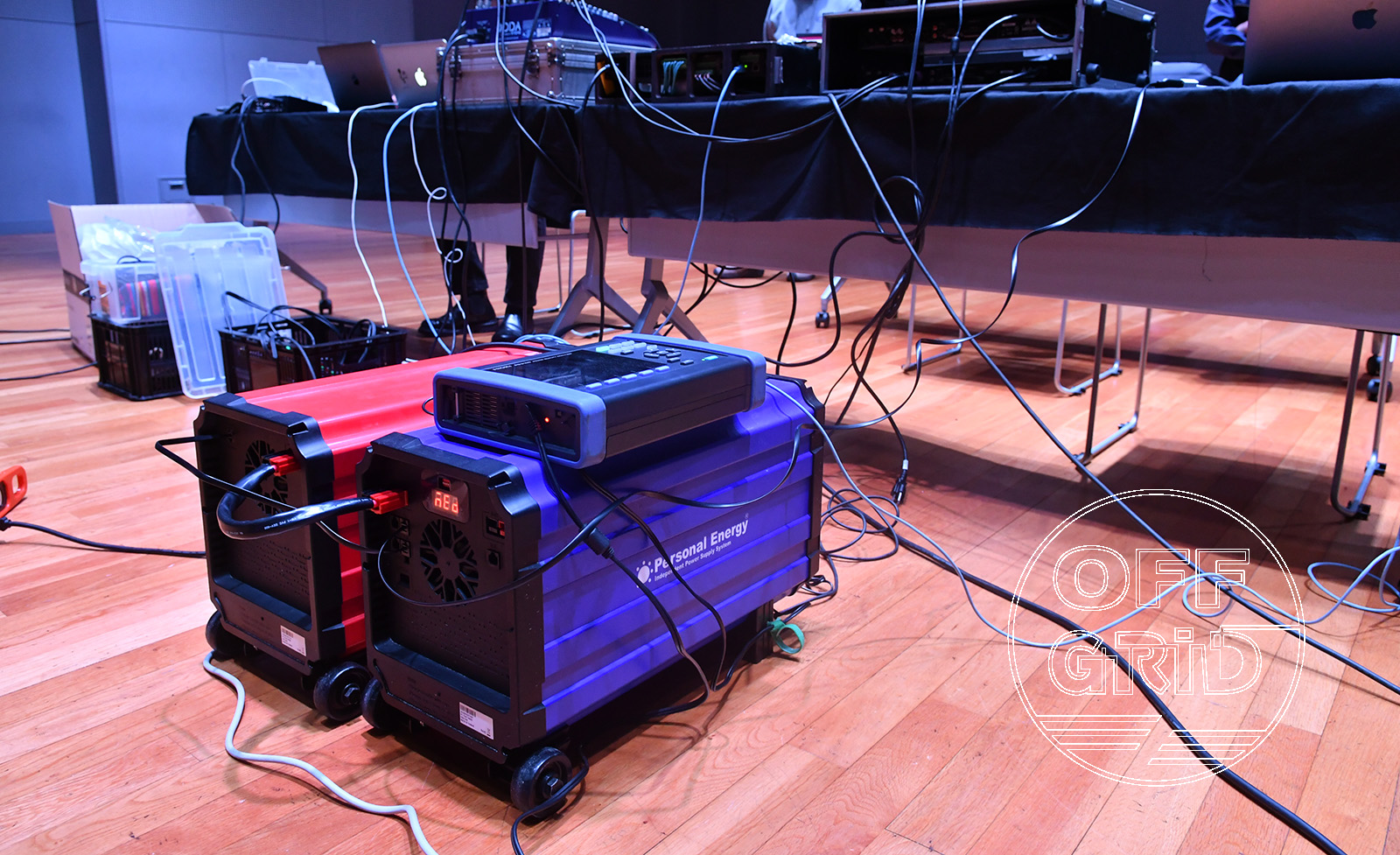
Portable UPS capacity is financially relevant when it protects a function whose failure would interrupt the wider operation. Typical priority loads include communications, PoE switches, wireless access points, authentication, WMS terminals, PLCs, industrial PCs, monitoring, label printing, and recovery workstations.
The economic benefit is not the electricity delivered by the battery. It is the option to maintain control, complete a safe shutdown, bridge generator startup, support incident recovery, continue a restricted workflow, or move power to another critical circuit without waiting for fixed construction.
System recovery is not business recovery.
Technical services may restart before data reconciliation, authentication, work queues, staffing, transport planning, and normal processing capacity return. Power continuity should therefore be designed around the recovery sequence and operating objective, not around an arbitrary number of backup minutes.
Conclusion / Explainable Resilience / Corporate Value
10. A Mature Organization Can Explain Why Nothing Happened
The next level of business continuity is not simply the ability to respond after a disruption. It is the ability to explain why the organization did not lose control, why a local failure did not propagate, why customers continued to receive service, and why recovery capacity remained available.
The Yanagi Model is useful here not because it supplies a universal resilience multiple, but because it insists that management connect non-financial capability, evidence, delayed value, disclosure, and dialogue. That is the same discipline required to move business continuity from a technical expense category into capital allocation and enterprise-value protection.
When nothing happens, the result may be invisible. The management capability that produced it should not be.
Sources and Further Reading
Primary and Institutional Sources
- Eisai: Employee Impact Accounting and Human Resource Investment Efficiency - describes Eisai's collaboration with a team led by Harvard Business School Professor George Serafeim and its employee impact accounting disclosures.
- International Foundation for Valuing Impacts: Eisai employee-investment case study - presents the objective, application, and findings of Eisai's impact-accounting work.
- Nomura Asset Management: Dialogue with Ryohei Yanagi - identifies Yanagi as the creator of the Yanagi Model linking ESG and corporate value.
- Nissin Foods Holdings: Value Creation Report 2022 - provides an English corporate disclosure applying the Yanagi Model to non-financial indicators and PBR.
- Tsumura Integrated Report 2024 - includes an English value-relevance analysis of ESG activities using correlation with PBR.
- Harvard Business School: George Serafeim faculty profile - provides the institutional profile of Professor Serafeim and his research focus on performance and value creation during environmental, social, technological, and institutional change.
- Official company disclosure: system disruption, second report, July 15, 2026 - confirms the cyberattack, system isolation, and impact on refrigerated warehouse intake and outbound frozen-food shipments used in the logistics case discussion.
Method note: this article distinguishes official English disclosures from the attributed "world-first" assessment reported by Ryohei Yanagi. It does not treat the assessment as a verified direct quotation from an HBS publication.
FAQ
Frequently Asked Questions
Is the Yanagi Model an ESG accounting standard?
No. It is a corporate valuation, empirical analysis, disclosure, and dialogue framework. It is not part of IFRS, ISSB, or another mandatory accounting standard.
Can the model be used outside Japan?
The underlying questions are internationally relevant, but the regression design, market structure, available KPIs, valuation measures, and time series must be adapted to the company and jurisdiction.
Does "nothing happened" prove that the investment worked?
Not by itself. Management needs test evidence, incident data, dependency analysis, and operating outcomes. The absence of loss can reflect effective controls, low exposure, or chance.
Why should a CFO care about recovery sequencing?
Because cash flow and capacity do not return merely when a server or power source restarts. Authentication, data integrity, backlogs, staffing, work instructions, communications, and customer commitments must recover in the correct order.
Related Articles
From Investment Rationale to Implementation
Disruption Structure
Modern Logistics Runs on Power and Information
How WMS, communications, power, concentration risk, and third-party dependency turn one failure into a supply-chain disruption.
Implementation
Keep Logistics and Manufacturing Running
How to protect communications, controls, authentication, and recovery loads with a portable zero-transfer UPS.
Technical Basis
Zero-Transfer Power and Power Quality
Technical explanation of transfer time, waveform quality, and why sensitive control and communications loads can stop before a visible blackout.
Japanese article